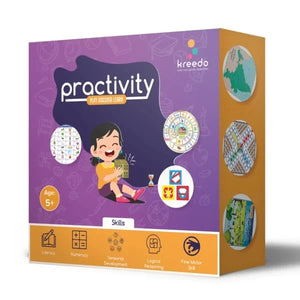
India Map Puzzle: Essential Montessori Learning for Primary Kids
The india map puzzle is an indispensable Montessori tool for primary school children (5-8 years) in India, definitively fostering a deep understanding of geography, cultural diversity, and spatial reasoning from an early age. This matters because it lays a crucial foundation for global awareness and critical thinking, helping Indian parents prepare their children not just for school exams but for life's broader perspectives. By engaging with this tangible material, children develop a deep, intuitive connection with their homeland.
In a world often dominated by screens and the relentless pursuit of academic scores, offering children a hands-on, self-correcting learning experience like an India map puzzle is a breath of fresh air. It empowers them to explore, discover, and learn at their own pace, free from the external pressures that often define early schooling in India.
What is an India Map Puzzle in the Montessori Method?
An educational map puzzle for India is a hands-on Montessori material designed to teach children about the country's states, capitals, and geographical features through tactile exploration. This matters because it engages multiple senses, promoting active learning and memory retention far more effectively than rote memorization. Indian parents can integrate these montessori geography toys to transform abstract concepts into tangible experiences, making learning enjoyable and meaningful.
Maria Montessori's philosophy emphasizes that children learn best by doing, and the map puzzle is a prime example of this principle. Each state piece, often with a small knob for easy grasping, allows children to physically manipulate and understand the shape, size, and relative location of different parts of India. This sensorial engagement builds a concrete understanding of complex geographical concepts.
Why an India Map Puzzle is Crucial for Primary Schoolers (5-8 Years)
Research consistently shows that early exposure to spatial reasoning tasks, like puzzles, correlates with stronger mathematical abilities and problem-solving skills in later academic years. An India map puzzle provides a foundational experience for developing these critical cognitive functions. For primary schoolers, this translates into an enhanced ability to visualize, analyze, and comprehend complex relationships, both geographical and beyond.
Boosting Cognitive Skills and Spatial Reasoning
Working with an India map puzzle significantly enhances a child's spatial reasoning — the ability to understand and remember the spatial relations among objects. As children fit each state into its correct place, they are developing critical thinking skills, problem-solving strategies, and fine motor coordination. Child development experts agree that these foundational skills are crucial for academic success across subjects.
Moreover, the act of identifying and placing each piece improves concentration and persistence. In busy Indian households, where attention spans are constantly challenged by distractions, a focused activity like this puzzle offers a valuable opportunity for deep engagement. It allows children to work independently, fostering a sense of accomplishment.
A Fun Way to Learn India States and Capitals
Traditional methods of teaching geography for kids India often rely on textbooks and memorization, which can feel daunting for young minds. An india map for kids presented as a puzzle transforms this challenge into an exciting discovery. Children naturally absorb information about state boundaries, shapes, and relative positions through play.
Parents can easily extend this learning by naming capitals as pieces are placed, or discussing specific landmarks and festivals associated with each state. This playful approach helps children to effortlessly learn India states and capitals, integrating knowledge into their long-term memory without the pressure of exams. Consider complementing this with other puzzles or activity kits that build on these concepts.
Cultivating Cultural Appreciation and National Pride
Beyond geographical facts, an India map puzzle is a powerful tool for fostering cultural awareness and national pride. As children engage with the map, parents and grandparents can share stories about the diverse cultures, languages, and festivals of different states. This not only makes learning vivid but also strengthens their connection to their heritage.
In many joint families, elders can play a vital role in narrating tales from specific regions, making the states come alive for the child. This rich, contextual learning builds a comprehensive understanding of India's unity in diversity, fostering a deep respect and appreciation for their country from a young age.
Montessori Approach vs. Rote Learning: The SkilloToys Difference
The Montessori method, as embodied by the India map puzzle, champions hands-on, experiential learning over passive rote memorization. Studies indicate that hands-on learning improves retention by up to 75% compared to passive methods, allowing children to build a robust internal framework of knowledge. Unlike endless textbook drills that can lead to burnout, this approach encourages genuine curiosity and self-directed exploration.
At SkilloToys, we believe in providing materials that stimulate a child's natural desire to learn, rather than force-feeding information. Our carefully curated collection of Montessori educational toys, including our India map puzzle, is designed to respect the child's developmental pace and interests, fostering a lifelong love for learning that extends far beyond the classroom.
Integrating the India Map Puzzle into Your Indian Home
Introducing the India map puzzle into your child's routine doesn't require a dedicated Montessori classroom. Set up a low, accessible table in the living room or a child's play area, making the puzzle inviting and always available. Encourage siblings or cousins to work on it together, fostering collaborative learning and healthy competition.
Make it a family activity during festivals like Republic Day or Independence Day to deepen the historical and cultural connection. This casual integration avoids adding to existing school pressure, instead presenting geography as a natural, engaging part of everyday life within an Indian home. It's about making learning a joyous discovery, not another item on a demanding academic checklist.
Beyond Screens: Engaging Minds with Educational Map Puzzle
In an era where children are increasingly glued to phones and tablets, the tactile experience of an educational map puzzle offers a vital alternative for engagement and discipline. It provides a concrete, multi-sensory activity that builds focus and self-regulation – skills essential for navigating the complexities of modern schooling and life. This type of constructive play can help children develop sustained attention, a crucial factor in academic success and personal well-being.
By providing such enriching, screen-free opportunities, parents can proactively address potential discipline problems rooted in over-stimulation or lack of engaging alternatives, fostering a more balanced approach to development. An India map puzzle is not just a toy; it's an investment in a child's holistic growth and a tool to encourage responsible, self-directed learning, as advocated by initiatives focused on quality education.
- The India map puzzle is a foundational Montessori material for children aged 5-8 years.
- It significantly enhances spatial reasoning, fine motor skills, and problem-solving abilities.
- Hands-on engagement with the puzzle makes learning India's states and capitals intuitive and fun.
- This educational tool fosters a deep appreciation for India's diverse cultures and national identity.
- Montessori map puzzles promote self-directed learning and reduce academic pressure compared to rote methods.
- Integrating the puzzle into daily home life offers a valuable screen-free, engaging activity.
What age is best for an India map puzzle?
An India map puzzle is ideally suited for children in the early primary school years, typically from 5 to 8 years old. This age range allows them to grasp geographical concepts, develop fine motor skills, and begin understanding states and capitals effectively.
How does an India map puzzle help with academic pressure?
An India map puzzle transforms learning geography into an enjoyable, hands-on activity, significantly reducing the pressure associated with rote memorization. It fosters intrinsic motivation and deeper understanding, making complex information accessible and fun for children.
Are Montessori map puzzles different from regular puzzles?
Yes, Montessori map puzzles are specifically designed with didactic purposes, often featuring knobbed pieces for easy manipulation and self-correction, along with accurate color-coding for geographical distinctions. They focus on isolation of concepts and sensorial learning, unlike many conventional puzzles.
How can I introduce an India map puzzle to my child?
Start by introducing a few states at a time, perhaps those familiar to your family or from festivals you celebrate. Encourage tracing the borders, naming the states, and later adding capitals, making it a playful discovery process rather than a test.
What other skills does an India map puzzle develop?
Beyond geography, an India map puzzle significantly develops fine motor skills, hand-eye coordination, problem-solving abilities, spatial reasoning, and concentration. It also encourages cultural discussions and a sense of national identity in young children.