Doll House for Kids: Sustainable Montessori Play Benefits
A sustainable doll house for kids provides a rich foundation for developmental growth, moving beyond mere play to become a powerful Montessori tool for fostering independence and imagination. Research shows that open-ended toys, like a well-chosen dollhouse, significantly enhance cognitive and social-emotional skills in young children. Indian parents can leverage these benefits by selecting eco-friendly, durable dollhouses that invite creative storytelling and practical life exploration.
What is a Sustainable Montessori Dollhouse?
A sustainable Montessori dollhouse is a durable, open-ended play structure crafted from natural, non-toxic materials, designed to encourage child-led exploration and imaginative role-play. This matters because it allows children to spontaneously create and recreate their world, building crucial social, emotional, and cognitive skills. Indian parents can choose a wooden dollhouse that reflects simplicity and offers versatile opportunities for learning, aligning with the Montessori philosophy of respecting a child's innate drive for discovery.
The recent discussions championed by figures like Sonika Bhasin on 'Composting With Kids' and choosing washable diapers reflect a growing movement among Indian parents towards conscious living. This ethos extends naturally to toys, with many families in Bengaluru and across India now seeking options like a sustainable dollhouse India that not only delight children but also align with their eco-conscious values. This isn't just a fleeting trend; it's a values-driven choice that influences how children learn about the world and their place in it.
Montessori Dollhouse Benefits: Nurturing Practical Life and Independence
Maria Montessori emphasized the child's innate drive for purposeful activity and the importance of a 'prepared environment'. A doll house offers a miniature world where children can practice daily routines they observe at home, like arranging furniture, cooking, or putting dolls to sleep. This engagement directly fosters practical life skills, problem-solving, and a profound sense of independence.
Imagine a child, perhaps 3-year-old Aarya in a bustling Bangalore joint family, meticulously arranging tiny utensils in her dollhouse kitchen, mimicking her Dadi making chai. Such focused activity, unprompted, develops concentration, fine motor control, and an understanding of sequences. It's an opportunity for them to process and internalise the rhythms of their own Indian home, transforming observed actions into learned skills through play.
The Power of Open-Ended Wooden Dollhouse for Imaginative Play
A simple, natural wooden dollhouse for imaginative play acts as a blank canvas, inviting children to be the architects of their own stories rather than just consumers of pre-defined narratives. Child development experts agree that toys without a prescribed purpose encourage greater creativity and cognitive flexibility than elaborate electronic toys. The satisfying clunk of wooden furniture or the smooth grain of the dollhouse itself provides rich sensory input, grounding the child in their play.
This simplicity is where true learning sparks. Instead of being told what to do with a character, children invent dialogues, create scenarios involving grandparents, siblings, or even friends coming over for Ganesh Chaturthi. Research from the American Academy of Pediatrics highlights that open-ended play is crucial for developing executive functions like planning, working memory, and self-regulation. These are vital skills that serve children well in school and beyond, especially in a culturally rich and complex society like India.
Why an Eco-Friendly Dollhouse Matters for Indian Families
Choosing an eco-friendly dollhouse goes beyond just selecting a toy; it's a statement about the values we impart to our children. Just as many parents are exploring sustainable practices at home, influenced by discussions like 'My baby greenest: When parenting goes sustainable' in The Times of India, selecting toys made from non-toxic, sustainable materials teaches children about environmental responsibility from a young age. These dollhouses are typically made from durable wood, ensuring they last for years, reducing waste, and often becoming cherished family heirlooms.
Moreover, natural materials are safer for children, free from harmful chemicals often found in plastics. This choice reflects a conscious effort to create a healthier play environment and instil an early appreciation for nature. It connects the child's immediate play experience with broader ecological understanding, fostering a generation that values and protects its surroundings.
Choosing the Right Sustainable Doll House for Kids in India
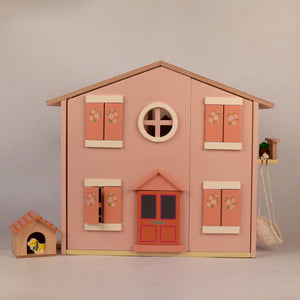
When selecting a doll house for kids, look for robust construction from materials like natural wood or bamboo. Opt for designs that are open-ended and adaptable, allowing for various configurations and cultural interpretations. For instance, an open-sided dollhouse can easily transform from a traditional South Indian home to a modern Mumbai apartment or even a festive village setting, providing endless scope for imagination.
Consider scale and accessibility; children should be able to comfortably reach and manipulate all parts of the dollhouse. Our collection of Montessori learning materials are designed with this philosophy, encouraging exploration and independent interaction. Parents can also explore activity kits to create miniature furniture or accessories, adding a personal touch and further engaging children in the creative process. Look for simple, clean finishes and avoid excessive detailing that might limit imaginative scope. The best dollhouse is one that encourages your child to bring their own world, their own family stories, and their unique Indian culture into play.