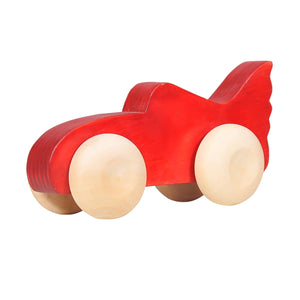
Educational Toys for Emotional Intelligence in Indian Children
Choosing the right educational toys is a definitive step Indian parents can take to nurture emotional intelligence in children, directly impacting their capacity for empathy, self-regulation, and social success. Research shows that early engagement with thoughtfully selected toys significantly contributes to developing crucial socio-emotional skills, setting a strong foundation for future well-being in a competitive environment.
Emotional intelligence is the ability to understand, use, and manage one's own emotions in positive ways to relieve stress, communicate effectively, empathize with others, overcome challenges, and defuse conflict. This matters because it's a stronger predictor of life success than academic scores, as highlighted by The Times of India. Indian parents can cultivate this by integrating specific play experiences into their child's daily routine.
In today's fast-paced Indian society, where academic pressures often overshadow holistic development, nurturing emotional intelligence is more vital than ever. The Hans India reports that emotional intelligence is an essential skill for children's overall development, equipping them to navigate social complexities, manage stress, and build resilience. This makes the conscious selection of toys an empowering choice for parents aiming to raise well-rounded, emotionally aware children.
Understanding Emotional Intelligence and Its Role in Childhood
Emotional intelligence encompasses a range of abilities crucial for thriving in personal and social spheres. These include self-awareness, self-regulation, motivation, empathy, and social skills. For Indian children, who often grow up in multi-generational homes and face diverse social interactions, developing these skills early is paramount.
Child development experts agree that play is a child's primary mode of learning, and therefore, the toys we provide are powerful tools for shaping emotional growth. When children engage with **emotional intelligence toys**, they naturally practice understanding feelings, expressing themselves, and navigating social dynamics without explicit instruction. This organic learning is incredibly effective and lasting.
Key Principles for Choosing Educational Toys for Emotional Development
Selecting **choosing educational toys** for emotional development goes beyond mere entertainment; it involves looking for materials that foster specific skills. Maria Montessori emphasized self-directed activity, hands-on learning, and collaborative play, all of which are foundational to building emotional intelligence. These principles guide the selection of truly impactful toys.
Studies indicate that children learn empathy and social reasoning best through experiences that mimic real-life interactions. Look for toys that encourage role-playing, sharing, and understanding different perspectives. These opportunities are vital for developing a child's capacity to connect with others, a core component of emotional intelligence.
Encouraging Empathy and Social Skills
Toys that facilitate cooperative play and storytelling are excellent for fostering empathy. Puppets, dollhouses, and miniature figures allow children to act out scenarios, understand different roles, and explore various emotions. Shared experiences with siblings or cousins, common in Indian joint families, amplify these learning opportunities.
Board games designed for young children, which involve turn-taking and simple rules, teach patience and fair play. SkilloToys offers a range of activity kits that encourage collaborative problem-solving and social interaction, making learning a shared, joyful experience.
Fostering Self-Regulation and Resilience
Toys that present gentle challenges and require problem-solving help children develop self-regulation and resilience. Puzzles, building blocks, and sorting games demand focus, persistence, and the ability to manage frustration. When a child successfully completes a task, they experience a sense of accomplishment, reinforcing their ability to overcome obstacles.
For instance, classic Montessori materials like the Pink Tower or Brown Stair indirectly teach patience and precision, contributing to a child's ability to self-regulate. These structured activities help children learn to manage impulses and work towards a goal, skills essential for emotional maturity.
Building Self-Awareness and Expression
Creative art supplies, musical instruments, and open-ended construction materials empower children to express their feelings and ideas. When children have avenues for creative expression, they develop a deeper understanding of their inner world. This self-awareness is the bedrock of emotional intelligence, allowing them to recognize and name their own emotions.
Encouraging children to talk about their creations and the emotions they felt while making them further enhances this connection. Simple art supplies found in any Indian home, from clay to colors, can become powerful tools for emotional exploration.
Best Educational Toys for Kids in India: Age-Wise Recommendations
When selecting the **best educational toys for kids India**, consider age-appropriateness and developmental stage. What captivates a toddler might overwhelm an older child, and vice-versa. SkilloToys curates Montessori educational toys designed to meet children at their unique developmental points.
Toddlers (1-3 years): Simple sorting toys, shape sorters, and soft dolls or animals are ideal. These toys help children identify basic emotions and begin to understand cause and effect. Engaging with dolls teaches nurturing and imaginative play, fostering early empathy.
Preschoolers (3-6 years): Role-playing costumes, elaborate dollhouses, and building blocks like LEGO or wooden construction sets are excellent. These encourage imaginative scenarios, negotiation, and collaborative storytelling. The Sandpaper Letters, while academic, also teach patience and focus, indirectly boosting self-regulation.
Early School Age (6-9 years): Complex board games, science kits that require collaboration, and story-writing prompts are beneficial. These toys challenge children to think critically, cooperate with peers, and understand more nuanced emotional situations, preparing them for school pressures and social groups.
- Choosing specific **educational toys** profoundly influences a child's emotional intelligence.
- Emotional intelligence, not just academic scores, predicts life success for Indian children.
- Montessori principles emphasize self-directed play and hands-on learning for emotional growth.
- Toys fostering role-playing, cooperation, and problem-solving build empathy and resilience.
- Creative expression through art and music enhances self-awareness in children.
- Age-appropriate **emotional intelligence toys** are crucial for effective developmental support.
What is emotional intelligence in children?
Emotional intelligence in children is the capacity to recognize, understand, and manage their own emotions, as well as perceive and influence the emotions of others. This crucial skill enables children to navigate social situations, build healthy relationships, and cope effectively with life's challenges from a young age.
How do Montessori educational toys support emotional development?
Montessori educational toys inherently support emotional development by promoting independence, problem-solving, and concentration through hands-on, self-directed play. These toys foster a sense of accomplishment and self-worth, which are foundational for emotional well-being, and encourage respectful interaction with materials and peers.
Are screen-based games beneficial for emotional intelligence?
While some educational apps claim to build emotional skills, research indicates that hands-on, interactive play with physical toys is far more effective for developing emotional intelligence in young children. Real-world interactions, role-playing, and tangible problem-solving build empathy and social cues that screens cannot replicate.
At what age should parents start focusing on emotional development?
Parents should begin fostering emotional development from infancy, as children are naturally learning about emotions from birth through interaction with caregivers. Introducing **emotional intelligence toys** and nurturing responsive relationships during the toddler and preschool years is particularly impactful for building a strong foundation.
How can I integrate emotional intelligence into my child's daily Indian routine?
Integrate emotional intelligence by encouraging open discussions about feelings, using stories from Indian folklore to illustrate emotions, and providing opportunities for collaborative play within joint families. Choosing **toys for emotional development** that prompt sharing, turn-taking, and imaginative scenarios naturally embeds these lessons into daily life.