Toys for Autistic Children: Practical Montessori Play in India
In India, creating truly inclusive environments for autistic children often begins at home with thoughtful play. The right toys for autistic children are not merely distractions; they are powerful tools for development, a sentiment echoed in recent discussions like Livemint's article on fostering inclusivity. Experts agree that purposeful play, especially rooted in Montessori principles, provides a structured yet flexible framework that caters to the unique learning styles of children on the autism spectrum.
What defines Montessori inclusive play for autistic children? This approach involves carefully designing a child's learning environment and selecting specific educational toys to meet their developmental needs. This matters profoundly because it allows autistic children to engage with their world in a way that builds confidence, independence, and essential life skills. Indian parents can integrate these strategies into daily routines, transforming playtime into impactful learning opportunities.
Embracing the "Prepared Environment" for Calm & Focus
A cornerstone of Montessori philosophy, the "prepared environment," is particularly beneficial for autistic children in India. Research shows that a predictable, orderly space significantly reduces sensory overload, a common challenge for many children on the spectrum. Imagine a quiet corner in your Bengaluru apartment or a dedicated mat in a joint family home, where each toy has its designated place, inviting focused engagement rather than chaotic stimulation.
This environment is not about rigidity but about creating a sense of calm and control for the child. It means having age-appropriate materials easily accessible on low shelves, avoiding clutter, and minimizing overwhelming visual or auditory distractions. Child development experts agree that such a structured setup empowers autistic children to make independent choices, fostering self-regulation and deeper concentration.
The Power of Purposeful Toys: Beyond Distraction
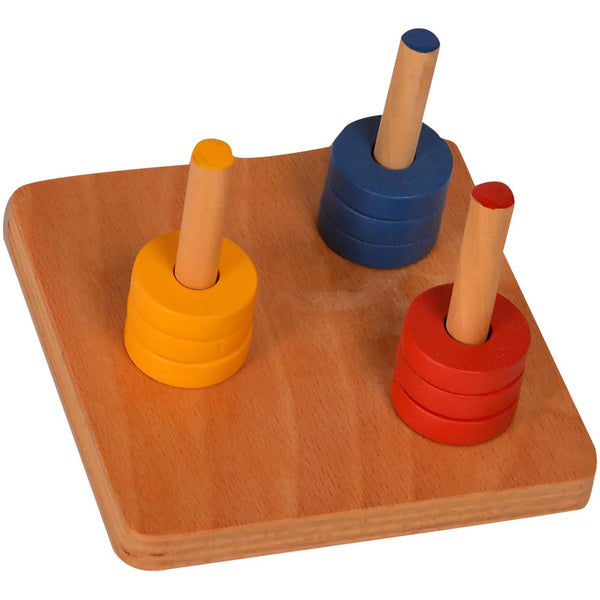
When selecting special needs educational toys, Montessori emphasizes materials that engage multiple senses and have a "control of error." This means the child can naturally discover their mistake and correct it without adult intervention, fostering problem-solving and self-esteem. Consider the simple satisfaction of a child stacking a fine motor skills toy, like a ring stacker, and seeing it balance perfectly, or realizing an imbalance and fixing it.
This hands-on, experiential learning is crucial for autistic children. For instance, the tactile experience of sandpaper letters can help connect a physical sensation to abstract concepts, enhancing literacy skills. Unlike many flashy electronic toys, Montessori materials invite active participation and deep engagement, moving beyond passive entertainment to genuine skill-building, aligning with Livemint's call for toys that truly foster inclusivity.
Nurturing Social Skills Through Guided Interaction
Montessori inclusive play also offers unique autism play strategies in India for developing social skills. While autistic children may engage in play differently, structured environments and guided interactions can facilitate connection. Start with parallel play, where children play alongside each other with similar materials, gradually introducing opportunities for shared attention and turn-taking.
For example, a parent in Chennai could invite their child to help prepare a snack using Montessori practical life tools, creating a shared experience with a clear sequence of steps. This offers a low-pressure way to practice communication and cooperation. The emphasis is on observation – understanding the child's cues and gently extending invitations for interaction, rather than forcing it, which respects their individual social comfort levels.
Individualized Learning & Respecting Pacing
One of the profound gifts of the Montessori approach for autistic children is its unwavering respect for individualized learning and pacing. In a country where academic pressure can often begin early, particularly for young children in urban metros, this principle is a breath of fresh air. Maria Montessori believed that children learn best at their own speed, mastering one concept before moving to the next.
This means if a 4-year-old in Delhi is deeply engrossed in repeating a specific fine motor activity, they are not rushed or redirected. This deep, sustained focus is invaluable for autistic children, allowing them to fully process information and develop mastery without the anxiety of external timelines. Studies indicate that self-paced learning environments lead to greater retention and engagement for diverse learners, including those on the spectrum.
Practical Tips for Indian Parents & Educators
Implementing these strategies at home, perhaps with the help of grandparents who value hands-on learning, can be transformative. Begin by decluttering a designated play area and introducing one or two Montessori-inspired activities at a time. Observe your child without judgment; what captures their attention? What do they repeat?
Consider introducing practical life skills early, such as pouring water, buttoning clothes, or sweeping a small area – activities that naturally develop concentration and coordination. SkilloToys offers a wide range of materials that support these skills. Remember, the goal is not perfection, but participation and the joy of discovery. For Aarya, a 3-year-old in a Bangalore joint family, learning to fold a napkin can be as profound as solving a complex puzzle, building essential life skills and self-reliance.
Embracing Montessori principles with educational toys for autistic children offers a pathway to deeper engagement and more joyful learning. It's about creating an environment where every child feels seen, supported, and empowered to thrive at their own pace. By focusing on practical, child-led strategies, Indian parents and educators can cultivate truly inclusive spaces that celebrate each child's unique journey.