Craft a DIY Stamp Game for Math Fun at Home
As Indian parents, we often seek creative, hands-on ways to engage our little ones in learning, especially when exploring Montessori principles at home. Imagine turning everyday kitchen items into powerful educational tools! Today, we're going to dive into a wonderfully simple and effective activity: crafting a DIY stamp game using humble potatoes and vibrant paints. This ingenious project brings the joy of mathematics to your children aged 3-6 years, making abstract numbers tangible and fun.
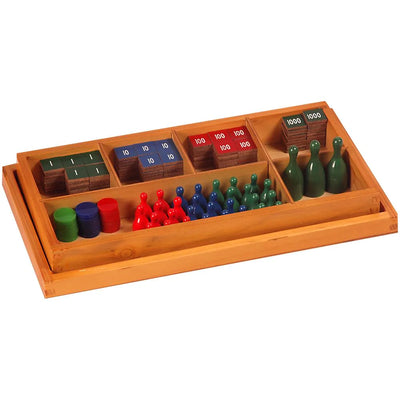
The Montessori Stamp Game is a foundational material for introducing children to the decimal system and arithmetic operations. It consists of small green, blue, and red stamps representing units, tens, hundreds, and thousands. This works because it provides a concrete, sensorial experience of abstract mathematical concepts like place value and carrying over. Parents can use this game to help their child visually and tactilely understand quantities, laying a strong foundation for future mathematical fluency.
Why a DIY Stamp Game is Perfect for Indian Homes
In the bustling landscape of an Indian home, whether it’s a cosy apartment in Bengaluru or a multi-generational house in a smaller town, practicality and resourcefulness are key. A DIY stamp game fits right in! It's incredibly budget-friendly, utilising materials you likely already have – 'aloo' and some child-safe paint.
This activity encourages family involvement, a cornerstone of Indian culture. Grandparents can join in the crafting, making it a shared experience. Plus, it's easily adaptable to smaller living spaces; you don't need a dedicated Montessori classroom. This is a brilliant way to introduce Montessori learning activities without a significant investment, making quality child development accessible to every Indian family.
What You'll Need: The Simple Supplies
Gathering your materials is part of the fun! You’ll be surprised how little you need to create such a powerful educational toy for toddlers and preschoolers.
- Medium-sized potatoes (about 4-5 should be enough)
- Child-safe, washable paints in green, blue, and red
- A sharp knife (for adult use only!)
- Plain paper or cardstock for stamping
- A pen or marker
- Small dishes or a palette for paint
- A damp cloth for easy clean-up
Step-by-Step Guide to Crafting Your Potato Stamps
Preparing Your 'Stamps'
This is where the creativity begins! With an adult’s careful supervision, cut the potatoes into distinct shapes. For units, a simple small square or circle works well. For tens, perhaps a rectangle. Hundreds could be a larger circle or triangle, and thousands a star or a different distinct shape. The key is to make them visually distinguishable. You'll want to carve enough of each shape to represent the different place values, ideally at least ten of each to allow for carrying over in addition.
Setting Up Your Math Workspace
Once your potato stamps are ready and dried, set up a clear, inviting workspace for your child. A small mat on the floor or a clear table surface is ideal. Arrange the paints in small dishes – green for units, blue for tens, red for hundreds, and green for thousands (following the traditional Montessori colours). Have plenty of paper ready. This organised setup, a hallmark of the Montessori method, helps children focus and understand the purpose of the activity.
How to Introduce the DIY Stamp Game to Your Child
Begin by showing your child how to stamp. Start with just the unit stamps (green). You might say, "This is a unit, it means 'one'." Stamp a few units, counting them as you go. Then, introduce the concept of place value gradually. For instance, "These are tens" (blue stamps), showing that ten units make one ten. When your child is comfortable, introduce simple addition problems, like "3 + 2." They stamp three green units, then two more, and count the total. As they progress, introduce tens, hundreds, and eventually thousands.
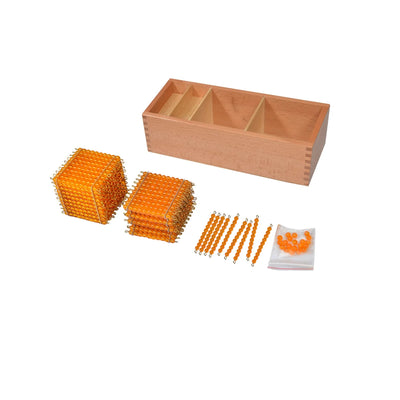
Remember, the goal is not to rush but to allow the child to explore at their own pace. For more advanced explorations into the decimal system, consider exploring authentic Montessori Mathematics Materials that offer further abstraction and complexity.
Expanding the Learning: Beyond Basic Addition
Once your child has mastered basic addition with the DIY stamp game, you can introduce other operations like subtraction, multiplication, and even simple division. For subtraction, they stamp the larger number and then "take away" stamps representing the subtrahend. For multiplication, they can stamp the multiplicand multiple times. This hands-on approach builds a deep, intuitive understanding of numbers and operations, fostering crucial child development in India.
Connect the learning to real-life Indian contexts! Count how many 'mithai' pieces are needed for Diwali, or how many rupees are left after buying groceries. These everyday examples make math relevant and exciting. You can also integrate other activity kits from SkilloToys to complement and expand their learning journey.
Key Takeaways
- The DIY potato stamp game makes abstract math concepts concrete for young children.
- It is a cost-effective, adaptable Montessori activity perfect for Indian homes.
- Children aged 3-6 benefit from the sensorial experience of place value and basic arithmetic.
- Parental involvement and a structured environment enhance the learning experience.
- This activity fosters early mathematical understanding and problem-solving skills.
What age is best for the DIY Stamp Game?
The DIY Stamp Game is most suitable for children aged 3 to 6 years. It caters to their sensitive period for order and numbers, helping them grasp foundational mathematical concepts through concrete manipulation.
How does the Stamp Game teach math concepts?
The Stamp Game teaches math by representing units, tens, hundreds, and thousands with different colours and quantities. This physical representation helps children visually and tactilely understand place value, carrying over in addition, and borrowing in subtraction, making abstract ideas tangible.
Can I use other vegetables for DIY stamps?
Absolutely! While potatoes are common, you can experiment with other firm vegetables like carrots or capsicums. The key is that they can be easily cut into distinct shapes and hold paint well, allowing for creative Montessori at home India explorations.
How often should my child play with the DIY Stamp Game?
Allow your child to engage with the DIY Stamp Game as often as they show interest. Montessori principles advocate for child-led learning, so follow their cues. Short, focused sessions are often more effective than long, forced ones.
Is this truly Montessori if it's DIY?
Yes, adapting materials for home use aligns with the spirit of Montessori. The core principles – concrete learning, sensorial exploration, and independence – are maintained. Maria Montessori herself encouraged observation and meeting the child where they are, using accessible resources.
Embarking on this DIY journey not only enriches your child's mathematical understanding but also creates beautiful memories of learning together. For those moments when you're looking for expertly crafted materials to complement your home activities, remember SkilloToys.com offers a curated selection of authentic Montessori educational toys, designed to support every stage of your child's growth.