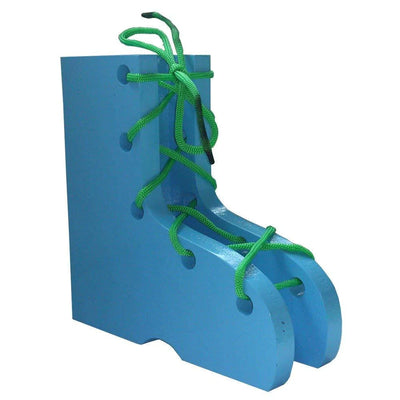
DIY Lacing for Toddlers: Boost Fine Motor Skills at Home
Watching our little ones discover the world, one tiny grasp at a time, is truly magical. In every Indian home, there's an inherent desire to nurture our children's growth, blending traditional wisdom with modern understanding. Today, we’re diving into a simple yet profound activity that supports crucial developmental milestones: a DIY lacing activity for fine motor development in toddlers.
This hands-on activity, easily created with materials found around the house, is a fantastic way to engage your toddler in meaningful play that boosts their concentration and prepares them for future academic tasks. It's a cornerstone of practical life skills within the Montessori philosophy, making it an excellent addition to your Montessori at home India journey.
What is a Lacing Activity and Why Does it Matter for Toddlers?
A lacing activity involves threading a string, lace, or cord through a series of holes in a solid object, typically a card or a block. This activity is a powerhouse for developing a toddler's fine motor skills, which are the coordination of small muscle movements in the hands and fingers, usually in coordination with the eyes. This works because it directly strengthens the pincer grip, improves hand-eye coordination, and enhances bilateral coordination—the ability to use both sides of the body simultaneously and independently.
Parents can easily introduce lacing to children typically aged 18 months and older, adapting the complexity to suit their child's current developmental stage. Maria Montessori herself emphasised the importance of purposeful activities that allow children to develop independence and refine their movements, making lacing a perfectly aligned exercise.
Crafting Your Own Lacing Activity: Simple & Sustainable
One of the beauties of Montessori principles is the emphasis on readily available, natural materials. Creating a lacing activity doesn't require a trip to a specialty store; often, the best resources are already within your Indian home, perhaps even in the 'dabba' where your grandmother stores old buttons!
Using Everyday Materials from Indian Homes
Look around your home for sturdy, reusable items. Thick cardboard from old delivery boxes, discarded wedding invitation cards with beautiful designs, or even stiff plastic from old files can be transformed. Instead of buying new laces, consider repurposing old shoelaces, thick yarn, or even strips cut from a worn-out saree or dupatta for a softer, textured feel. These local materials not only save money but also teach children about sustainability.
Step-by-Step DIY Lacing Card Ideas
To begin, select your base material. Draw simple, large shapes like circles, squares, or even familiar Indian motifs like a mango, a lotus, or a 'diya' (lamp). Using a hole punch or a sharpened pencil (with adult supervision!), create evenly spaced holes around the perimeter of your chosen shape. For younger toddlers, make the holes larger and the lace thicker to reduce frustration.
As your child grows, you can introduce more intricate designs, smaller holes, and thinner laces, challenging their developing skills. Themes related to Indian festivals like Diwali or Holi can make the activity even more engaging and culturally relevant for your little one.
The Developmental Magic of Lacing: Beyond Just Play
While a DIY lacing activity might seem like simple play, it's a powerful tool for holistic child development in India, laying foundations for many future skills.
Nurturing Fine Motor Skills and Hand-Eye Coordination
Each time your toddler grasps the lace and pushes it through a hole, they are refining their pincer grip—the precise hold between the thumb and forefinger—which is essential for holding pencils, buttons, and zipping clothes. This repeated action builds strength and dexterity in their tiny hand muscles. Simultaneously, their eyes track the lace, coordinating with their hand movements to ensure accuracy, a vital aspect of fine motor skills development.
This engagement is far more impactful than passive screen time, offering tangible progress in areas like pre-writing skills. For more Montessori-aligned educational toys for toddlers focusing on these areas, explore SkilloToys.com.
Cultivating Concentration and Problem-Solving
Lacing demands focus. Toddlers learn to concentrate on the task at hand, blocking out distractions—a skill often difficult to cultivate in our bustling, often joint-family homes. Successfully lacing a card provides a sense of accomplishment, boosting their self-esteem and encouraging independent work. They also encounter gentle problem-solving as they navigate the lace through holes, learning about spatial relationships and perseverance. These are key practical life skills that foster a sense of order and accomplishment, echoing the purpose of Montessori practical life materials.
Incorporating Lacing into Your Montessori at Home India Journey
Integrating DIY lacing into your daily routine is straightforward. Present the activity neatly on a small tray or a mat, inviting your child to explore it. Demonstrate the lacing slowly and deliberately, without speaking, allowing your child to observe the sequence of actions. Then, step back and allow them to explore at their own pace.
In many Indian apartments, space can be a constraint. A small, dedicated shelf or corner for these activities works wonderfully. Grandparents, who often play a significant role in raising children, can also be wonderful facilitators, sharing their patience and wisdom. This kind of structured, self-directed play is at the heart of Montessori learning activities, encouraging children to learn through discovery and repetition.
Key Takeaways
- DIY lacing activities are excellent for developing fine motor skills and hand-eye coordination in toddlers aged 18 months and above.
- Utilise everyday Indian household materials like cardboard, old shoelaces, and fabric scraps for sustainable and affordable creations.
- Lacing helps children develop crucial pre-writing skills, concentration, and problem-solving abilities.
- Introduce the activity with clear, silent demonstrations and allow the child to work independently, fostering self-reliance.
- Adapting hole size and lace thickness makes the activity suitable for various developmental stages.
- This practical life exercise aligns perfectly with the Montessori philosophy, supporting natural child development.
Frequently Asked Questions About Lacing Activities
What age is suitable for introducing lacing activities?
Lacing activities are generally suitable for toddlers starting around 18 months, depending on their individual fine motor development. Begin with larger holes and thicker laces, progressing to smaller ones as their skills improve, often around 2-3 years of age.
How can I make DIY lacing safer for my toddler?
Always supervise your child during lacing activities. Ensure laces are not too long to prevent entanglement risks, and check that any holes punched are smooth to avoid cuts. Choose non-toxic materials, especially if your toddler is still prone to mouthing objects.
What if my child isn't interested in lacing?
If your child shows no interest, put the activity away for a few weeks and reintroduce it later. Children's interests change rapidly. You can also try different themes (e.g., their favourite animal or vehicle) or vary the materials to pique their curiosity.
How does lacing align with Montessori principles?
Lacing is a classic Montessori practical life activity. It fosters concentration, independence, fine motor control, and coordination, all central tenets of Maria Montessori's educational philosophy. It allows the child to work with a real, tangible material and achieve a clear goal.
Are there other benefits besides fine motor skills?
Absolutely! Beyond fine motor skills, lacing enhances hand-eye coordination, develops patience, encourages problem-solving, and boosts concentration. It also contributes to pre-writing skills and builds self-esteem through successful completion of a task.
Empowering our children with simple, engaging activities like DIY lacing lays a strong foundation for their growth. At SkilloToys.com, we believe in supporting every Indian parent on their journey to foster independence and a love for learning in their little ones. Explore our collection for more curated educational resources that align with your child's developmental needs.