DIY Potato Stamp Game for Early Math Skills
In many bustling Indian homes, finding engaging, educational activities for our little ones that don't break the bank is a delightful challenge. What if we told you that some of the best learning tools are hiding right in your kitchen? Today, we're diving into how to create a simple yet incredibly effective DIY potato stamp game, a fantastic Montessori-inspired activity that brings math concepts to life for young children aged 3-6 years.
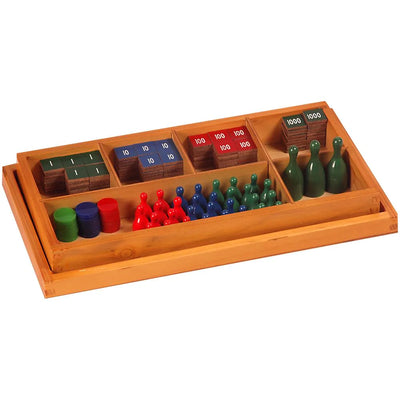
The Montessori Stamp Game is a classic material used to introduce children to the decimal system and basic arithmetic operations like addition, subtraction, multiplication, and division. It provides a concrete, hands-on representation of abstract mathematical concepts, allowing children to physically manipulate quantities representing units, tens, hundreds, and thousands. This works because it moves from the tangible to the abstract, catering to a child's natural inclination to learn through touch and movement. Parents can replicate the core principle of this material using everyday items, making complex ideas accessible and fun right in their own homes, fostering early mathematical understanding.
Why a DIY Potato Stamp Game for Your Child?
Creating a DIY potato stamp game offers numerous benefits, especially for Indian parents keen on enriching their child's early learning journey. Firstly, it's incredibly cost-effective, using materials you likely already have. Secondly, it champions sustainability by repurposing items. This activity not only introduces foundational math concepts but also hones crucial developmental skills.
Children develop their fine motor skills as they grasp and press the stamps, while hand-eye coordination improves with each carefully placed number. It's a wonderful way to introduce early number recognition and counting, laying a strong foundation for future mathematical understanding. For parents exploring Montessori at home India, this activity is a perfect entry point into practical life and sensorial learning, contributing significantly to overall child development India, particularly for toddlers and preschoolers.
Gathering Your Simple Supplies (From Your Kitchen!)
The beauty of this project lies in its simplicity. You won't need a trip to a specialty store; most items are probably already in your pantry or craft drawer. Here’s what you’ll need:
- Potatoes: Medium-sized, firm potatoes are best. You'll need at least one for each number (0-9) and perhaps a few extras for units, tens, hundreds, and thousands if you want to follow the Stamp Game colours.
- Paint: Child-safe tempera or acrylic paint in red (units), green (tens), blue (hundreds), and red (thousands, or simply a single colour for all).
- Paper: A stack of plain white paper or cardstock.
- A small, sharp knife: For adult use only, for carving the numbers.
- Paper towels or a cloth: For cleaning up.
- Shallow plates or trays: To hold the paint.
Step-by-Step: Crafting Your Potato Stamps
Creating the stamps is a fun, hands-on activity for adults, perhaps while your child is napping or engaged in independent play. Remember, safety first when handling sharp objects!
- Prepare the potatoes: Wash and cut each potato in half crosswise. Pat the cut surfaces dry with a paper towel.
- Carve the numbers: Carefully, using the sharp knife, carve a number (0-9) onto the flat surface of each potato half. You can also carve simple symbols for units (a small dot or square), tens (a longer rectangle), hundreds (a larger square), and thousands (a triangle or even just a number with a larger stamp).
- Optional: Colour code: If following the traditional Stamp Game colours, use red paint for units and thousands, green for tens, and blue for hundreds. If not, any single colour is fine.
- Test your stamps: Dip each potato stamp lightly into a shallow plate of paint and test it on a scrap piece of paper. You might need to refine the carving slightly for a clearer print.
Playing and Learning: Montessori Math with Potatoes
Once your stamps are ready, the real fun begins! This activity is fantastic for introducing Montessori learning activities focused on early math concepts. Start simple and follow your child's lead.
For younger children (2.5-4 years), begin with number recognition and simple counting. Ask them to stamp the number '3' three times, or stamp '1' then '2' then '3'. As they grow, you can introduce quantities. Write a number (e.g., 5) on a piece of paper and ask them to stamp that many dots or objects next to it. This tangible connection between the numeral and its quantity is a cornerstone of Montessori math.
For children aged 4-6, you can introduce basic addition. Write a simple sum like '2 + 3 = ?'. Have them stamp two units, then three units, and then count the total to stamp the answer. This concrete experience with numbers lays a strong foundation for understanding the decimal system, much like the original Stamp Game. Remember, the focus is on the process of discovery and understanding, not just getting the right answer.
Expanding the Play: More Ideas for Your DIY Stamp Game
This educational toy for toddlers isn't just for numbers! Let your creativity flow and expand the learning opportunities:
- Pattern Play: Stamp alternating colours or shapes to create beautiful patterns, enhancing visual discrimination and sequencing skills.
- Storytelling: Stamp a sequence of numbers or objects and ask your child to create a story around them. This boosts language and imaginative play.
- Festival Fun: During festivals like Diwali, stamp diyas or stars and count them together, making the learning culturally relevant and exciting.
- Shape Stamps: Carve simple shapes like circles, squares, and triangles for early geometry exploration.
- Letter Stamps: For older children, carve letters to create simple words, moving towards the Montessori movable alphabet concept.
Nurturing a Love for Learning the Montessori Way
Creating a DIY potato stamp game is more than just a craft; it's an invitation for your child to explore, discover, and build confidence in their own abilities. Maria Montessori believed in providing children with tools that allow them to learn independently and at their own pace. This simple activity embodies that philosophy perfectly, making abstract concepts concrete and accessible.
Whether you live in a large joint family home or a cozy city apartment, these homegrown activities bridge the gap between structured learning and everyday life. It's about making learning joyful and integrated into the rhythm of your Indian home. For more insights and expertly crafted materials that complement these DIY adventures, SkilloToys.com is always here to support your Montessori journey.
Key Takeaways
- The DIY potato stamp game is a cost-effective, hands-on Montessori-inspired math activity for children aged 3-6.
- It helps develop fine motor skills, hand-eye coordination, and early number recognition.
- Materials are easily found in Indian kitchens: potatoes, child-safe paint, paper.
- The activity connects abstract math concepts (like the decimal system) to concrete manipulation.
- It encourages independent learning and can be expanded for pattern, shape, and letter exploration.
- This DIY approach supports Montessori at home India principles, making learning culturally relevant and accessible.
FAQ: Your Questions Answered
What age is this DIY potato stamp game suitable for?
This activity is generally suitable for children aged 3 to 6 years. Younger children can focus on simple stamping, colour recognition, and one-to-one correspondence, while older preschoolers can use it for number recognition, counting, and basic addition.
How does this relate to the actual Montessori Stamp Game?
The DIY potato stamp game mimics the core principle of the Montessori Stamp Game by allowing children to physically represent and manipulate numerical quantities. While the original uses colour-coded tiles for units, tens, hundreds, and thousands, the potato version provides a similar concrete experience for early math concepts, especially counting and basic operations.
What skills does the potato stamp game develop?
This activity develops a range of skills including fine motor skills (grasping, pressing), hand-eye coordination, number recognition, one-to-one correspondence, counting, and early addition/subtraction concepts. It also fosters creativity and problem-solving.
Can we use other vegetables for stamping?
Yes, absolutely! Other firm vegetables like carrots, bell peppers (cut in half to expose interesting shapes), or even apples can be used. Potatoes are often preferred due to their size, ease of carving, and firm texture, but feel free to experiment with what you have.
How can I make the paint safe for young children?
Always use child-safe, non-toxic paints for this activity. Tempera paints are an excellent choice as they are water-soluble and easy to clean. If you're concerned about very young children who might put things in their mouths, you can even make edible paints using yogurt and food colouring, though these might not stamp as crisply.
We hope this DIY potato stamp game brings joy and discovery to your child's learning journey. At SkilloToys.com, we believe every child deserves the best start, and sometimes, the most profound learning happens with the simplest tools from home.