DIY Potato Stamp Game for Early Math Skills
Hello, wonderful parents! In our bustling Indian homes, where every corner holds a story and every object can become a tool for learning, finding engaging activities for our little ones is a delightful quest. Today, we're diving into a super simple, incredibly effective, and utterly fun way to introduce early math concepts: creating a DIY potato stamp game. Forget expensive materials; all you need are humble potatoes, a splash of paint, and a spirit of playful exploration.
What is a Montessori Stamp Game?
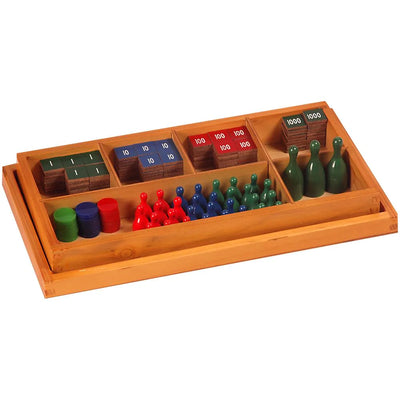
The Montessori Stamp Game is a foundational mathematics material designed to help children understand the decimal system and perform arithmetic operations (addition, subtraction, multiplication, division) through concrete representation. It typically consists of small wooden or plastic tiles, or 'stamps,' representing units, tens, hundreds, and thousands, often colour-coded green, blue, and red.
This hands-on approach allows children to physically manipulate quantities, building a strong conceptual understanding before moving to abstract symbols. It works because it engages multiple senses, making abstract mathematical ideas tangible and relatable. Parents can introduce this game to children typically from 4.5 to 5 years onwards, or whenever they show readiness for numbers beyond counting.
Why a DIY Stamp Game is Perfect for Your Indian Home
Living in India, we often value resourcefulness and creativity. A DIY potato stamp game perfectly embodies this spirit, making Montessori learning accessible right at home. It's budget-friendly, utilizes everyday items, and is adaptable to smaller spaces, whether you're in a metro apartment or a joint family home in a tier-2 city.
This activity encourages independent exploration and fine motor skill development, making it an excellent addition to your repertoire of Montessori activity kits. Grandparents can easily join in the fun, sharing their wisdom and helping little hands with the stamping process, fostering precious intergenerational bonds that are so central to Indian family life.
Crafting Your Own Potato Stamp Game: A Step-by-Step Guide
Let's get those creative juices flowing and transform ordinary potatoes into extraordinary learning tools!
What You'll Need:
- A few medium-sized potatoes
- A sharp knife (for adult use only!)
- Child-safe, washable paints (ideally green, blue, red to align with Montessori math colours)
- Paper or a notebook
- A marker pen
- Small plates or shallow bowls for paint
- Wet wipes or a damp cloth for quick clean-ups
Getting Started: Preparing Your Stamps
- Wash and Dry Potatoes: Ensure your potatoes are clean and dry for best stamping results.
- Cut for Units: Cut one potato in half. On the flat surface of one half, carefully carve out a small circle or a simple dot. This will be your 'unit' stamp (representing 1).
- Cut for Tens: Cut another potato in half. On its flat surface, carve out a long, thin rectangle or a line. This is your 'ten' stamp (representing 10).
- Cut for Hundreds: For the 'hundred' stamp, carve a larger square.
- Cut for Thousands: The 'thousand' stamp can be a triangle or a different distinctive shape.
- Colour Code (Optional but Recommended): Assign green paint for units, blue for tens, and red for hundreds and thousands. This visual consistency is key to Montessori mathematics materials.
Setting Up Your Workspace
Create a dedicated, inviting space for your child. Lay down old newspapers or a mat to protect surfaces. Arrange the paints in shallow dishes, ready for the stamps. Have plenty of paper within easy reach. In the Montessori method, a 'prepared environment' encourages focus and independence, even when it's just a corner of your living room.
Playing with Your DIY Potato Stamp Game: Fun Math Activities
Now for the exciting part – playing and learning! Remember to follow your child's lead and make it enjoyable.
Introduction to Numbers (1-9)
Start with the green unit stamp. Ask your child to stamp 'one' green circle, then 'two', and so on, up to 'nine'. Write the corresponding numeral next to each set of stamps. This simple activity helps consolidate number recognition and one-to-one correspondence, vital for Montessori mathematics materials.
Exploring Tens, Hundreds, Thousands
Once comfortable with units, introduce the blue ten-stamp. Explain that this single stamp represents 'ten' units. Stamp ten green circles, then stamp one blue line next to it, saying, "Ten units is the same as one ten." Repeat this for hundreds (red square) and thousands (red triangle), showing the relationship between quantities.
Simple Addition and Subtraction
For addition, you can write a simple problem like "2 + 3 = ?" Your child stamps two green units, then three more green units, and counts the total. For subtraction, start with a number of stamps, then "take away" (cover or wipe off) a certain number. This concrete manipulation makes abstract operations much clearer for developing minds.
The Montessori Magic Behind the Potato Stamps
The DIY stamp game is a hands-on way to introduce the decimal system and arithmetic operations. This works because it allows children to physically manipulate quantities, building a concrete understanding before moving to abstraction. Parents can observe their child's natural curiosity and readiness for more complex math concepts, fostering crucial cognitive development in Indian children.
This activity beautifully aligns with the Montessori principle of 'learning by doing,' offering Montessori activity kits at home without needing a formal classroom. It develops fine motor skills, concentration, and logical thinking – all essential building blocks for academic and life success. This approach to Montessori learning activities is highly effective for educational toys for toddlers and preschoolers.
Key Takeaways
- The DIY potato stamp game is a cost-effective, engaging way to introduce Montessori math concepts at home.
- It helps children understand the decimal system and basic arithmetic through hands-on manipulation.
- Utilizing everyday materials makes it perfect for adapting Montessori at home India.
- The activity fosters fine motor skills, concentration, and problem-solving abilities.
- Colour-coding (green, blue, red) aligns with traditional Montessori math materials for visual consistency.
- It's a wonderful opportunity for family bonding and shared learning experiences.
Frequently Asked Questions
Is the potato stamp game suitable for all ages?
While the traditional Stamp Game is introduced around 4.5-5 years, simpler potato stamping with just units can be fun for younger toddlers (2-3 years) to explore shapes, colours, and cause-and-effect. Always supervise young children, especially with paint.
How do I introduce the concept of units, tens, hundreds to my child?
Start with concrete examples. Show your child 10 individual green stamps, then one blue ten-stamp, explaining they represent the same quantity. Use stories or real-life scenarios to make the concepts relatable and engaging for their level of child development India.
What if my child just wants to play with the paint?
That's perfectly normal! Young children are often more interested in the process than the outcome. Let them explore the paint and stamps freely for a while. You can gently redirect later, perhaps by suggesting "Let's see how many green dots we can make." Embrace their curiosity!
How does this activity support Montessori learning at home in India?
This DIY activity promotes hands-on learning, independence, and an understanding of abstract concepts through concrete materials, which are hallmarks of the Montessori method. It encourages self-directed exploration using readily available materials, making Montessori at home India practical and joyful for families.
Creating your own Montessori materials like this potato stamp game is incredibly rewarding, fostering both creativity and crucial early learning skills. We hope this inspires you to bring more hands-on fun into your daily routine. For other high-quality Montessori method learning materials, remember to explore SkilloToys.com.