DIY Potato Stamp Game for Montessori Math Fun at Home
In the vibrant tapestry of Indian family life, where every corner of the home often serves multiple purposes, finding creative ways to engage children is a delightful challenge. If you're an Indian parent exploring or practicing Montessori at home, you know the magic of hands-on learning. Today, we’re bringing you a simple yet profound activity: a DIY stamp game using potatoes and paint. It’s an imaginative and budget-friendly way to introduce your little one to fundamental mathematical concepts, right from your kitchen!
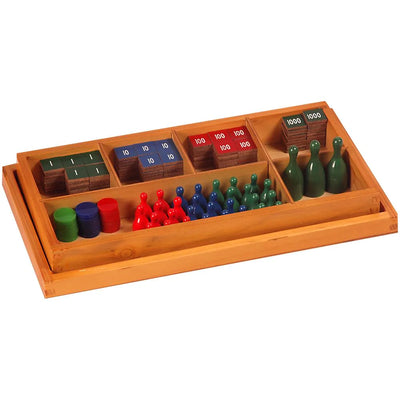
So, what exactly is the Montessori Stamp Game? The traditional Montessori Stamp Game is a concrete material designed to help children aged 4-8 years understand place value and the operations of addition, subtraction, multiplication, and division. It consists of small green, blue, and red squares, each representing units, tens, and hundreds respectively (thousands are also green, often larger). Children physically move these 'stamps' to compose and decompose numbers, making abstract arithmetic tangible and intuitive.
Why a DIY Potato Stamp Game is Perfect for Your Child
Bringing Montessori principles into your Indian home doesn’t always require elaborate materials. A DIY potato stamp game offers a fantastic alternative, especially when space is limited or you're looking for an activity that's easy on the pocket. This hands-on project encourages creativity, develops fine motor skills as children carve and stamp, and lays a solid foundation for mathematical understanding.
It’s a wonderful way to foster independence and a love for learning, embodying the spirit of Montessori learning materials. Plus, what could be more fun than playing with food and paint? This activity naturally fits into a busy household, offering a meaningful learning experience that doesn't feel like 'schoolwork'.
Understanding the Montessori Stamp Game Concept
The Montessori Stamp Game is designed to make abstract mathematical concepts concrete. This works because children can physically manipulate the 'stamps' representing different place values (units, tens, hundreds, thousands), building a foundational understanding of numbers and quantities. Parents can observe their child's innate logic and guide them through activities, fostering a deep, intuitive grasp of arithmetic.
Gathering Your Simple Materials (Potato Power!)
One of the best things about this DIY project is that most materials are likely already in your Indian kitchen or easily available at the local market. You’ll need:
- Medium-sized potatoes (about 4-5)
- Child-safe paints in green, blue, and red (and maybe yellow for thousands, or just reuse green)
- A sharp knife (for adult use only!)
- Paper or a small whiteboard for stamping
- A marker pen
- A shallow tray or old newspapers to protect your surface
Involving older children (with supervision) in washing the potatoes or choosing the paint colours can add to the excitement and give them a sense of ownership over their new learning tool.
Step-by-Step Guide to Crafting Your Stamps
Creating your potato stamps is a fun activity in itself! Here’s how:
- Prepare the Potatoes: Cut each potato in half. On the cut surface of one half, carefully carve out the number '1'. Repeat this for another half, carving '10'. On a third, carve '100', and on the fourth, '1000'. You can also simply cut four distinct shapes (e.g., a square for 1, a rectangle for 10, a triangle for 100, a circle for 1000) for a simpler approach, assigning values by shape and colour.
- Assign Colours: Prepare shallow dishes with a small amount of paint. Traditionally, units (1s) are green, tens (10s) are blue, and hundreds (100s) are red. For thousands (1000s), you can use green again (as in the traditional material) or a distinct colour like yellow for clarity in a DIY setup.
- Let Them Dry (Optional but Recommended): If you carved numbers, gently pat the potato stamps dry with a paper towel. This helps the paint adhere better and gives clearer impressions.
- Set Up Your Workspace: Lay down old newspapers or a large sheet of cardboard on your floor or table – perfect for small Indian apartments! Have your paper ready for stamping.
Engaging Your Child with the DIY Potato Stamp Game
Now comes the exciting part – playing and learning! Remember to always follow your child's lead and make it a joyful experience. This approach fosters genuine `child development India` style, embracing the child's natural curiosity.
Introduction to Place Value
Start simply. Begin with just the '1' stamps and the '10' stamps. Ask your child to stamp '3' (three '1' stamps) or '20' (two '10' stamps). Then, combine them: "Can you stamp 23?" They would stamp two '10's and three '1's. Gradually introduce '100' and '1000' stamps as their understanding grows. This concrete representation is key to understanding larger numbers.
Exploring Basic Operations (Addition & Subtraction)
Once your child is comfortable with place value, you can move to simple addition and subtraction. For example, for 23 + 12:
- Have them stamp 23 (two 10s, three 1s).
- Then stamp 12 (one 10, two 1s) below it.
- Count the 1s stamps together (3 + 2 = 5). Stamp five 1s.
- Count the 10s stamps together (2 + 1 = 3). Stamp three 10s.
- They will see the answer 35 emerge visually!
For subtraction, simply remove the required number of stamps. This hands-on manipulation is what makes Montessori `educational toys for toddlers` and older children so effective, helping them grasp abstract `Montessori learning activities` in a tangible way. For more advanced Montessori mathematics materials, you can explore options on our website.
Tips for Indian Homes
- Space-Saving: Use a small mat or a large puja thali to define the workspace. This helps contain the mess and makes clean-up easier, ideal for smaller living spaces.
- Grandparent Engagement: Involve grandparents! Their stories and patient guidance can add another layer of joy and learning to the activity, especially for `Montessori at home India` setups.
- Festival Themes: Integrate with festivals! During Diwali, stamp patterns of diyas; for Holi, use vibrant colours. Learning can be seamlessly woven into cultural celebrations.
- Clean-up is Part of the Fun: Teach your child to help wipe the potatoes, wash the paint dishes, and put away materials. It's a practical life skill and part of the complete learning cycle. You can find more ideas for engaging activities in our Montessori activity kits.
Key Takeaways
- The DIY potato stamp game is an accessible, fun, and cost-effective Montessori math activity for children aged 4-8.
- It helps children concretely understand place value and basic arithmetic operations (addition, subtraction).
- Materials are simple: potatoes, child-safe paint, knife (adult use), paper.
- Creating the stamps involves carving numbers (1, 10, 100, 1000) or using distinct shapes on potato halves.
- Engage children by starting with simple numbers and gradually introducing operations, always following their interest.
- This activity promotes fine motor skills, creativity, and a love for mathematics in a hands-on way.
FAQs about the DIY Potato Stamp Game
What is the ideal age for the DIY potato stamp game?
This activity is generally ideal for children aged 4 to 8 years. Younger children can enjoy the stamping process and basic number recognition, while older children can delve deeper into place value and arithmetic operations.
How does this DIY version compare to the original Montessori Stamp Game?
While the DIY potato stamp game provides a fantastic, hands-on introduction to the concepts of the Montessori Stamp Game, it's a simplified version. The original material offers precise sizing, durable components, and specific color coding that supports a more structured and extended mathematical exploration.
Can I use different materials instead of potatoes?
Absolutely! You can use sponges, erasers, or even wood blocks for your stamps. Potatoes are chosen for their ease of carving and accessibility, but any material that can hold a shape and absorb paint will work effectively.
How do I clean up after a potato stamp game?
Cleaning up is simple! Wipe excess paint from the potato stamps and store them in the refrigerator for a few days if you wish to reuse them. Wash paint dishes with water, and use old newspapers or a mat to protect your surfaces from any paint spills.
Where can I find more Montessori math resources?
For a comprehensive range of authentic Montessori mathematics materials and further guidance on integrating them into your child's learning journey, you can explore the extensive collection available on SkilloToys.com.
The joy of learning knows no bounds, especially when sparked by simple, creative activities at home. We hope this DIY potato stamp game brings much laughter and discovery to your family. For genuine Montessori materials and more inspiration, remember to visit SkilloToys.com, your partner in nurturing young minds.