DIY Potato Stamp Game: Montessori Math at Home
In Indian homes, where ingenuity often sparks the most wonderful ideas, bringing enriching activities to our children doesn’t always mean elaborate setups. Sometimes, the simplest things, like a humble potato from our kitchen, can transform into powerful learning tools. Today, let’s explore how to create a wonderful DIY stamp game using potatoes and paint, a fantastic way to introduce foundational Montessori math concepts to your child right at home.
This hands-on activity, perfect for little hands exploring Montessori learning activities, encourages concentration, fine motor skill development, and a concrete understanding of numbers, all while having oodles of fun with colours!
What is a Montessori Stamp Game and Why DIY It?
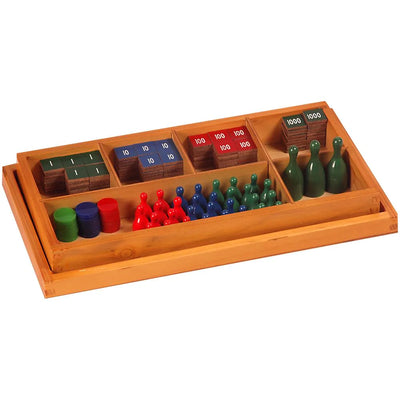
The traditional Montessori Stamp Game is a sophisticated mathematics material designed to introduce children to the decimal system and perform arithmetic operations like addition, subtraction, multiplication, and division. It uses small, coloured wooden or plastic stamps representing units, tens, hundreds, and thousands, helping children visualise abstract numerical concepts concretely.
The Montessori Stamp Game is a material that transitions children from concrete manipulation to abstract understanding of numbers. This works because it uses distinct, manipulable units to represent each place value, making the concepts of 1s, 10s, 100s, and 1000s tangible and relatable. Parents can create a similar, cost-effective experience at home with a DIY version, offering many of the same benefits for developing number sense and logical thinking.
Crafting Your DIY Stamp Game with Potatoes and Paint
Potatoes, a staple in every Indian kitchen, are not just for aloo gobhi! Their firm texture and ease of carving make them ideal for creating custom stamps. This activity is perfect for Montessori at home India setups, even in small apartments, and can involve the whole family, including grandparents.
Materials You'll Need (Desi Style!)
- 2-3 medium-sized potatoes
- A sharp knife (for adult use ONLY)
- Acrylic or tempera paints in green, blue, and red (or colours of your choice)
- Paper or a notebook for stamping
- A paintbrush (optional, for applying paint evenly)
- Markers or a pen
- A tray or old newspaper to protect your workspace
Step-by-Step Guide to Potato Stamping Fun
-
Prepare Your Potatoes: Wash and dry the potatoes. With the help of an adult, carefully cut each potato in half. You’ll get a nice flat surface for stamping.
-
Carve Your Stamps: On the cut side of each potato half, an adult can carve simple shapes. For the Montessori Stamp Game, we typically represent units with a green stamp, tens with a blue stamp, and hundreds with a red stamp. You could carve:
- A small circle or dot for Units (green paint)
- A short line or bar for Tens (blue paint)
- A larger square or triangle for Hundreds (red paint)
- For thousands, you can use a smaller version of the unit stamp or a different green shade.
Keep the shapes simple for easy recognition by your child.
-
Set Up Your Painting Station: Squeeze small amounts of green, blue, and red paint onto separate saucers or a palette. Have your paper ready. Perhaps an old dupatta or newspaper can cover your floor for easy cleanup, a common practice in Indian homes!
-
Introduce the Concept: Explain to your child that each stamp represents a different value. For instance, “This green stamp is for 1s, this blue one is for 10s, and this red one is for 100s.”
-
Start Stamping Numbers: Write a number on a piece of paper, for example, 345. Ask your child to represent it using the potato stamps. They would stamp 5 green units, 4 blue tens, and 3 red hundreds. Guide them gently, counting aloud as they stamp.
-
Experiment and Explore: Let your child stamp freely, creating patterns and exploring colours. This also counts as an excellent activity kit idea for fostering creativity and independent play.
Montessori Learning Activities: Benefits of Your DIY Stamp Game
This educational toy for toddlers and preschoolers offers a wealth of developmental advantages, aligning perfectly with Montessori principles.
Developing Number Sense and Place Value
By physically stamping units, tens, and hundreds, children gain a concrete understanding of how numbers are formed. They see that 10 units make one ten, and 10 tens make one hundred. This hands-on experience is crucial for building a strong foundation in mathematics, making abstract concepts more relatable. Explore more hands-on approaches with our Montessori mathematics materials.
Boosting Fine Motor Skills and Concentration
Holding the potato stamps, dipping them in paint, and carefully pressing them onto paper requires precision and control. These actions significantly enhance fine motor skills, hand-eye coordination, and finger strength. The focused nature of stamping, especially when trying to represent a specific number, also cultivates concentration and attention span, vital aspects of child development India.
Encouraging Creativity and Practical Life Skills
Beyond math, this activity allows for immense creative expression. Children can experiment with colours, create their own patterns, and enjoy the sensory experience of paint. Cleaning up after the activity also introduces practical life skills like responsibility and order, empowering them to participate in their environment, a core Montessori value.
Adapting for Different Ages (0-6)
-
Toddlers (1-3 years): Focus on simple stamping and colour recognition. Let them explore the textures and colours without the pressure of numerical representation. Simply stamping green, blue, and red can be a joyful sensory experience.
-
Preschoolers (3-5 years): Introduce the concept of units, tens, and hundreds using the stamps. Start with smaller numbers (e.g., 1-99) and then gradually move to three-digit numbers. Practice writing the number and then stamping it.
-
Early Elementary (5-6 years): For children ready for more, introduce simple addition or subtraction using the stamps. For example, stamp out 12 and then stamp out 3, and count the total. This lays the groundwork for arithmetic operations.
Key Takeaways
- A DIY potato stamp game offers a creative, low-cost way to teach Montessori math concepts at home.
- It significantly develops number sense, place value, and concrete understanding of numbers.
- The activity boosts fine motor skills, hand-eye coordination, and concentration.
- It encourages creativity, colour recognition, and introduces practical life skills.
- Potatoes are an easily accessible, natural, and eco-friendly material found in most Indian kitchens.
- The activity can be easily adapted for various age groups, from toddlers to early elementary children.
Frequently Asked Questions
What age is suitable for a DIY potato stamp game?
This activity is generally suitable for children aged 2.5 to 6 years. Younger children can enjoy the sensory aspect of stamping and colour recognition, while older preschoolers can begin to grasp number representation and place value.
How does this activity support Montessori principles?
It supports Montessori by providing a concrete, hands-on experience for learning abstract concepts. It allows for self-correction, encourages independent exploration, and appeals to a child's natural desire to manipulate materials and learn through doing.
Can I use other vegetables for stamping?
Absolutely! Carrots, bell peppers, apples (cut in half), or even okra (for a star shape) can be used. Experiment with what you have in your kitchen. The goal is to use natural, accessible materials.
What if my child just wants to play with the paint?
That's perfectly normal and part of the exploration! Allow them time for free exploration with the paint and stamps. Once their initial curiosity is satisfied, gently guide them back to the structured number representation aspect, or simply enjoy the creative play together.
How can I extend this activity for older children?
For older children, you can introduce larger numbers (thousands), simple addition or subtraction problems, or even multiplication. Ask them to create their own number problems and solve them using the stamps, reinforcing their learning in a fun way.
Creating learning tools from everyday items is a beautiful way to foster a love for discovery in your child, aligning perfectly with the spirit of Montessori. For more thoughtfully designed materials that support every stage of your child's development, do explore the curated collections at SkilloToys.com.