DIY Potato Stamp Game: Montessori Math Fun at Home
Ever wondered if you could bring the magic of Montessori math into your Indian home without breaking the bank? For many parents exploring Montessori at home India, the thought of expensive materials can be a hurdle. But what if we told you that one of the most fundamental math tools, the Montessori Stamp Game, can be beautifully recreated with something as simple and readily available as potatoes and a splash of paint? Yes, a DIY stamp game using potatoes and paint for children is not just possible, it's a delightful and engaging way to introduce early math concepts!
This creative activity transforms an everyday vegetable into a powerful learning tool, making abstract numbers tangible for your little one. It’s a wonderful example of how practical life skills can blend seamlessly with academic learning, even in a small apartment or a busy joint family home.
What is the Montessori Stamp Game and Why is it Important?
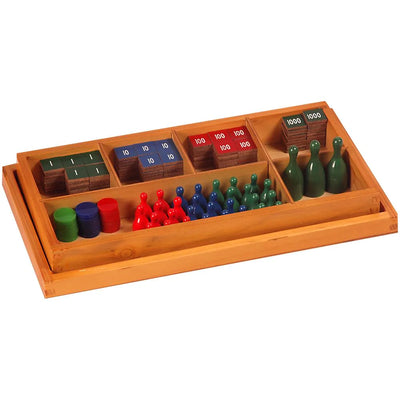
The traditional Montessori Stamp Game is a mathematics material designed to introduce children to the decimal system and basic arithmetic operations like addition, subtraction, multiplication, and division. It consists of small green, blue, and red wooden or plastic tiles representing units, tens, hundreds, and thousands, respectively. Children physically manipulate these 'stamps' to build numbers and solve problems, making abstract mathematical concepts concrete and understandable.
This material is crucial for developing a child's understanding of place value, which is a foundational concept for all future mathematical learning. By seeing, touching, and moving quantities, children internalise the relationship between numbers and their values. The DIY version achieves the same goal by providing a hands-on, visual, and tactile experience.
Potatoes to the Rescue: An Eco-Friendly & Economical Approach
Choosing potatoes for your DIY Stamp Game is not just about affordability; it’s about sustainability and resourcefulness, values deeply embedded in Indian culture. Potatoes are inexpensive, biodegradable, and provide a lovely texture for stamping. They offer a unique sensory experience that engages children more deeply than pre-made plastic alternatives.
This approach aligns perfectly with the spirit of Montessori – using what’s available in the child's environment to foster learning. Plus, involving your child in the creation process itself, from washing potatoes to selecting paints, adds another layer of practical life skill development and excitement for the upcoming math adventure.
Gathering Your Simple Materials
Before you begin carving, gather your materials. You will need a few medium-sized potatoes, child-safe tempera or acrylic paints in green, blue, and red (or colours of your choice), a sharp knife (for adult use only), paper or a notebook, and a small sponge or paintbrush for applying paint. A tray or old newspaper to protect your workspace is also a good idea.
Carving the Montessori Symbols: A Step-by-Step Guide
This is where the magic happens! With adult supervision, cut your potatoes in half. On the flat surface of each potato half, carefully carve the Montessori symbols:
- Green Dot: For Units (1s)
- Blue Bar/Line: For Tens (10s)
- Red Square: For Hundreds (100s)
- Green Triangle: For Thousands (1000s)
You’ll want to make several stamps for each value, especially for units and tens, to ensure you have enough for various operations. For instance, having 9 'unit' stamps, 9 'ten' stamps, 9 'hundred' stamps, and 9 'thousand' stamps will allow for comprehensive number building. Remember, the focus is on function, not perfection – a slightly imperfect potato stamp still works wonders!
Playing with Your DIY Stamp Game: Early Math Explorations
Once your potato stamps are ready and the paint is dry, it’s time to play! This DIY material is an excellent tool for developing educational toys for toddlers and preschoolers into foundational math skills.
Introduction to Place Value
Start by introducing your child to the concept of place value. Lay out a piece of paper and draw columns for units, tens, hundreds, and thousands. Ask your child to stamp numbers. For example, to stamp the number 2345, they would stamp two thousand triangles, three hundred squares, four ten bars, and five unit dots in their respective columns. This concrete representation helps them grasp that the '3' in 2345 doesn't just mean three, but three hundreds.
Basic Operations: Addition & Subtraction
Using the DIY stamp game, your child can visually perform simple addition and subtraction. For addition, they can stamp out two numbers and then count the total stamps for each place value, learning about carrying over when needed. For subtraction, they can stamp the larger number and then 'take away' stamps corresponding to the smaller number, which helps them understand borrowing.
While this DIY activity is fantastic, remember that professionally designed Montessori materials, like those found in our Montessori Mathematics Materials collection, offer precision and durability for long-term use, complementing your homemade creations beautifully.
Creative Play and Beyond
Don't limit the potato stamps to just math! Encourage your child to use them for creative expression. They can create patterns, design 'Rangoli'-inspired artwork, or even tell stories through their stamped creations. This free exploration fosters imagination and fine motor skills, making it a versatile addition to your collection of activity kits at home.
Montessori Principles in Action with Potato Stamps
The DIY potato stamp game embodies several core Montessori principles, making it a powerful Montessori learning activity for child development India.
This hands-on material is a 'concrete representation' of abstract math concepts. This works because children aged 3-6 are in the sensitive period for order and developing their mathematical mind; they learn best by doing and touching. Parents can guide their child through practical demonstrations, allowing them to internalise the rules of the decimal system at their own pace.
The act of stamping, counting, and arranging helps develop concentration, coordination, and independence. It allows children to self-correct as they visually verify the quantities they are representing. This simple activity promotes a deep understanding of numbers, far beyond rote memorisation.
Key Takeaways for Your DIY Montessori Math Adventure
- The DIY potato stamp game makes Montessori math accessible and affordable for home learning.
- It helps children understand place value and basic arithmetic through concrete, hands-on experience.
- Using potatoes promotes sustainability and resourcefulness in parenting.
- The activity enhances fine motor skills, concentration, and practical life skills during creation and play.
- It offers opportunities for both structured math learning and creative, open-ended play.
- This method aligns with Montessori principles of active learning and self-discovery for young children.
Frequently Asked Questions About DIY Montessori Math
What age is appropriate for the DIY potato stamp game?
Children typically aged 4-6 years can benefit greatly from the stamp game for understanding place value and basic operations. Younger children (3+) can enjoy the stamping and pattern-making aspect, developing fine motor skills and familiarity with numbers.
How long do potato stamps last?
Potato stamps are temporary. They are best used for a single session or day as they will start to dry out and shrivel. For longer-lasting alternatives, you could use dense sponges or even craft erasers, but potatoes offer a unique natural feel.
What kind of paint should I use for potato stamping?
Child-safe, washable tempera paint is ideal for easy cleanup. Acrylic paints also work well for stamping and offer vibrant colours, but might require quicker cleanup if you want to avoid staining hands or surfaces.
Can I make other Montessori materials with potatoes?
Absolutely! Potatoes can be used to make simple shape stamps (circles, squares, triangles) for sensorial sorting activities or even small 'counting items' for one-to-one correspondence exercises. Let your creativity guide you!
Embrace the joy of learning with everyday items, bringing authentic Montessori experiences right into your home. SkilloToys.com is dedicated to supporting your child's developmental journey, whether through innovative DIY activities or our curated range of Montessori learning materials.