Little Fingers, Big Brains: Fine Motor Skills & Intelligence
As Indian parents, we often marvel at our little ones' every milestone – from their first tentative steps to their adorable attempts at drawing a Ganesh or a rangoli design. We celebrate their curiosity and watch with joy as they explore their world. But have you ever considered the surprising link between fine motor skills and intelligence in your child's early years? It's a connection far deeper than you might imagine, impacting everything from problem-solving to academic readiness.
What exactly are fine motor skills? Fine motor skills are the coordinated movements of the small muscles, typically in the hands and fingers, working in sync with the eyes. This works because these precise movements engage complex neural pathways, enhancing brain development and cognitive function. Parents can nurture these skills by providing opportunities for hands-on exploration and purposeful play, right from their tiny tot's infancy.
Why Little Hands Mean Big Brain Gains
Maria Montessori, the visionary pioneer of the Montessori Method, observed over a century ago that the hand is the instrument of human intelligence. She understood that through their hands, children literally 'build' their brains. Every time your child grasps, pinches, threads, or cuts, they are sending signals to their brain that strengthen neural connections, laying the groundwork for higher-order thinking and problem-solving.
This isn't just about dexterity; it's about connecting brain regions. The act of manipulating objects stimulates areas of the brain responsible for language, spatial reasoning, and critical thinking. It’s a foundational process that helps children make sense of their environment and develop a deeper understanding of concepts, preparing them for more complex learning later on.
Montessori at Home India: Practical Life Activities
In our bustling Indian homes, opportunities for developing fine motor skills are abundant! Simple everyday activities, often called 'Practical Life' exercises in Montessori, are perfect. Think about involving your child in folding clothes for the puja, helping knead atta for chapatis, or even pouring water from a small jug for their own glass during meal times. These seemingly small tasks are powerful Montessori learning activities that build independence and dexterity.
Providing child-sized tools, like a small broom for sweeping up after a snack or a miniature mortar and pestle for grinding soft spices for play, empowers them. These activities not only refine their hand movements but also foster concentration and a sense of contribution within the family. It's about respecting the child's innate desire to participate and giving them the means to do so effectively.
Boosting Early Literacy & Math Skills
The link between fine motor skills and intelligence extends directly into early academics. Consider handwriting: the ability to hold a pencil correctly and form letters is entirely dependent on fine motor control. Children who struggle with this often find writing frustrating, which can impede their desire to learn and participate in classroom activities.
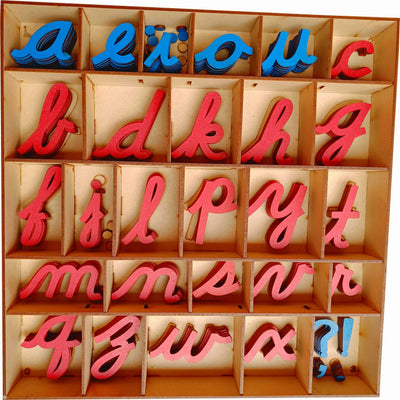
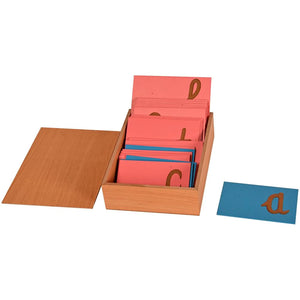
Montessori materials are specifically designed to prepare children for reading and writing. Take the Sandpaper Letters, for example. Tracing the textured letters with their fingers helps children internalise the shape and sound of each letter, engaging multiple senses and building crucial pre-writing skills. Similarly, stacking the Pink Tower helps develop pincer grip and spatial awareness, foundational for geometry and mathematics.
Educational Toys for Toddlers: More Than Just Play
When choosing educational toys for toddlers, especially those under six, look for items that encourage manipulation, sorting, and building. These aren't just for 'keeping them busy'; they are vital brain builders. Traditional Indian games involving small pieces or threading beads (like a simple bead stringing activity for a mala) are wonderful examples that we can bring into our modern homes.
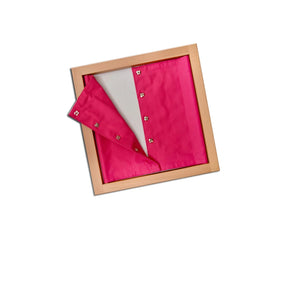
In a world increasingly dominated by screens, offering tactile, hands-on toys is more important than ever. Materials like threading beads, lacing cards, puzzles, block sets, and even simple play dough encourage children to use their fingers, strengthening hand muscles and eye-hand coordination. These engaging activities help develop a precise grip, crucial for everything from eating independently to buttoning clothes and writing.
The Cognitive Benefits Go Beyond Academics
Beyond reading and writing, strong fine motor skills are linked to broader cognitive benefits. When a child meticulously places small beads or tries to fit a tricky puzzle piece, they are developing problem-solving abilities, patience, and concentration. These are key aspects of executive function, which governs planning, focus, and impulse control – skills essential for success in school and life.
Observing a child deeply engrossed in a threading activity or carefully transferring grains of rice with a spoon reveals their developing capacity for sustained attention. This focus, cultivated through repeated, purposeful movements, directly contributes to their overall intelligence and ability to learn complex concepts later on. It’s a quiet, powerful preparation for a lifetime of learning.
Key Takeaways
- Fine motor skills (small hand and finger movements) are directly linked to cognitive development and overall intelligence in children aged 0-6.
- Maria Montessori's philosophy highlights the hand as a crucial tool for brain development, enabling children to build their intellect through purposeful manipulation.
- Practical Life activities, integrated into daily routines in Indian homes, are excellent for refining fine motor control and fostering independence.
- Strong fine motor skills are foundational for academic readiness, including pre-writing, reading, and mathematical understanding.
- Montessori materials like Sandpaper Letters and the Pink Tower are specifically designed to enhance these skills and prepare the child's hand for learning.
- Purposeful educational toys, rather than passive screen time, are essential for stimulating tactile exploration and strengthening hand-eye coordination.
- Developing fine motor skills cultivates crucial cognitive abilities like concentration, problem-solving, and executive function, setting children up for future success.
What age is critical for developing fine motor skills?
The period from birth to six years is most crucial. This is when the brain is rapidly developing, and children are naturally driven to explore their environment through touch and manipulation, laying the foundation for all future learning and skill acquisition.
How can I encourage fine motor development at home without expensive toys?
You don't need fancy toys! Simple activities like tearing paper into strips, squeezing sponges during bath time, threading beads for a Diwali decoration, or helping with small cooking tasks (like rolling dough) are incredibly effective. Even using clothes pegs to hang doll clothes or helping sort pulses for cooking can be a fun activity.
Does screen time affect fine motor skills?
Excessive screen time can indeed hinder fine motor development as it typically involves passive viewing or limited, repetitive finger movements, rather than the varied, purposeful manipulation that builds strength and coordination. Prioritise hands-on play and real-world interactions for optimal development.
Are Montessori learning activities good for child development in India?
Absolutely! Montessori learning activities are universally beneficial, and their emphasis on practical life, sensory exploration, and independence integrates beautifully into the Indian context. They encourage children to engage with their surroundings and develop skills relevant to their daily lives, family routines, and cultural heritage.
What are some easy educational toys for toddlers for fine motor skills?
Simple puzzles with large knobs, stackable blocks, threading beads, lacing cards, and shape sorters are excellent choices. Look for toys that require pinching, grasping, twisting, and placing, which all help strengthen the small muscles in their hands and fingers and promote hand-eye coordination.
Understanding this profound connection between little fingers and bright minds empowers us to make conscious choices for our children's development. At SkilloToys.com, we believe in nurturing this potential with carefully curated Montessori educational toys that make learning an joyful, hands-on journey. Let's give our children the tools they need to flourish!