Montessori Children Excel in Executive Function Studies
As parents in India, we all dream of our children growing up to be independent, thoughtful, and capable individuals. We often notice how some children navigate challenges with remarkable ease, showing focus and self-control that seems beyond their years. This isn't just luck; it’s often the result of robust executive functions, which are significantly nurtured in a Montessori environment. Indeed, studies consistently show that Montessori children score higher in executive function studies, setting them up for greater success in school and life.
So, what exactly are executive functions? Think of them as the brain's command center – a set of mental skills that help us plan, focus attention, remember instructions, and juggle multiple tasks successfully. They include working memory (holding information in mind), cognitive flexibility (adapting to new situations), and inhibitory control (managing impulses). These are crucial for everything from solving a complex math problem to planning a fun family activity during Diwali or even simply remembering where to put your shoes away after coming home.
The Montessori Way: Nurturing Brain Power from an Early Age
Maria Montessori's philosophy, developed over a century ago, intuitively understood how children learn and grow. Her approach, which emphasizes self-directed activity and hands-on learning, is perfectly aligned with strengthening these vital executive functions. Let's explore how this happens, often right in the comfort of an Indian home.
The Prepared Environment: A Foundation for Order and Focus
Imagine a small corner in your Indian apartment, thoughtfully arranged with child-sized furniture and accessible activities. This is the essence of a Montessori 'prepared environment.' Children are given the freedom to choose their own work, focus without interruption, and return materials to their proper places. This seemingly simple routine builds a strong sense of order, encourages decision-making, and fosters concentration – all critical components of executive function. It teaches them to plan their actions and follow through, much like they might learn to sort pulses or help organise spices in a traditional Indian kitchen.
Practical Life Activities: Hands-On Learning for Self-Control
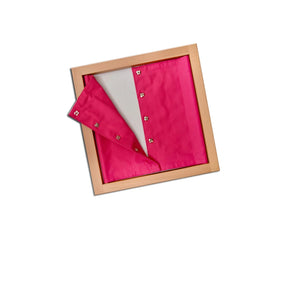
From pouring water without spilling to buttoning their own kurta, Montessori practical life activities are designed to develop independence and fine motor skills. In an Indian household, this could extend to children helping fold laundry, preparing simple snacks like fruit chaat, or watering plants in the balcony garden. Each step requires sequential thinking, attention to detail, and persistence. By engaging with purposeful tasks, children learn inhibitory control (resisting the urge to rush) and build their working memory (remembering the steps of an activity). These Montessori method learning materials and toys are not just playthings; they are tools for growth.
Sensorial Exploration: Sharpening the Mind's Tools
Montessori sensorial materials are designed to isolate and refine the senses. Think of the Pink Tower, where children grade blocks by size, or the Sound Cylinders, where they match pairs of sounds. These activities directly train a child's discrimination, observation, and problem-solving abilities. When a child works with Montessori sensorial materials, they are actively engaging their working memory to recall differences and similarities, and their cognitive flexibility to adapt their approach if a solution isn't immediately obvious. It's like learning to identify different spices by smell or distinguish between various fabrics by touch – skills deeply rooted in our Indian heritage.
Freedom Within Limits: Cultivating Self-Regulation
A core Montessori principle is 'freedom within limits.' Children are free to choose their work, work at their own pace, and repeat activities as often as they like. This autonomy, however, comes with the responsibility of respecting others and the environment. This delicate balance helps children develop strong self-regulation – the ability to control their emotions and behaviours. When a child chooses to complete a challenging activity, even when they'd rather be doing something else, they are exercising their executive function muscles, learning to delay gratification and persist towards a goal. This is crucial for positive child development in India.
The Uninterrupted Work Cycle: Fostering Deep Concentration
Unlike environments with frequent transitions or interruptions, Montessori encourages long, uninterrupted work periods. This allows children to enter a state of deep concentration, often referred to as 'flow.' Such sustained focus is incredibly powerful for developing attention span and inhibitory control. When a child is deeply engrossed in building a structure or working with sandpaper letters, their brain is learning to filter out distractions, a cornerstone of strong executive function. This practice of quiet, focused work is an invaluable gift we can give our children, even amidst the bustling energy of an Indian joint family.
Executive function is the brain's air traffic control system, guiding our thoughts and actions with precision. This works because Montessori intentionally designs activities and environments that consistently challenge and strengthen these mental muscles, fostering an internal discipline rather than relying solely on external controls. Parents can support this by offering age-appropriate, purposeful educational toys for toddlers and encouraging independent exploration and a calm space for Montessori learning activities at home in India.
Key Takeaways: Why Montessori Nurtures Executive Function
- Montessori fosters vital executive functions like planning, focus, working memory, and self-control.
- The prepared environment encourages order, independent decision-making, and deep concentration.
- Practical life activities build sequential thinking, fine motor skills, and self-reliance.
- Sensorial materials enhance discrimination, observation, and problem-solving abilities.
- Freedom within limits cultivates self-regulation, discipline, and impulse control.
- Uninterrupted work cycles train sustained attention and focus, crucial for cognitive development.
Frequently Asked Questions About Montessori and Executive Function
What exactly are executive functions?
Executive functions are a set of cognitive skills that help us manage our thoughts and actions. They include working memory (remembering information), cognitive flexibility (adapting to new situations), and inhibitory control (managing impulses and staying focused).
How can I support executive function development at home in India?
You can support it by creating an organised space, offering purposeful activities like helping with chores, providing open-ended educational toys, allowing for independent choice within safe limits, and encouraging focused playtime without constant interruptions.
Are Montessori children really 'smarter' than others?
Montessori doesn't necessarily make children 'smarter' in a general sense, but it does excel at nurturing key cognitive and socio-emotional skills, like executive functions, that are strong predictors of academic and life success. This leads to better problem-solving, adaptability, and self-regulation.
At what age can I start Montessori at home?
You can begin implementing Montessori principles at home right from birth! Focusing on a prepared environment, encouraging independence, and offering age-appropriate activities can start even with infants and become more structured as children reach toddlerhood (0-3 years) and preschool ages (3-6 years).
Do Montessori toys help with executive function?
Absolutely! Montessori educational toys are specifically designed to be purposeful, self-correcting, and to engage children in focused, hands-on learning. They challenge children to concentrate, problem-solve, and follow sequential steps, directly strengthening various executive function skills.
Understanding why Montessori children often excel in executive function studies empowers us as parents. By incorporating these principles and using well-designed Montessori learning materials, we can lay a powerful foundation for our children's future, right here in our Indian homes. Explore SkilloToys.com for a wide range of authentic Montessori educational toys that support this incredible journey.