Montessori Math at Home: Concrete to Abstract Learning
As Indian parents, we often dream of giving our children the very best start, especially when it comes to education. Whether you're homeschooling or simply looking to enrich your child's learning journey at home, understanding the Montessori math sequence can transform how your little one perceives numbers and quantities. It’s a natural, joyful path that respects your child's innate curiosity.
At SkilloToys.com, we believe in empowering parents with insights into child development India, helping them create nurturing environments. Today, let's explore how Montessori brings numbers to life, guiding children from tangible experiences to complex mathematical understanding, perfectly suited for a home setting.
What is the Montessori Math Sequence?
The Montessori math sequence is a structured, hands-on approach that introduces mathematical concepts progressively, moving from the concrete to the abstract. This method works because it aligns with a child's natural developmental stages, allowing them to first physically manipulate and experience quantities before associating them with symbols and abstract ideas. Parents can implement this by providing a prepared environment with specific Montessori learning materials that invite exploration and discovery.
It’s not about rote memorization, but about building a deep, intuitive understanding of numbers, their relationships, and how they function. Imagine your child not just reciting numbers, but truly 'feeling' what three or ten means through touch and sight. This foundation is crucial for developing strong early math skills.
The Montessori Math Journey: Step-by-Step at Home
Maria Montessori observed that children are naturally drawn to order and precision. Her mathematics curriculum harnesses this, starting with very simple, tangible representations and gradually increasing complexity. Here's how this sequence typically unfolds, adaptable for your Indian home.
Building Foundational Number Sense (Ages 2.5-4 years)
Before numbers, children learn 'pre-math' skills like sorting, grading, and one-to-one correspondence. Activities like separating rajma and chana, or arranging objects from smallest to largest, build crucial logical thinking. For numbers 1-10, materials like the Montessori Number Rods allow children to physically compare lengths, associating each rod with a quantity.
At home, this might look like counting the number of flowers for your daily puja, distributing equal portions of laddoos to family members, or matching pairs of socks from the laundry. These everyday interactions, often involving grandparents or joint family members, are powerful Montessori learning activities that lay a strong groundwork for understanding quantity.
Introducing Symbols and Quantities (Ages 3.5-5 years)
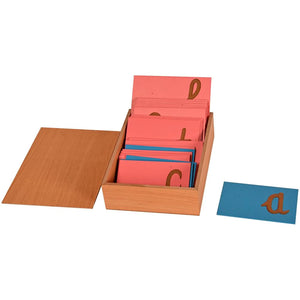
Once a child has a concrete understanding of quantities, we introduce the symbols. Materials like the Sandpaper Numerals allow children to trace the shape of numbers, connecting the visual form to the quantity they already understand. The Spindle Boxes then reinforce the connection between the numeral (symbol) and the number of objects (quantity), with zero being introduced as the absence of quantity.
This stage is about linking the 'how many' to the 'what it looks like'. You can extend this by asking your child to identify house numbers on your street, or count the number of guests expected for a festival like Diwali, relating the symbol to the real-world count. These practical experiences strengthen their number sense for preschoolers.
Exploring Operations and Place Value (Ages 4-6 years)
This is where children begin to grasp the concept of addition, subtraction, multiplication, and division, all still very concretely. The Golden Beads are a quintessential Montessori material here, allowing children to physically build numbers up to thousands, and then carry out operations by combining or separating the beads.
Imagine your child using the Golden Beads to 'add' two groups of beads, experiencing the sum directly. This makes abstract concepts like borrowing and carrying tangible. In an Indian home, this could translate to sharing sweets equally among cousins, or 'managing' small amounts of money for a trip to the local market – activities that involve real-life 'calculations' and help children understand the value of numbers in a practical context.
Moving Towards Abstraction (Ages 5-6+ years)
As children master the concrete materials, they gradually transition to more abstract representations. Materials like the Stamp Game and Bead Frames help them move towards mental calculations, building upon their solid foundation. They start to perform operations without needing the physical quantities in front of them, but with the strong visual and tactile memory of their earlier work.
This transition is key. It's not about abandoning the materials, but about the child internalizing the concepts. Encourage them to solve simple problems in their head, like 'If we have 5 rotis and eat 2, how many are left?' These mental exercises, rooted in their concrete experiences, are vital for developing strong mathematical reasoning.
Creating a Montessori Math Environment at Home
To support this beautiful journey, a few simple adjustments in your home can make a world of difference for Montessori at home India:
- Prepared Space: Dedicate a small, accessible area for educational toys for toddlers and younger children. A low shelf where math materials (or even simple counting objects like stones, shells, or bindis) are neatly arranged invites exploration.
- Quality Materials: Invest in a few good Montessori learning materials. SkilloToys.com offers a range of high-quality, durable wooden toys and math aids that support this progression.
- Observation, Not Instruction: Your role is to present the material, observe your child's engagement, and offer help only when needed. Allow them to discover and make mistakes; that's where true learning happens.
- Patience is Key: Every child develops at their own pace. Don't rush through the sequence. Allow ample time for repetition and mastery at each stage.
- Connect to Culture: Incorporate counting during festivals, discussing patterns in rangoli, or measuring ingredients for traditional recipes. This grounds the learning in your child’s cultural reality.
Key Takeaways for Montessori Math at Home
- Montessori math is a hands-on, sequential journey from concrete experiences to abstract understanding.
- It builds a deep, intuitive number sense rather than relying on rote memorization.
- The sequence starts with pre-math skills (sorting, grading) and progresses to symbols, quantities, and operations.
- Materials like Number Rods, Sandpaper Numerals, and Golden Beads are central to this learning.
- Creating a prepared environment with accessible materials and observing your child's pace are crucial.
- Incorporating everyday Indian cultural contexts enhances the learning experience.
Frequently Asked Questions About Montessori Math at Home
What age should we start Montessori math at home?
You can begin introducing pre-math concepts like sorting and counting as early as 2.5 to 3 years. Formal work with materials like Number Rods usually starts around 3.5 to 4 years, depending on your child's readiness and interest.
Do I need expensive Montessori materials for math?
While authentic Montessori materials are highly effective, you can start with simpler, homemade alternatives or natural objects for counting and sorting. SkilloToys.com offers high-quality, durable Montessori mathematics materials that are an investment in your child's long-term learning.
How can I make Montessori math fun for my child?
The Montessori approach itself makes learning fun by allowing self-discovery and hands-on exploration. Present materials with enthusiasm, let your child choose their activities, and connect math to playful, real-life scenarios like counting toys or sharing snacks with friends.
What if my child isn't interested in math activities?
Don't force it. Observe what interests your child and try to integrate math concepts into those areas. Perhaps they love cooking – measure ingredients together. Or they love building – count blocks. Sometimes, simply stepping back and re-presenting the material another day can spark interest.
Embracing the Montessori math sequence at home offers a powerful way to nurture your child's mathematical mind, building a foundation of confidence and joy in numbers. At SkilloToys.com, we are committed to providing the finest educational resources to support every Indian family on this incredible learning journey.