Montessori Math Sequence: Concrete to Abstract at Home
In our bustling Indian homes, whether in a sprawling joint family setup or a cosy city apartment, parents often seek meaningful ways to nurture their child's learning. When it comes to mathematics, the thought of 'teaching' can feel daunting. But what if we told you that children have a natural, almost magical, inclination towards numbers? The Montessori method, developed by Dr. Maria Montessori, offers a beautiful, systematic way to introduce the Montessori math sequence, moving from the concrete to the abstract, right here at home.
This approach isn't about rote memorisation; it's about building a deep, intuitive understanding of mathematical concepts. It respects the child's developmental stages, offering materials that they can touch, manipulate, and explore, thereby internalising complex ideas through their own discoveries. Imagine your little one's joy as they 'see' and 'feel' what a number truly represents!
What is the Montessori Math Sequence?
The Montessori math sequence is a pedagogical journey that introduces mathematical concepts in a progressive, hands-on manner. It begins with very tangible, sensorial experiences and gradually transitions to abstract symbols and operations. This works because it caters to the child's natural learning style, moving from what they can perceive directly with their senses to what they can comprehend intellectually. Parents can implement this by providing carefully designed materials and observing their child's readiness, allowing them to lead their own learning.
The Concrete Foundation: Building Number Sense (0-5 Years)
For our little learners, numbers are initially just words. The Montessori approach helps them connect these words to actual quantities. Think of the excitement a toddler shows when helping their Dadi count out a dozen bananas for the week's groceries!
Exploring Quantity with Number Rods
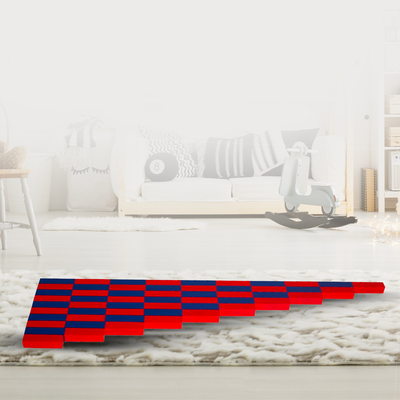
The journey often begins with Montessori mathematics materials like the Red and Blue Number Rods. These rods vary in length, representing quantities from one to ten. A child doesn't just learn 'one, two, three'; they physically carry the 'one' rod, then the 'two' rod, feeling the increasing weight and length. This concrete experience lays a solid foundation for understanding quantity.
Spindle Boxes and Counters
Next, activities like the Spindle Boxes help children associate a symbol (the numeral) with a quantity. They learn that '3' isn't just a squiggly line, but the count of three actual spindles. At home, you can use rajma beans, small stones from your garden, or even little colourful bindis as counters. These are wonderful educational toys for toddlers that foster early number recognition and counting skills.
Connecting Quantity to Symbol: The Road to Abstraction (3-6 Years)
Once a child has a firm grasp on quantity, the next step in the Montessori math sequence is to introduce the abstract symbols – the numerals themselves. This is where the magic of linking 'how many' to 'what it looks like' happens.
Sandpaper Numerals and Number Rods (Revisited)
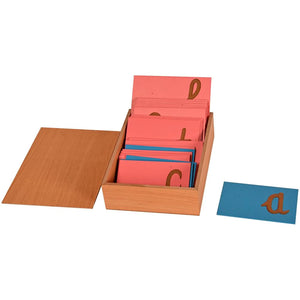
Sandpaper Numerals allow children to trace the shape of numbers with their fingers, engaging their tactile sense. This reinforces the visual memory of the numeral. Soon after, the Number Rods are paired with corresponding numeral cards, bridging the gap between the physical rod and its abstract symbol. Imagine the satisfaction on your child's face when they match the '5' card to the 'five' rod!
Teen and Ten Boards
As they progress, materials like the Teen and Ten Boards introduce children to the concept of place value and the formation of numbers beyond ten. They physically combine '10' with '1' to make '11', '10' with '2' to make '12', and so on. This hands-on experience demystifies larger numbers, which is crucial for child development in India, preparing them for more complex calculations later.
Embracing Abstraction: Operations and Place Value (4-6+ Years)
With a strong foundation, children are now ready to explore mathematical operations – addition, subtraction, multiplication, and division – using materials that still offer a concrete representation, but are a step closer to abstract thought.
The Golden Beads and Stamp Game
The Golden Bead Material, representing units, tens, hundreds, and thousands, allows children to perform large arithmetic operations with tangible beads. They can literally see 1000 beads being divided into groups of 100. This is followed by the Stamp Game, which uses small tiles (stamps) representing units, tens, hundreds, and thousands, offering a more abstract yet still manipulative way to perform operations. These Montessori learning activities provide a deep, conceptual understanding before ever needing a pen and paper.
Montessori Math at Home: Practical Tips for Indian Families
Bringing the Montessori math sequence into your Indian home is simpler than you might think. You don't need a dedicated classroom; a prepared corner or even a mat on the floor works wonders.
- Utilise Everyday Items: Count idlis on a plate, group colourful bangles, or sort pulses into bowls. These everyday tasks are fantastic for developing early math skills.
- Involve Grandparents: Our elders are a treasure trove of knowledge and patience. Grandparents can engage children in counting flower petals for puja, or even distributing sweets during Diwali, naturally integrating math into cultural practices.
- Create a Prepared Environment: Ensure materials are accessible and inviting. A small shelf with a few carefully chosen Montessori math materials can make a big difference. Rotate materials to keep interest high.
- Follow the Child: Observe your child's interest and readiness. If they're fascinated by counting, offer more counting activities. If they're exploring patterns, provide materials for that. This 'Montessori at home India' approach truly respects the individual learner.
- Embrace Language: Use precise mathematical language naturally. Instead of just 'more,' say 'greater quantity' or 'sum.'
Key Takeaways for Montessori Math at Home
- The Montessori math sequence progresses systematically from concrete, hands-on experiences to abstract understanding.
- It respects the child's natural pace and innate curiosity, fostering a love for numbers.
- Early activities focus on associating quantity with number names through sensorial materials.
- Later stages bridge the gap between quantity and abstract numerals, then move to operations.
- Parents can effectively implement Montessori math at home using everyday items and dedicated materials.
- Involving family and integrating math into cultural activities strengthens learning.
FAQ about Montessori Math for Homeschooling
How early can I start Montessori math with my child?
You can begin introducing foundational math concepts as early as infancy through sensory play and everyday counting. Formal Montessori math materials typically start being introduced around 2.5 to 3 years of age, aligning with a child's absorbent mind and developing coordination.
Do I need special Montessori materials for math at home?
While authentic Montessori materials offer unparalleled benefits, you can start with many DIY alternatives using household items. As your child progresses, investing in key materials from a trusted source like SkilloToys.com can significantly enhance their learning journey.
How is Montessori math different from traditional methods?
Montessori math emphasises hands-on, self-correcting exploration of concepts before abstract memorisation, unlike traditional methods that often begin with abstract symbols. It focuses on understanding 'why' math works rather than just 'how' to get the answer, building a deep conceptual foundation.
What are some simple Montessori math activities for a small Indian apartment?
In a small apartment, use practical life activities like sorting and counting pulses (dal), setting the table for family meals, or counting items during grocery unpacking. You can also create DIY number cards or use small wooden toys for one-to-one correspondence and simple addition.
Embracing the Montessori math sequence at home is a gift you can give your child, fostering a lifelong love for learning and numbers. At SkilloToys.com, we are passionate about providing high-quality, authentic Montessori and educational toys that support this incredible journey for Indian families, from concrete beginnings to abstract mastery.