Montessori Puzzle Maps: Geography Lessons for Young Children
Picture this: your little one, nestled comfortably on the living room floor, meticulously fitting a colourful piece of wood into a larger shape, completely absorbed. It’s not just any puzzle; it’s a continent, a country, a piece of our vast world coming together right before their eyes. This beautiful engagement is the magic of Montessori puzzle maps, offering fascinating geography lessons for young children right here in their Indian homes.
Many Indian parents, especially those exploring or practicing Montessori at home India, often wonder how to introduce complex subjects like geography in an age-appropriate and engaging manner. The Montessori approach makes it not just possible, but delightful, transforming abstract concepts into concrete, hands-on experiences.
What Are Montessori Puzzle Maps?
Montessori puzzle maps are distinct wooden puzzles representing continents, countries, or states, where each political entity is a separate, precisely cut piece. This works because children learn through their senses; by touching, holding, and placing each piece, they form a strong, multi-sensorial impression of the world's geography. Parents can introduce these maps as early as 2.5 to 3 years, starting with simple continent maps and gradually progressing to more detailed country maps.
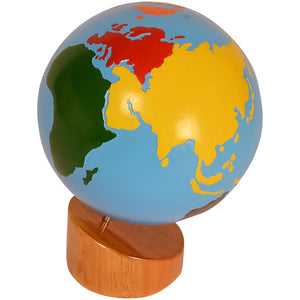
Each piece often has a knob for easy grasping, perfect for developing fine motor skills alongside cognitive understanding. The colour-coding for continents also helps children visually differentiate and remember their names, preparing them for future learning without rote memorisation.
Why Geography Matters in Early Childhood
For young children, understanding their place in the world begins with their immediate surroundings. Geography extends this understanding, fostering a natural curiosity about different places, cultures, and peoples. It's about nurturing a global perspective from a young age.
Introducing geography early on supports holistic child development India. It helps children grasp concepts of scale, distance, and diversity. Imagine explaining how Diwali is celebrated differently in North India versus South India, or how relatives live in various states – these real-life connections make geography tangible and relevant.
Getting Started with Montessori Puzzle Maps at Home
Integrating Montessori geography into your home learning environment, even in a small apartment, is simpler than you think. The key is to follow the child's interest and provide prepared materials in an accessible way.
Introducing the Continent Puzzle Map
Start with the world continent map. Present it by showing your child how to carefully remove and replace each continent piece, naming it as you do. Focus on the sensorial experience – the weight of the wood, the shape of each landmass. You might say, “This is Asia, where we live!” or “This is Africa, with its vast deserts.”
Encourage your child to explore freely. They might just enjoy fitting the pieces, which is excellent for developing concentration and problem-solving skills, much like any educational puzzle. Over time, you can introduce the names of the continents and their unique characteristics, perhaps by pointing out pictures of animals or landmarks from each.
From Continents to Countries: Expanding the Worldview
Once your child is familiar with the continents, you can introduce more detailed maps, like the India puzzle map. This helps them understand their own country’s states and their geographical relationships. Imagine identifying your grandparent’s village in Uttar Pradesh or tracing the route to your ancestral home in Kerala!
These Montessori learning activities can be wonderfully enriched with stories. Tell tales of different regions during festivals, or show photos of family trips. Children often connect deeply with personal narratives, making the abstract shapes on the map come alive with meaning and personal relevance.
Integrating Puzzle Maps into Daily Life
The beauty of Montessori is its integration into everyday life. Keep the puzzle maps accessible in your child’s learning space. When a relative calls from another state, point it out on the India map. When you see news about a flood in Kerala or a festival in Rajasthan, locate it together.
These are not just educational toys for toddlers; they are tools for understanding the world. They foster conversations, spark questions, and lay the foundation for a deep appreciation of global diversity. Even grandparents can join in, sharing stories of their youth and journeys, connecting generations through geography.
Montessori at Home: Tips for Indian Families
In Indian homes, especially in joint families or smaller urban apartments, space might be a consideration. A dedicated shelf or a sturdy mat can serve as a “work area.” Remember, Montessori isn’t about perfect environments, but about thoughtful preparation. Use simple, local materials for extensions: draw flags on chart paper, collect pebbles to mark locations, or make a small 'passport' for imaginary journeys.
The emphasis is on respect for the child's concentration and providing opportunities for independent exploration. The more hands-on and self-directed the learning, the deeper the engagement and understanding will be.
Key Takeaways for Montessori Geography at Home
- Montessori puzzle maps offer a sensorial and hands-on approach to teaching geography to young children.
- They support fine motor skill development, concentration, and problem-solving alongside geographical understanding.
- Introducing geography early fosters global awareness and curiosity about diverse cultures.
- Start with continent maps, then progress to more detailed country and state maps, linking to real-world experiences.
- Integrate geography into daily conversations, family stories, and current events to make learning relevant.
- Montessori at home is adaptable to various living spaces, focusing on prepared materials and independent exploration.
Frequently Asked Questions About Montessori Geography
What age is best to introduce Montessori puzzle maps?
Montessori puzzle maps can be introduced as early as 2.5 to 3 years old, starting with the simpler continent maps. The child's readiness for more detailed maps, like individual countries, typically develops between 3.5 and 5 years, depending on their interest and concentration levels.
How can I make geography fun at home without a lot of space?
Even in small spaces, geography can be fun. Use a designated mat for the puzzle maps, incorporate storytelling, sing songs about continents, or play "I Spy" with map pieces. Focus on the quality of interaction rather than the size of the learning area.
Are Montessori puzzle maps only for children interested in geography?
Not at all! Montessori puzzle maps are multi-faceted. They develop fine motor skills, visual discrimination, and problem-solving, making them beneficial even for children who don't initially show a strong interest in geography. Their hands-on nature appeals to a wide range of learning styles.
Where can I find quality Montessori geography materials in India?
SkilloToys.com is India's leading Montessori educational toys store, offering a wide range of high-quality Montessori geography materials, including various puzzle maps and related learning aids. You can explore our collection of Montessori geography materials designed to support your child's learning journey.
At SkilloToys.com, we believe in empowering Indian parents with thoughtfully designed Montessori materials that bring the world into your child's hands. Explore our full range of educational toys and embark on an exciting journey of discovery with your little one today!