Montessori Puzzle Maps: Geography Lessons for Young Children
Ever wondered how to make the vast subject of geography accessible and exciting for your little explorer, right here in your Indian home? It might seem daunting to teach continents and countries to tiny hands, but with the right approach, it’s not only possible but incredibly fun. That’s where Montessori puzzle maps come in, offering a unique, hands-on pathway to understanding our amazing world.
Montessori geography lessons are designed to capture a child's natural curiosity and make abstract concepts concrete. Instead of memorising names, children build their understanding through touch, sight, and problem-solving. It’s an approach that respects their developmental stage and fosters a genuine love for learning.
Making Geography Engaging with Montessori Puzzle Maps
What exactly are Montessori puzzle maps? A Montessori puzzle map is a wooden puzzle where each piece represents a distinct country or state within a continent, or each continent in the case of the world map. Each piece has a small knob, inviting the child to grasp and manipulate it, making it an ideal puzzle for developing fine motor skills and spatial reasoning.
This works because the tactile experience grounds the abstract idea of a 'country' or 'continent' in a physical object. Parents can present these maps as a sensorial activity, allowing children to feel the shapes, trace the borders, and later, learn the names and locations. It’s a foundational step in early childhood education that ignites a lifelong interest in cultures and places.
Why Montessori Geography Works for Little Ones
Maria Montessori observed that children have an absorbent mind, especially between the ages of 0 and 6 years. They soak up information from their environment effortlessly. The puzzle maps cater to this by providing a self-correcting, hands-on material that allows children to learn at their own pace.
When a child picks up a puzzle piece representing India, they not only see its shape but feel its contours. This multi-sensory engagement strengthens their memory and understanding far more than just looking at a picture in a book. It’s a wonderful example of effective Montessori learning activities that encourage independence.
Starting Your Geography Journey at Home
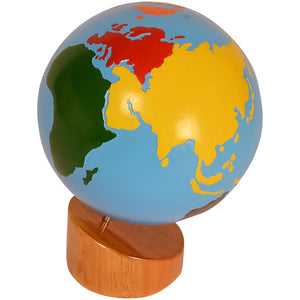
Introducing geography using Montessori puzzle maps can begin as early as 2.5 to 3 years of age, or whenever your child shows interest in puzzles. Start with the World Map, presenting the continents one by one. You can trace them, talk about their colours (each continent has a specific Montessori colour), and relate them to stories or animals.
Perhaps you have family living in another country – point it out on the map! If you're looking for quality Montessori geography materials, SkilloToys.com offers excellent options that are durable and designed for little hands. These are fantastic additions to any home aiming for a comprehensive Montessori learning environment.
Beyond the Map: Expanding Your Child's World
Once your child is familiar with the puzzle maps, you can expand their learning. Introduce flags, traditional clothing from different regions, or even food items. For Indian parents, this offers a fantastic opportunity to explore the diverse geography of our own country, from the Himalayas to the coastal plains, or even the states of our beautiful nation.
Connecting the map to real-life experiences makes the learning resonate deeper. Show them pictures of places on the map, sing songs about countries, or even cook a simple dish from a particular region. This holistic approach supports strong child development in India, fostering not just knowledge but also cultural appreciation.
Integrating Geography into Daily Life
In many Indian homes, with grandparents and joint families, there are often rich stories of travel or ancestral places. Use these narratives to bring the maps to life! During festivals, you can discuss where the traditions originated or how they are celebrated in different parts of India or the world. For instance, explaining the diverse ways Diwali is celebrated across states.
Even in a small apartment, you can create a 'geography corner' with a map, a globe, and books. This helps reinforce that learning about the world is a natural and continuous process. It’s about building a sense of global citizenship from a young age, fostering an understanding that we are all connected, a vital lesson for Montessori at home India.
Connecting to Nature and Our Planet
Geography isn't just about political boundaries; it's also about physical features. Introduce concepts like mountains, rivers, and oceans. Take your child to a local park and talk about the trees and plants, connecting it to the idea of ecosystems. Discussing how different regions on the map have different climates and landscapes helps children grasp environmental awareness early on.
Simple discussions about weather patterns, seasonal changes, or where our food comes from can all be tied back to geographical understanding. This enriches their general knowledge and encourages a sense of wonder about the planet they inhabit. Such exploration through play is key to making educational toys for toddlers truly impactful.
Key Takeaways
- Montessori puzzle maps are tactile, self-correcting tools for early geography education.
- They engage multiple senses, aiding memory and understanding of abstract concepts.
- Introduce maps around 2.5-3 years, starting with the World Map and continents.
- Connect map learning to real-life experiences, family stories, and local culture.
- Expand learning with flags, cultural items, and discussions about nature and environment.
- Montessori geography fosters a global perspective and cultural appreciation from a young age.
Frequently Asked Questions
When should I introduce Montessori puzzle maps to my child?
Children can typically begin exploring Montessori puzzle maps around 2.5 to 3 years of age, or when they show an interest in puzzles and manipulating objects. Start with the World Map, presenting one continent at a time, and observe your child's engagement.
What's the best way to present a Montessori puzzle map?
Present the map on a clean work mat. Begin by removing and replacing a few pieces, demonstrating how to grasp the knob and fit them back. Encourage your child to explore freely, tracing the shapes and feeling the pieces, without pressure to name everything initially.
Can I make my own geography materials at home?
While the quality and precision of authentic Montessori materials are ideal, you can supplement with DIY activities. Drawing and colouring continent outlines, creating continent boxes with small objects representing each landmass, or using playdough to shape countries can all enhance learning.
How do puzzle maps support holistic child development in India?
Montessori puzzle maps foster fine motor skills, problem-solving, and spatial reasoning. They also cultivate a global perspective, cultural awareness, and a sense of interconnectedness, which is particularly relevant in India's diverse and rich cultural landscape, promoting respect and understanding.
Embarking on a geography journey with your child using Montessori puzzle maps is a rewarding experience. It’s about igniting curiosity and building a foundation for understanding our incredible planet. Explore our range of Montessori materials at SkilloToys.com and bring the world to your child's fingertips.