Montessori Way to Raise Bilingual Kids in India
In many Indian homes, it's common for children to hear two, three, or even more languages spoken from birth. This rich linguistic tapestry is a beautiful advantage, and with the Montessori method, you can empower your child to embrace it fully. Learning how to navigate raising bilingual children the Montessori way in India means respecting their natural capacity for language and creating an environment that nurtures it effortlessly.
Raising bilingual children the Montessori way is about providing a prepared environment that respects the child's innate drive to communicate. This approach works because Maria Montessori observed that children from birth to six years have an 'absorbent mind,' a remarkable ability to soak up information from their environment, especially language. Parents can create a language-rich home by offering consistent, clear exposure to multiple languages through conversation, stories, and engaging activities.
Why Bilingualism Matters for Indian Children
Beyond the practical benefits, bilingualism offers profound advantages for child development India. Children who grow up speaking multiple languages often exhibit enhanced cognitive flexibility, problem-solving skills, and a deeper understanding of cultural nuances. For Indian children, it means connecting effortlessly with grandparents (nani-dadi), understanding family traditions, and participating fully in festivals where different regional languages might be spoken. It's a bridge to their heritage and a passport to a global future.
The Montessori Philosophy for Language Acquisition
The Montessori approach views language as a key to human connection and understanding. During the sensitive period for language (roughly 0-6 years), children are incredibly receptive to acquiring new vocabulary and grammar. The role of the adult isn't to 'teach' language in a didactic way, but to be a 'guide' and a model, providing precise language in a calm and consistent manner. We focus on enriching the child's environment with words, sounds, and experiences.
One Parent, One Language (OPOL) or Contextual Language Approach?
Many parents wonder about the 'best' method. The One Parent, One Language (OPOL) strategy, where each parent consistently speaks a different language to the child, is popular globally. However, in Indian joint families or smaller apartments, where grandparents and other relatives might also be involved and speak regional languages or 'ghar ki boli', a strict OPOL can be challenging.
A contextual language approach often works wonderfully in India. This means assigning languages to specific environments or people. For instance, Hindi or the regional language at home, English for educational materials, and another regional language with grandparents. The key is consistency within the chosen context. Clarity in language exposure, rather than rigid separation, prevents confusion and builds strong foundations.
Creating a Language-Rich Montessori Home Environment
A language-rich environment is one where children are constantly exposed to language in a meaningful and engaging way. This is at the heart of Montessori at home India. It's not about expensive gadgets, but about thoughtful interaction and accessible materials.
- Talk, Read, Sing: Narrate your day, read stories in both languages, and sing traditional lullabies or rhymes. Point to objects and name them clearly in the designated language for that interaction.
- Labeling the Environment: For older toddlers, use simple labels on objects around the home (e.g., "door / darwaza") to connect the written word with the object and its sounds in both languages.
- Diverse Books: Invest in books in both languages, featuring stories that resonate with Indian culture and universal themes. Read aloud daily, encouraging interaction and questions.
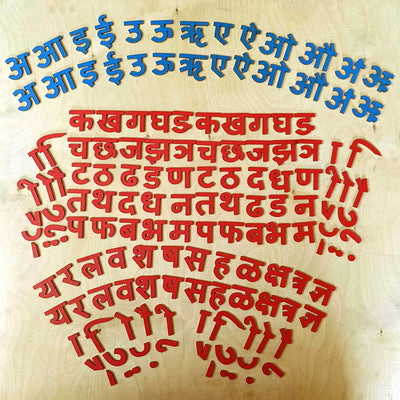
- Montessori Language Materials: SkilloToys offers excellent Montessori language materials designed to make learning tangible. Think about sandpaper letters for tactile learning of sounds and letter shapes in English and Hindi script, or movable alphabets to construct words. Picture cards (nomenclature cards) depicting everyday objects, animals, or Indian festivals are also fantastic for building vocabulary in both languages.
- Storytelling & Puppetry: Use puppets or create simple story bags with props to tell familiar tales or invent new ones in both languages. This makes language dynamic and imaginative, fostering educational toys for toddlers a joy.
- Cultural Connection: Discuss Indian festivals, family recipes, or local flora and fauna using terms from both languages. This anchors language learning in real-life, culturally relevant experiences.
Respecting the Child's Pace
Children acquire language at their own unique pace. There's no need to pressure them or correct every grammatical error. Instead, model correct language through your own speech. If your child says, "I saw a kutta," you can respond, "Oh, you saw a dog? That's wonderful!" This gentle approach encourages communication without instilling a fear of making mistakes.
Observe your child's interests and respond to their cues. If they are fascinated by animals, use animal nomenclature cards in both languages. If they love cooking, involve them in simple kitchen activities, naming ingredients and actions. This natural engagement makes language learning a joyful journey rather than a chore.
Key Takeaways
- Indian homes offer a unique advantage for raising bilingual children due to inherent linguistic diversity.
- The Montessori approach leverages the child's absorbent mind (0-6 years) for natural language acquisition.
- Consistency in language exposure, whether through OPOL or a contextual approach, is crucial.
- Create a language-rich environment with diverse books, conversations, and specific Montessori materials.
- Utilize resources like sandpaper letters, movable alphabets, and picture cards for tangible language learning.
- Integrate Indian cultural context (festivals, stories) to make language learning relevant and engaging.
- Respect the child's individual pace and foster language development through observation and gentle guidance, not correction.
Frequently Asked Questions
Is it confusing for children to learn two languages at once?
No, children's brains are remarkably wired for language acquisition, especially during the early years. Exposure to multiple languages simultaneously does not typically cause confusion; rather, it often enhances cognitive flexibility and problem-solving skills. Any temporary mixing of languages is a normal part of the bilingual journey.
When is the best time to start teaching multiple languages?
The optimal time to introduce multiple languages is from birth. During the 0-6 sensitive period for language, children absorb sounds, vocabulary, and grammatical structures with incredible ease. The earlier the exposure, the more naturally they will acquire both languages.
How can I ensure my child speaks both languages well?
Consistency is key. Ensure regular and meaningful exposure to both languages in various contexts. Engage in conversations, read books, sing songs, and use language materials daily. Actively use both languages in your home, making them a natural part of your child's everyday life.
What if my child mixes languages (code-switches)?
Code-switching is a very common and normal phenomenon in bilingual children. It indicates that they are effectively navigating their linguistic knowledge. Instead of correcting, simply repeat the sentence correctly in the target language. For example, if they say "I want pani," you can respond, "You want water? Here's some water."
Can Montessori help with learning regional Indian languages?
Absolutely! The Montessori principles of providing a prepared environment, hands-on materials, and respecting the child's pace are perfectly suited for learning any language, including regional Indian languages like Kannada, Bengali, or Marathi. Materials like sandpaper letters can be adapted for local scripts, and traditional stories and songs become wonderful language tools.
Embracing bilingualism the Montessori way offers a wonderful gift to your child, connecting them to their roots and preparing them for the world. Explore SkilloToys.com for a range of thoughtfully designed Montessori educational toys and materials that support this incredible journey.