Pretend Play Builds Math Skills in Young Children
Imagine your little one setting up a pretend chai shop, meticulously counting out imaginary rupees or arranging 'biscuits' in neat rows. Or perhaps they're playing 'ghar-ghar,' dividing rotis equally among their dolls. What if we told you these seemingly simple games are directly building crucial mathematical thinking skills in your child?
It’s true! The delightful world of make-believe isn't just about fun and fantasy; it's a powerful, hands-on classroom. Many Indian parents, especially those exploring or practising Montessori at home, might be surprised to learn how profoundly pretend play builds mathematical thinking, laying a strong foundation for future academic success.
What is Mathematical Thinking in Pretend Play?
Mathematical thinking in pretend play is the natural, intuitive application of early math concepts like counting, sorting, sequencing, pattern recognition, measurement, and problem-solving, all while engaging in imaginative scenarios. This works because children are actively manipulating quantities, comparing sizes, understanding order, and solving 'problems' within their play. Parents can easily foster this by providing open-ended materials and joining in their child's imaginative adventures.
Think about the precision involved when your child arranges tiny utensils for a doll's tea party – that's one-to-one correspondence in action! When they decide which 'vegetables' to put in their shopping cart, they're sorting and categorising. These are foundational skills that even young toddlers begin to grasp, long before formal schooling.
The Hidden Math in Everyday Pretend Play
From the bustling streets of Bengaluru to a quiet corner in a joint family home, children are constantly observing and imitating. When they mimic everyday activities – a parent cooking, a shopkeeper weighing produce, or a pujari arranging offerings – they are engaging with mathematical concepts in incredibly organic ways.
Consider a child pretending to be a grocer. They might count out five 'apples' (blocks), weigh them on a toy scale, and then give change. This single scenario involves counting, estimation, measurement, and basic arithmetic. When they set up a mini vegetable market using real vegetables or colourful blocks from their activity kits, they're learning about quantity, categorisation, and even economic exchange.
Sequencing and Patterns: More Than Just Play
Sequencing is vital for understanding narratives and, crucially, for algebra. When a child pretends to cook a meal, they follow a sequence: 'first chop the onions, then fry them, then add tomatoes.' This order is a direct precursor to understanding steps in a mathematical problem. Similarly, arranging beads or coloured fabrics to create 'rangoli' patterns during festive play builds early geometry and pattern recognition skills.
Even in a small Indian apartment, children can set up a 'railway track' with cushions and learn about length and spatial reasoning. The beauty of Montessori learning activities is that they often mirror these real-life, hands-on experiences, making learning concrete and meaningful.
Montessori's View: Play is the Child's Work
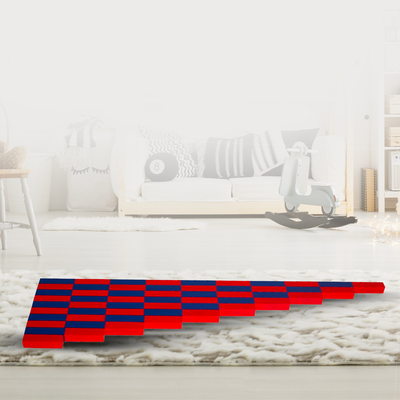
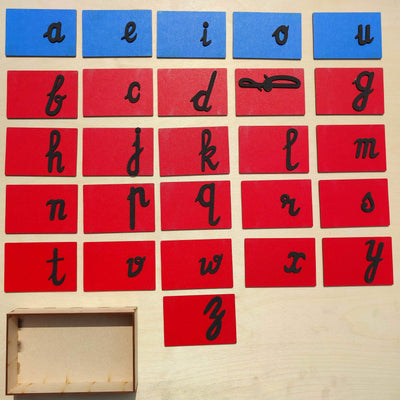
Dr. Maria Montessori famously stated that 'play is the child's work.' She recognised that through purposeful activity, children develop concentration, coordination, independence, and a deep understanding of the world. While Montessori classrooms use specific didactic materials like the Pink Tower for visual discrimination of size or sandpaper letters for tactile literacy, the philosophy extends to valuing self-directed, imaginative play at home.
For parents seeking educational toys for toddlers, it's not always about structured lessons. Providing open-ended materials that encourage pretend play, like kitchen sets, dollhouses, or even simple cloths and baskets, aligns perfectly with the Montessori approach. These materials invite children to explore, experiment, and naturally build their Montessori method learning materials and mathematical minds.
Practical Tips for Encouraging Math-Rich Pretend Play at Home
- Observe and Join In: Watch your child's play. If they're 'cooking,' ask, 'How many spoons of salt do we need?' If they're setting up a shop, ask, 'How much for this one?' and encourage them to count.
- Provide Open-Ended Materials: Simple items like blocks, pebbles, leaves, small bowls, scarves, and old clothes can become anything a child imagines. These are often more effective than highly prescriptive toys.
- Real-Life Scenarios: Encourage playing roles from your daily Indian life. A 'sweets shop' during Diwali, a 'tailor' measuring clothes, or a 'doctor' checking family members – these are rich in mathematical opportunities.
- Involve Grandparents: Grandparents often have a wealth of traditional games and stories that involve counting, sorting, and sequencing. Their participation can enrich pretend play, bridging generations and cultural understanding.
- Make Space, Even in Small Homes: Even in compact living spaces, designate a small corner for pretend play. A blanket over two chairs can become a 'house,' and a small basket can hold 'ingredients' for cooking.
Key Takeaways
- Pretend play is a direct and powerful way for children aged 0-6 to develop mathematical thinking.
- Children apply concepts like counting, sorting, sequencing, and measurement during imaginative play.
- Montessori philosophy values purposeful, self-directed play as essential for child development.
- Everyday Indian scenarios like playing shopkeeper or cooking for festivals offer rich math-learning opportunities.
- Parents can encourage math-rich pretend play by observing, joining in, and providing open-ended materials.
Frequently Asked Questions
How does pretend play teach counting and number sense?
In pretend play, children naturally count objects like 'customers,' 'food items,' or 'coins.' This hands-on experience helps them understand one-to-one correspondence and the quantity that each number represents, building a strong foundation for number sense.
What specific mathematical skills does role-playing build?
Role-playing helps build skills in counting, sorting, classifying, pattern recognition, sequencing, spatial reasoning (e.g., arranging furniture), measurement (e.g., 'how long' is this cloth), and basic problem-solving (e.g., 'how do we fit all these items in the basket?').
Are there Montessori toys that specifically support mathematical pretend play?
While many Montessori materials are structured, open-ended Montessori-aligned toys like building blocks, stacking rings, play kitchen sets, and sorting boxes are excellent for pretend play. They allow children to manipulate objects, encouraging natural mathematical exploration and discovery.
How can I encourage pretend play in a small Indian apartment?
Utilise multi-functional items like cushions, blankets, and baskets for versatile play. Focus on vertical spaces with shelves, and rotate toys to keep the play area fresh and engaging. Even a small corner can become a vibrant imaginary world for your child.
At SkilloToys.com, we believe in nurturing every aspect of your child's development through thoughtful, engaging play. Explore our range of Montessori-aligned toys and resources designed to spark imagination and build foundational skills, right here in India.