Why Montessori Classrooms Skip Desks in Rows
Have you ever walked into a Montessori classroom and noticed something striking? There are no traditional desks lined up in neat, imposing rows. Instead, you'll find open spaces, small tables, and children often working on the floor or at individual stations. This isn't a design accident; it's a fundamental choice rooted deeply in Maria Montessori's philosophy of child development. The real reason Montessori classrooms have no desks in rows goes far beyond aesthetics; it's about nurturing a child's natural drive to learn, move, and grow.
So, what exactly defines a Montessori classroom environment? It is a 'prepared environment' — a carefully designed space that supports children's natural development, allowing them to explore and learn at their own pace. Unlike conventional settings, it prioritizes freedom of movement, choice, and concentration, all crucial for a child's holistic development in India and worldwide.
Freedom of Movement: The Core Principle
Imagine a child in an Indian home. They spend much of their day playing, exploring, and even helping with 'ghar ka kaam' on the floor. Maria Montessori observed that children learn best when they are active, using their entire body. Desks in rows restrict this natural impulse to move, explore, and interact with their surroundings.
In a Montessori environment, children are free to choose their activity, move materials from shelves to their workspace (be it a table or a mat on the floor), and return them when finished. This freedom is vital for developing gross motor skills and spatial awareness, laying a strong foundation for future learning and overall child development in India.
Learning is Active, Not Passive
Think about how we learn as adults. We often engage in hands-on tasks, experiments, or discussions rather than just passively listening. Children are no different. They are active constructors of their own knowledge.
Montessori education embraces this by replacing passive listening with active engagement. Children don't sit still for long lectures; instead, they are engaged with tangible, self-correcting Montessori learning materials like the Pink Tower, Sandpaper Letters, or the Movable Alphabet. This hands-on approach caters to various learning styles and helps children internalize concepts more deeply.
The Prepared Environment: A World of Discovery
The Montessori prepared environment is a thoughtfully designed space where children can freely explore and engage with self-correcting learning materials. This works because it respects the child's inherent desire for independence and provides opportunities for concentrated work without constant adult intervention. Parents can replicate elements of this by creating a simple, organized 'work area' at home, allowing children to choose activities, much like they would with educational toys for toddlers.
Practical Life: Learning from Everyday Chores
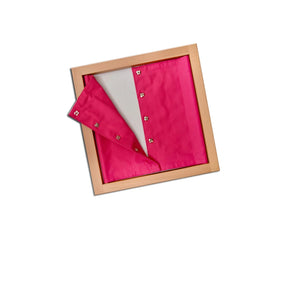
Many Indian parents observe their children's fascination with household activities – from sweeping with a small broom to helping knead dough for rotis. Montessori's practical life exercises mirror this natural inclination, offering activities like pouring, spooning, buttoning, and cleaning.
These activities, often done at small, child-sized tables or on floor mats, develop coordination, concentration, and a sense of responsibility. They are an integral part of practical life materials, teaching children valuable life skills and contributing to their independence, just as helping Dadi-Maa prepare for Diwali helps them feel included and capable.
Fostering Independence and Self-Discipline
When children are given the freedom to choose their work and move about, they naturally develop a strong sense of independence. They learn to make decisions, manage their time, and follow through on tasks without constant supervision. This autonomy leads to self-discipline – not imposed by an external authority, but cultivated from within.
Without the rigid structure of desks in rows, children learn to navigate their social environment, negotiate space, and respect others' work. This encourages collaborative learning and problem-solving, skills essential for navigating the world outside the classroom.
From Classroom to Home: Montessori at Home India
The beauty of the Montessori philosophy is that it's not confined to a classroom. Indian parents can easily apply these principles to create a stimulating environment, even in smaller apartments or joint family homes. Consider:
- Creating a dedicated, accessible shelf for a few chosen Montessori learning activities at a time.
- Allowing your child to move freely and choose activities on their own mat or small table.
- Involving them in simple household chores appropriate for their age, like dusting, watering plants, or helping set the dinner table.
- Prioritizing open spaces for play over cluttered furniture.
These practices foster concentration, independence, and a love for learning, echoing the Montessori classroom's core values.
Key Takeaways
- Montessori classrooms intentionally omit desks in rows to encourage freedom of movement and active learning.
- This design supports children's natural drive to explore, choose, and engage with their environment.
- The prepared environment and practical life activities are central to fostering independence and self-discipline.
- Children learn through hands-on interaction with specific Montessori materials, not passive listening.
- Parents can adapt these principles for effective Montessori at home India, promoting child development in everyday settings.
Frequently Asked Questions
Why is freedom of movement so important in Montessori?
Freedom of movement is crucial because children learn through their bodies and senses. Restricting movement hinders their natural exploration, coordination development, and ability to engage actively with their learning materials.
How does a child learn without a teacher constantly directing them?
In Montessori, the environment and materials are designed to be self-correcting. Children learn by doing, experimenting, and discovering solutions independently, with the teacher acting as a guide rather than a lecturer.
Can I create a Montessori environment at home without special furniture?
Absolutely! The core principles involve accessibility, order, and child-sized tools, not specific furniture. Using low shelves, floor mats, and involving children in practical life tasks are great starting points for Montessori at home India.
What are 'practical life activities' and how do they benefit toddlers?
Practical life activities are everyday tasks like pouring water, buttoning clothes, or sweeping. They benefit toddlers by developing fine motor skills, concentration, independence, and a sense of contribution to the family.
The absence of desks in rows is a powerful statement about trust in the child's innate capabilities. By understanding this core philosophy, Indian parents can transform their homes into environments that truly nurture their child's potential. Discover more such insights and explore a range of authentic Montessori learning materials at SkilloToys.com.