Gross Motor Skill Progression: Building Blocks of Movement
Gross motor skills build on each other in a sequential, interconnected manner, where mastery of simpler movements forms the essential foundation for more complex physical abilities. Child development experts agree that understanding this gross motor skill progression is crucial for nurturing holistic physical development, from a child's first roll to their confident stride. This insight empowers parents, from Bengaluru's bustling metros to quieter towns, to create an environment that naturally supports their child's unfolding movement journey.
What are Gross Motor Skills?
Gross motor skills are the abilities that involve the large muscles of the body, enabling movements like rolling, sitting, walking, running, and jumping. This matters because these foundational skills are directly linked to a child's independence, confidence, and capacity to engage with their surroundings. Indian parents can actively support this development by providing a prepared environment that encourages ample free movement and exploration.
The Montessori View: Readiness and the Prepared Environment
Maria Montessori observed that children possess an innate drive to move and explore, a drive she called the “absorbent mind” for movement. She believed that rather than teaching specific movements, our role as adults is to prepare an environment that invites exploration and practice at the child's own pace. This emphasis on readiness means respecting a child's developmental timeline, allowing them to master rolling before pushing them to sit, or crawl before standing. Research consistently highlights the importance of child-led play for optimal development, a principle UNICEF echoes in its “It's Right to Play” initiative.
In many Indian homes, with grandparents often playing a central role, there's a beautiful tradition of letting children explore naturally. This aligns perfectly with the Montessori philosophy. Providing safe, open spaces, whether a corner in a joint family living room or a designated play area in an apartment, is crucial for fostering interconnected gross motor skills.
The Interconnected Web of Gross Motor Development
The concept that gross motor skills are not isolated achievements but a complex, interconnected network is gaining significant attention. A recent Nature article ('Mapping relationships among gross motor skills...') highlighted how network analysis can map these relationships in children, reinforcing what Montessori educators have observed for decades: each skill is a vital node supporting others. Here's how this progression typically unfolds:
Building Core Strength and Stability: The Foundation
Before a child can stand tall, they need a strong core. Movements like rolling, tummy time, and crawling are not just adorable milestones; they are intensive core workouts. When baby Aanya in her Mumbai flat pushes up during tummy time, she's strengthening the back and abdominal muscles crucial for sitting independently. Similarly, the cross-lateral movement of crawling builds coordination between the brain hemispheres, a vital precursor for balance and laterality. Studies indicate that a strong core developed in infancy significantly impacts later posture, balance, and even fine motor control for tasks like writing.
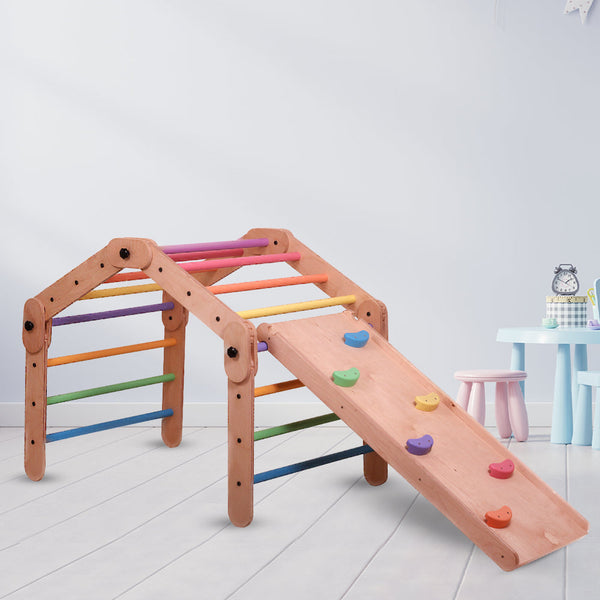
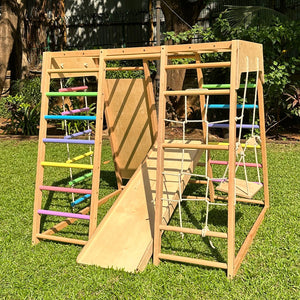
Encourage tummy time from birth and provide a safe mat or play gym where infants can roll freely. As they grow, low climbing structures or soft blocks encourage reaching and pushing, enhancing this foundational strength.
Developing Balance and Spatial Awareness: Standing Tall
Once a child develops core stability, they naturally begin to pull themselves up, cruise, and eventually take those triumphant first steps. This stage is all about balance and coordination development. Think of little Rohan in his Bengaluru home, holding onto the sofa, trying to balance on one foot. Each wobbly step, each fall and recovery, is a lesson in proprioception – the body's sense of its position in space. This skill is critical not just for walking, but for navigating crowded festival gatherings or playing safely in a park.
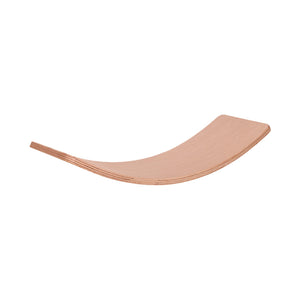
Montessori activities like pushing a small, weighted trolley or walking on a line drawn on the floor (the “walking on the line” exercise) are excellent for refining balance. Simple balance boards or stepping stones also offer fantastic opportunities for children to challenge and refine their equilibrium.
Refining Coordination and Agility: Active Exploration
As children master walking, their world expands. They want to run, jump, climb, and throw. These actions demand increasingly sophisticated large muscle development in children, combining strength, balance, and fine-tuned coordination. A child learning to climb stairs, holding their grandparent's hand, is integrating multiple gross motor skills: stepping, balancing, and using their leg and core muscles dynamically.
Activities like throwing and catching balls, skipping rope, or navigating a simple obstacle course built with cushions and furniture at home foster agility and bilateral coordination. Encourage outdoor play where possible, allowing children to run freely, climb on safe playground equipment, and engage in traditional Indian games like gilli-danda (with appropriate supervision) which naturally build these complex skills.
Nurturing Holistic Physical Development in an Indian Home
Supporting your child's gross motor skill progression doesn't require elaborate setups. It's about thoughtful observation and providing opportunities. Here's how Indian parents can foster this development:
- Create Movement Zones: Designate a safe area at home, free from clutter, where your child can move freely. This might be a rug in the living room or a corner of the bedroom.
- Embrace Outdoor Play: Whenever possible, let children explore parks, open grounds, or even the society's common area. Running, climbing, and exploring uneven surfaces are invaluable. The “It's Right to Play” ethos is particularly relevant here, encouraging unstructured outdoor time.
- Montessori-Inspired Activities: Offer simple, purposeful Montessori gross motor activities. A small wooden stool for stepping up, a low bar to pull themselves to standing, or a simple beanbag for throwing and catching are all excellent.
- Involve Them in Daily Chores: Let them help carry light groceries, push a small cart, or water plants. These real-life tasks naturally engage large muscle groups.
- Respect Their Pace: Avoid comparing your child's milestones with others. Every child develops uniquely, and the focus should be on their personal progression, not rushing them through stages.
The Link to Cognitive and Fine Motor Skills
The benefits of robust gross motor development extend far beyond physical prowess. Research consistently demonstrates a strong correlation between physical activity and cognitive development, including improved attention, memory, and problem-solving skills. Moreover, well-developed gross motor skills provide the stable base needed for refined fine motor movements. As The Times of India recently highlighted “5 fun tricks to supercharge fine motor skills in your child”, it's crucial to remember that strong core and shoulder stability (gross motor) directly support steady hands for writing, drawing, and manipulating small objects (fine motor skills). This holistic connection underscores why investing in holistic physical development is an investment in your child's entire future.
By understanding how each gross motor skill builds upon the last, Indian parents can confidently guide their children towards a lifetime of confident, joyful movement and learning. SkilloToys.com offers a range of Montessori-aligned materials designed to support every stage of this incredible journey.