Poshan Pakhwada 2026: India's New Motor Skill Screening System
India’s Poshan Pakhwada 2026 early child development initiative now features a groundbreaking new screening system designed to identify developmental delays, including motor skills, early on. This significant national effort, prominently highlighted by Bihar topping India in its implementation, empowers parents and caregivers to ensure every child receives timely support. Child development experts agree that early detection through such systems is crucial for closing the school-readiness gap, aligning with the vision for Viksit Bharat 2047.
India's new child development screening system, launched under Poshan Pakhwada 2026, is a comprehensive framework to assess children for early developmental delays across various domains, including physical and cognitive skills. This matters because early identification allows for timely intervention, significantly improving long-term outcomes for children. Indian parents can actively engage by understanding the screening process and partnering with healthcare providers.
India's New Child Development Screening: What Parents Need to Know
The launch of a new screening system for early child development issues across India, championed particularly by states like Bihar, marks a pivotal moment in national childcare. This initiative under Poshan Pakhwada 2026 is strategically aligned with the 'padhai pivot' – a critical push to close the school-readiness gap and foster a generation prepared for Viksit Bharat 2047. Research shows that children identified with developmental concerns early on and receiving intervention are significantly more likely to thrive in school and life.
This system aims to make child development screening India a routine part of healthcare, integrating assessments into existing health programs. It provides a structured approach for frontline workers to evaluate children's cognitive, language, social-emotional, and crucially, motor skills. For parents, understanding this new system means being prepared to participate and advocate for their child's developmental journey, ensuring no milestone is missed.
Early Motor Skill Assessment for Toddlers: The Poshan Pakhwada Focus
A key component of India’s new screening system is the targeted early motor skill assessment for toddlers, vital for holistic development. Motor skills, broadly categorised into fine and gross motor skills, are foundational for daily tasks from eating independently to writing and playing. For instance, around 18-24 months, a child should typically be able to stack blocks, a fine motor skill, and run steadily, a gross motor skill. Studies indicate that strong motor skills directly correlate with better academic performance and social confidence.
Parents play a crucial role in observing these developmental milestones. Look for how your child grips small objects, scribbles, or builds towers – these indicate developing fine motor skills. Observe their ability to run, jump, climb, and balance, which are indicators of robust gross motor skills. The Times of India recently highlighted '5 fun tricks to supercharge fine motor skills,' emphasizing that playful activities are key. If you notice persistent delays or concerns, the new Poshan Pakhwada screening offers a structured path for professional evaluation and guidance.
Bihar's Leadership in Early Child Development Initiatives
The news from Patna Press, highlighting Bihar topping India again in Poshan Pakhwada 2026 for its early child development initiatives, underscores the impact of dedicated state-level efforts. Bihar’s proactive approach in launching and implementing the new screening system sets a powerful precedent for other states. Such focused initiatives ensure that critical resources and attention are directed towards the youngest citizens, building a healthier foundation for the entire nation.
This leadership demonstrates that targeted strategies, combined with community engagement and strong political will, can significantly improve outcomes. Parents in states with robust Bihar child development initiatives can expect enhanced support systems, from local Anganwadi centers to primary healthcare facilities, all working towards identifying and addressing developmental needs early.
Supporting Motor Skill Development with Montessori Principles
For parents in Bengaluru and across India looking to proactively support their child's motor skill development, the Montessori philosophy offers a powerful framework. Maria Montessori emphasized the importance of a 'prepared environment' where children can freely explore and develop at their own pace. This approach perfectly complements early intervention, fostering natural skill acquisition through purposeful activity.
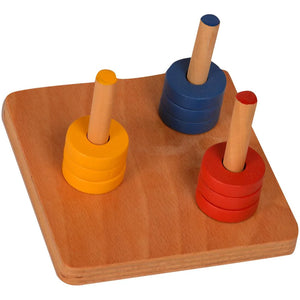
Montessori materials are specifically designed to enhance both fine and gross motor skills. For fine motor development, items like the Pink Tower, Knobbed Cylinders, and Sandpaper Letters engage children in precise movements, strengthening grip, coordination, and concentration. These tools, available as Montessori toys for early intervention, offer concrete experiences that prepare children for complex tasks like writing and self-care.
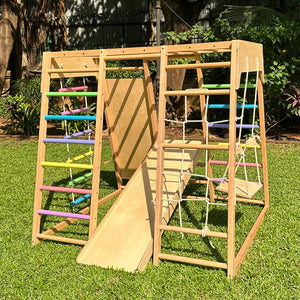
Similarly, practical life activities within a Montessori environment – pouring water, buttoning clothes, sweeping – inherently develop gross and fine motor coordination, alongside independence. Indian families, often with the loving support of grandparents, can integrate these principles by providing child-sized tools and encouraging participation in age-appropriate household tasks, making learning a natural part of daily life. This active engagement creates a rich developmental landscape that supports healthy motor skill progression from toddlerhood upwards.
Key Takeaways
- India's Poshan Pakhwada 2026 introduces a new national screening system for early child development issues, including motor skills.
- Early identification of developmental delays significantly improves long-term outcomes for children.
- Bihar has been recognized for its exemplary implementation of child development initiatives under Poshan Pakhwada 2026.
- The new system aligns with the national goal of 'Viksit Bharat 2047' by addressing school-readiness gaps.
- Parents should observe their child's fine and gross motor skill milestones and utilize screening services if concerns arise.
- Montessori educational toys and principles offer an effective way to support and enhance children's motor skill development at home.
What is Poshan Pakhwada 2026 and its focus?
Poshan Pakhwada 2026 is a national initiative in India focusing on nutrition and child development. This year, it emphasizes a new screening system to identify early child development issues, including motor skill delays, across the country.
How does the new screening system help with motor skill development?
The new screening system under Poshan Pakhwada 2026 helps by systematically assessing children for both fine and gross motor skill milestones. Early identification of any delays allows for timely intervention and targeted support, improving a child's developmental trajectory.
What are some signs of motor skill delays in toddlers?
Signs of fine motor delays might include difficulty with grasping small objects or using utensils, while gross motor delays could show as difficulty with crawling, walking, or balancing. Persistent inability to meet age-appropriate milestones warrants professional assessment through the new screening system.
How can Montessori toys support early motor skill intervention?
Montessori toys are designed to naturally enhance motor skills through purposeful activities. Materials like Knobbed Cylinders (fine motor) or walking boards (gross motor) encourage precise movements, coordination, and problem-solving, aligning perfectly with early intervention principles.
Where can Indian parents access these new screening services?
Indian parents can typically access these new child development screening services through their local Anganwadi centers, primary healthcare centers, or government-run health programs. These services are integrated into community health initiatives as part of Poshan Pakhwada 2026 implementation.