Early Academic Pressure India: Outdoor Play Builds Stronger Kids
The intense early academic pressure India places on young children often hinders holistic development, while robust outdoor and gross motor play is, in fact, the true foundation for crucial cognitive, emotional, and physical growth. This foundational play, including elements like mud play, is far more vital for a child's future readiness than rote learning at age three.
Across India, a critical conversation is brewing. A recent Economic Times article highlighted an Indian man in Norway questioning why children in India are solving maths at three, contrasting it with the freedom to play in mud. This sentiment echoes growing concerns parents and educators share, from Bengaluru to Mumbai, about the overwhelming push for early academics. It's time to re-evaluate our approach to childhood education.
What is Montessori Play-Based Learning?
Montessori play-based learning is a child-led, experiential approach where children learn through self-directed exploration and sensory engagement, often in natural environments. This matters because it fosters intrinsic motivation, deep concentration, and a lifelong love for learning, rather than relying on external pressures. Indian parents can integrate this by observing their child's interests and providing open-ended, engaging materials that encourage independent discovery.
Play vs Academics Early Childhood India: Why Outdoors Wins
In the perennial debate of play versus academics in early childhood India, the scientific evidence increasingly favours play, especially outdoors. Child development experts agree that the first six years of life are critical for physical, emotional, and social development, not just cognitive rote learning. When a child balances on a log, climbs a small hill, or simply runs free in a park, they are developing spatial awareness, balance, coordination, and resilience.
This kind of spontaneous, unstructured play offers a richer, more integrated learning experience than any textbook can. It's in these moments that a child truly learns problem-solving, negotiation with peers, and how to manage their body in space—skills that are indispensable for future academic success and life itself.
Montessori Play-Based Learning Benefits: Building Brains in Nature
Maria Montessori herself championed the importance of connecting children with nature, viewing the outdoor environment as an extension of the classroom. The Montessori play-based learning benefits are profound when applied outdoors. Children develop self-discipline as they navigate natural obstacles, cultivate curiosity through observing plants and insects, and strengthen their concentration as they engage in self-chosen activities.
Research consistently shows that exposure to natural environments reduces stress, improves focus, and enhances creativity. For Indian children, often growing up in bustling cities or joint family homes with limited personal space, access to green spaces and outdoor Montessori materials can be a powerful antidote to modern pressures, providing a vital outlet for energy and discovery.
Mud Play Benefits for Kids India: The Ultimate Sensory Classroom
Imagine a child, perhaps a 4-year-old boy, with hands plunged into cool, damp mud. This isn't just mess; it's a profound learning experience. The mud play benefits for kids India are immense, touching every domain of development. Sensory integration thrives as children feel the texture, smell the earth, and see the colours of nature. This multi-sensory engagement builds neural pathways that are crucial for language development, mathematical reasoning, and even emotional regulation.
Beyond sensory input, mud play is a natural immunity booster, exposing children to beneficial microbes that strengthen their immune systems. It fosters creativity as they sculpt, dig, and imagine. It also encourages crucial gross motor skill development as they lift, carry, and manipulate the earth around them.
Outdoor Play for Child Development India: Fueling Future Leaders
The playground is arguably the most dynamic classroom for outdoor play for child development India needs right now, especially in the age of AI. While rote learning might seem efficient, the future demands critical thinkers, problem-solvers, and emotionally intelligent individuals. Outdoor play cultivates these very traits.
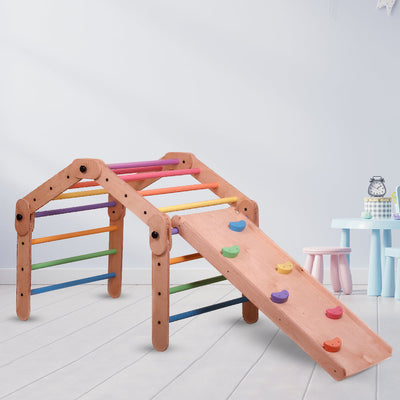
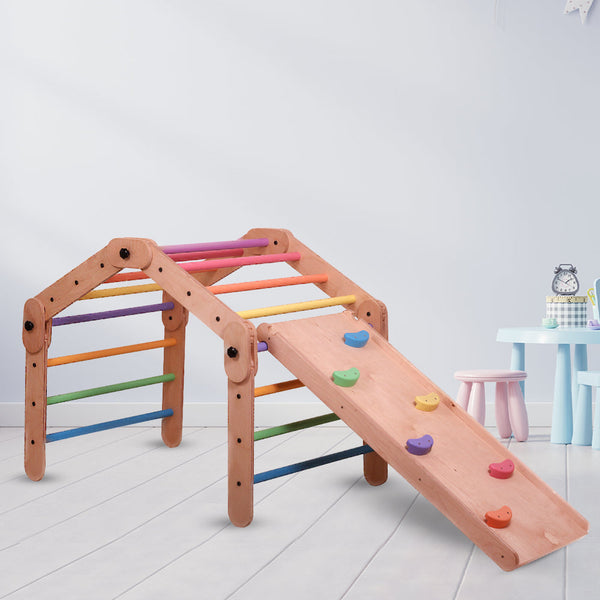
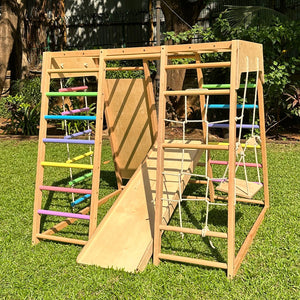
A child negotiating a turn on a swing, collaborating to build a fort with sticks, or figuring out how to balance on an uneven surface is developing crucial executive functions: planning, impulse control, and working memory. These are the skills that empower future innovators and leaders, far beyond the ability to memorise multiplication tables at three. Giving a child a simple climbing ladder or a set of large wooden blocks for outdoor construction provides countless opportunities for this essential learning.
Prioritising True Foundations for Indian Children
For parents seeking toys for 4 year old boys and girls, shifting focus from early academic pressure to robust outdoor and gross motor play is a powerful choice. It's about providing experiences that build a strong, adaptable foundation, rather than rushing towards milestones that are often developmentally inappropriate.
Let your children climb, jump, run, and get wonderfully messy. Encourage their exploration of nature, their experimentation with gravity, and their joyful engagement with the world around them. This is how true learning happens, how resilient spirits are forged, and how Indian children will truly thrive in an ever-changing world.