Doll House for Kids: Boost Sensory Play & Development
A Montessori doll house for kids is definitively more than just a toy; it is a meticulously designed environment for fostering holistic child development through rich sensory experiences. Research shows that engaging multiple senses simultaneously strengthens neural pathways, crucial for learning in children aged 0-5 years. Indian parents, often seeking ways to combine traditional values with modern educational approaches, can transform dollhouse play into powerful toddler sensory activities that nurture their child's cognitive, emotional, and social growth.
Many parents focus on the visual-spatial and fine motor benefits of dollhouses, which are indeed significant. However, the true magic lies in extending the play to engage all senses – touch, sound, smell, and even the often-overlooked emotional and social sensory inputs. This approach aligns perfectly with Maria Montessori's philosophy of a 'prepared environment' that encourages independent, experiential learning.
What is Montessori Doll House Sensory Play?
Montessori doll house sensory play involves intentionally designing scenarios and adding elements that stimulate a child's various senses – touch, sight, sound, smell, and even proprioception – within the miniature world of the dollhouse. This matters because active sensory engagement is the foundation of learning and understanding the world around them. Indian parents can facilitate this by introducing diverse, culturally relevant materials and narrative prompts during playtime, turning simple play into profound learning.
Awakening the Sense of Touch: Tactile Explorations
The tactile sense is fundamental for young children's development, providing crucial information about their environment. Your dollhouse can become a rich tactile landscape. Think beyond smooth wooden floors: lay down small scraps of different fabrics – perhaps a miniature silk 'saree' as a rug, a soft cotton 'dupatta' for a bedspread, or a textured jute piece for a doormat. These variations invite little fingers to explore and describe.
Bring in natural elements safely: tiny, smooth pebbles from your garden can become part of a dollhouse pathway, or small, dried leaves can be 'trees.' Even a miniature bowl filled with dry lentils or rice can become a 'kitchen' activity for the dolls, offering a satisfying tactile experience. Child development experts agree that varied tactile input helps children understand object properties and develops sensory discrimination. For Aanya in Bengaluru, whose grandparents love to tell stories, a tiny hand-knitted shawl for a doll can spark conversations about its texture and the effort behind it.
Practical Tip: Collect small, safe pieces of fabric with distinct textures from around your home – an old velvet blouse, a worn-out cotton kurta, a woollen sock. Offer them to your child to use as dollhouse furnishings, encouraging them to describe how each one feels.
Sounds & Stories: Auditory & Language Richness
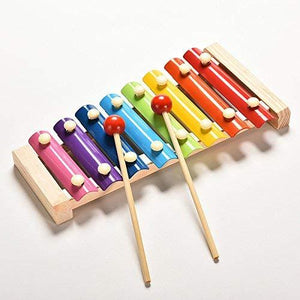
The dollhouse is a perfect stage for auditory exploration and language development. Encourage your child to create sounds for the dolls' actions: a soft 'thump' when a doll sits, a tiny 'ding-dong' for the doorbell, or crinkling paper for a 'fire.' You can even add small bells to doll clothing for gentle jingling sounds as they move.
Your narration is key here. Use different voices for each doll character, describing their actions and emotions. For instance, "Dadi doll is humming a bhajan while cooking," or "The little boy doll is laughing loudly because it's Diwali!" Studies on early childhood education indicate that exposure to diverse sounds and rich verbal interaction directly boosts linguistic skills. In many Indian homes, storytelling is a beloved tradition; let the dollhouse be a visual aid for these narratives, incorporating sounds of festivals like the gentle pop of a phuljhadi or the distinct tunes of traditional instruments.
Practical Tip: During playtime, use distinct voices for each doll character and describe the sounds their actions make (e.g., "The little girl doll is singing a soft lullaby to her baby doll, 'la la la...'"). Encourage your child to mimic these sounds or create their own.
Beyond Five Senses: Emotional & Social Sensory Input
This is where dollhouse play truly shines, extending beyond physical senses to crucial emotional and social development. Research consistently shows that imaginative play helps children understand social cues and emotional intelligence. Create scenarios where dolls experience different emotions: joy at a miniature EuroKids-style celebration, sadness when a doll "loses" a toy, or empathy when one doll helps another. Discuss not just the emotion, but also how it might physically 'feel' – a 'heavy' heart for sadness, 'butterflies' in the tummy for excitement.
Montessori principles emphasize a prepared environment for social learning, and the dollhouse is an ideal miniature society. Role-play situations common in Indian joint families – welcoming guests, sharing imaginary food during a festival, or resolving a small conflict. This practice helps children process real-life social dynamics in a safe space. Just as 'Umang Vatika' at Safdarjung Hospital provides a safe space for children with disabilities to play, your dollhouse can be a safe, inclusive world for exploring emotions and social interactions.
Practical Tip: Create a scenario where a doll spills tea. Ask your child, "How does the doll feel?" and "What can the other dolls do to help?" This fosters empathy and problem-solving skills.
Engaging Taste & Smell (Safely & Symbolically)
While direct taste exploration isn't always safe or practical in a dollhouse, you can engage these senses symbolically. Use small wooden fruits and vegetables or activity kits with playdough to create miniature 'food' for the dolls. Talk about the imagined tastes: "This idli is soft and savoury!" or "The mango lassi is sweet and refreshing!"
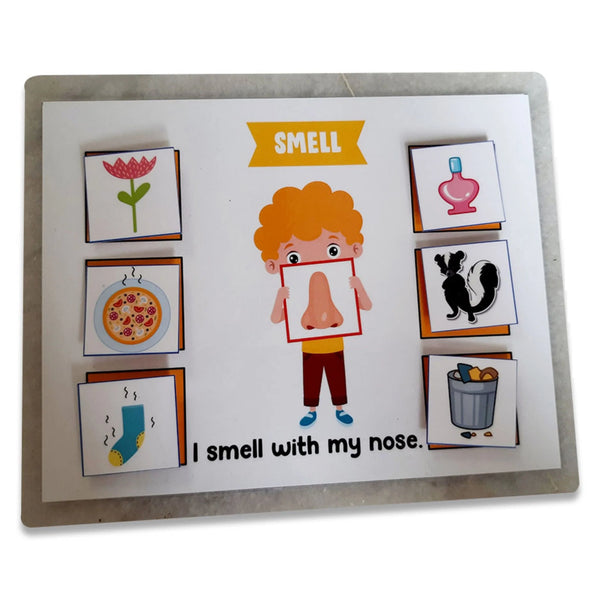
For smell, introduce safe, natural scents. A tiny potpourri sachet made with dried jasmine or rose petals can be a 'flower vase' in the dollhouse. A cotton ball with a single drop of rose water or a small piece of cinnamon stick can be subtly placed near the play area, prompting discussion about the "smell of the dolls' home." This introduces the concept of scent association, linking smells to memories and places, much like India-Sage Williams' Sensory Museum aims to engage diverse sensory experiences.
Practical Tip: Place a tiny piece of fragrant cinnamon stick or a few dried jasmine flowers near the dollhouse and ask your child to describe the scent as the dolls "walk" past. Link it to real-life smells, like "This smells like Amma's kitchen during Diwali!"
Setting the Stage for Holistic Development with Your Montessori Doll House
By intentionally weaving in these diverse sensory elements, your dollhouse transforms from a simple plaything into a powerful Montessori learning material. This multi-sensory engagement during the critical 0-5 year developmental window not only stimulates brain development but also fosters creativity, problem-solving, and emotional intelligence. As parents, you are the facilitators, guiding your child's exploration and enriching their understanding of the world.
Embrace the simplicity and open-ended nature of a Montessori doll house to create a dynamic environment where every play session is an opportunity for rich, holistic sensory growth. These small, thoughtful additions can make a world of difference in your child's developmental journey.