Educational Toys for 4-Year-Old Boys: Independence Outdoors
Montessori outdoor educational toys are instrumental in fostering independence and problem-solving skills in 4-year-old boys by providing open-ended challenges and rich opportunities for self-directed exploration. These active play experiences are crucial for holistic development, allowing young children to navigate their world with curiosity and confidence. For Indian parents, leveraging these educational toys outdoors helps build resilience and critical thinking.
In today's fast-paced world, where screens often compete with sunshine, ensuring our children get enough outdoor activity is more vital than ever. The India Today recently highlighted a worrying trend of increased Vitamin D deficiency among children, directly linked to less time spent outdoors. Simultaneously, experts like pediatricians, as reported by The Times of India, champion the benefits of letting children engage in 'mud play' for their immune system and sensory development. Montessori outdoor play, especially for active 4-year-old boys, offers the perfect antidote.
What is Montessori Outdoor Learning?
Montessori Outdoor Learning is a pedagogical approach that extends the child-centred, hands-on principles of Maria Montessori's classroom into natural environments. This matters because it provides a rich, dynamic setting for self-directed exploration and sensory engagement, crucial for developmental growth. Indian parents can integrate this by creating accessible outdoor play zones with purpose-driven materials.
Montessori Outdoor Toys: Building Independence in 4-Year-Old Boys
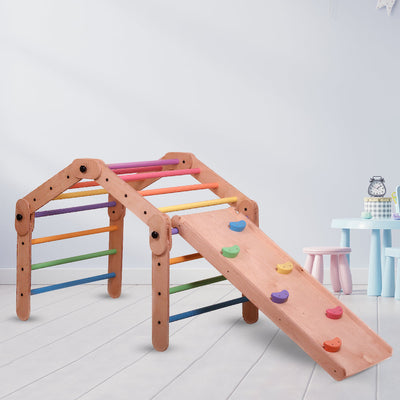
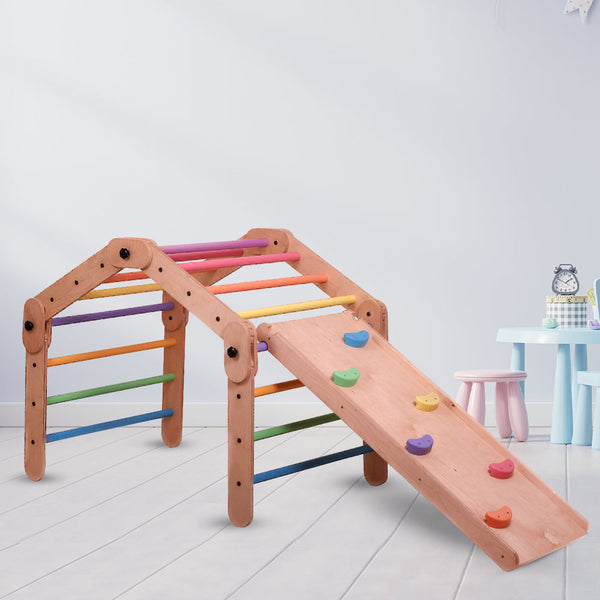
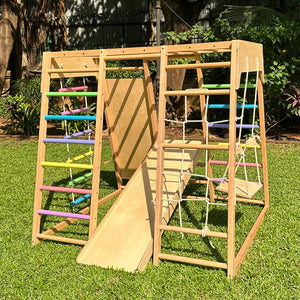
Independence is a cornerstone of Montessori philosophy, and outdoor play provides unparalleled avenues for its development, especially for active 4-year-old boys. Research shows that children who engage in self-directed outdoor play develop stronger decision-making abilities and a greater sense of self-efficacy. For example, a simple gross motor skill set like a low balance beam or climbing arch empowers a child to assess risks, make choices about how to move their body, and overcome physical challenges independently.
These independence building toys allow a child to initiate activities, complete tasks at their own pace, and learn from their mistakes without constant adult intervention. Imagine a young boy attempting to climb a small rock wall; he's not just building strength, but also problem-solving how to place his hands and feet, experiencing the satisfaction of reaching the top. This self-reliance gained from navigating physical obstacles translates into confidence in other areas of life, from dressing himself to choosing his activities with his grandparents.
Encouraging this independent exploration is a gift. Provide gardening tools for them to tend a small patch of garden, perhaps growing a marigold for Diwali. This teaches responsibility and the cycle of nature, fostering a deep connection to the earth and their role within it. Maria Montessori herself observed that children possess an innate drive for purposeful activity and mastery, and the outdoors provides an ideal canvas for this.
Problem-Solving Toys for Kids: Navigating Challenges Outdoors
The outdoor environment is inherently rich with opportunities for problem-solving, making it an ideal setting for developing critical thinking in 4-year-old boys. Unlike structured indoor activities, outdoor play often presents unexpected variables and open-ended scenarios that demand flexible thinking. These problem-solving toys for kids don't always come in a box; sometimes, they're the sticks, stones, and puddles found in a garden.
Consider a child trying to build a 'dam' in a small stream or connect two parts of a makeshift fort with found branches. He must experiment with different materials, understand basic physics, and adapt his approach when something doesn't work. This iterative process of hypothesis, trial, and error is the very essence of problem-solving. Studies indicate that children engaged in outdoor play demonstrate greater creativity and divergent thinking compared to their indoor counterparts.
Such natural problem-solving also directly combats the sedentary lifestyle often associated with increased screen time, promoting both cognitive agility and physical health. Providing simple outdoor learning toys like large, uneven wooden blocks or a collection of natural materials (pinecones, pebbles, leaves) can transform any backyard into a dynamic learning laboratory. Indian families, often with spacious courtyards or nearby parks, have excellent opportunities to facilitate this kind of rich, developmental play.
Integrating Outdoor Learning Toys into Daily Routine
Incorporating outdoor learning toys into your 4-year-old boy's daily routine doesn't require elaborate setups; it requires intention and a belief in the power of nature. Start by designating specific 'outdoor exploration' times, perhaps after school or in the cool mornings before the Bengaluru heat sets in. Offer a variety of gross motor skill activities, such as a low wooden climbing frame or a set of robust buckets and shovels for sand play.
Child development experts agree that a prepared outdoor environment is key. Ensure the space is safe but also offers elements of challenge and discovery. This could be as simple as a designated mud kitchen area with old pots and pans, encouraging imaginative cooking and sensory play. Allow your child the freedom to get dirty – as pediatricians remind us, playing in the mud strengthens their immune system and provides invaluable tactile experiences.
Remember, the goal is to facilitate, not dictate. Observe your child's interests and provide materials that support their natural curiosity. If they're fascinated by insects, offer a magnifying glass and a small bug viewer. If they love building, provide large, lightweight blocks or natural construction materials. By integrating outdoor educational toys and embracing nature, Indian parents can nurture independent, resilient, and resourceful young boys ready to face any challenge.