Doll House for Kids: Multi-Sensory Play Adventures (0-5 Yrs)
Transforming a doll house for kids into a multi-sensory adventure is a powerful way to boost development for children aged 0-5 years, moving beyond simple imaginative play to engage all their senses. By incorporating diverse textures, sounds, and scents, parents can create an enriching environment that stimulates cognitive growth, enhances fine motor skills, and supports emotional regulation in a safe, controlled setting. This approach provides a miniature world for exploration, much like the supportive play spaces observed in initiatives like 'Umang Vatika' for children with diverse needs, offering freedom and safety.
Multi-sensory doll house play involves intentionally integrating elements that stimulate sight, touch, sound, and smell within the miniature world. This matters because it engages multiple neural pathways simultaneously, deepening learning and memory, especially for children aged 0-5. Indian parents can easily achieve this by adding everyday textured fabrics, scented spices, and natural elements to their child's doll house.
Why Multi-Sensory Doll Houses Matter for Indian Kids (0-5 Years)
Child development experts agree that rich sensory experiences are foundational for early learning, directly impacting brain development and future academic success. In urban Indian homes, where outdoor play might be limited due to space or safety, a montessori doll house becomes a crucial, compact arena for this exploration. It's not just about setting up a miniature home; it's about building a miniature world where every sense is invited to participate.
Research shows that children who engage in varied sensory play exhibit better problem-solving skills and improved focus. For a 3-year-old in a joint family in Pune, navigating the complexities of a multi-sensory doll house, from arranging tiny furniture to dressing dolls in fabric scraps, fosters independence and strengthens their ability to process information. This type of open-ended play is particularly valuable as it allows children to follow their innate curiosity, a core principle advocated by Maria Montessori.
Engaging the Senses: Practical Doll House Activities
Moving beyond just visual appeal, we can infuse doll house play with tactile, auditory, and olfactory stimulation. These doll house activities are simple to implement and use items readily available in most Indian households. The goal is to make the doll house a dynamic, ever-changing environment that reflects the rich tapestry of life.
Sight: A Kaleidoscope of Colours and Light
Visual sensory input goes beyond just seeing objects; it involves light, shadow, patterns, and colour variations. Encourage your child to create miniature 'rangolis' inside the doll house using coloured rice or lentils, or provide small, safe battery-operated fairy lights to illuminate rooms. Observing how light changes the mood of a room, or how colours combine, fosters visual discrimination and aesthetic appreciation.
You can also introduce patterned fabrics, perhaps from an old dupatta or a festive saree, to serve as tiny carpets or curtains. For younger children (0-2 years), simply watching you place these colourful elements, or reaching for a contrasting colour, provides stimulating visual engagement. This is a subtle yet powerful way to introduce basic design concepts and cultural aesthetics from a young age.
Touch: Exploring a World of Textures
Tactile exploration is paramount for developing fine motor skills and understanding material properties. Offer a variety of textured materials: soft cotton balls for beds, rough sandpaper as a 'garden path', smooth silk scraps as blankets, and crinkly paper for 'newspapers'. Even natural elements like small, smooth river pebbles or dry, fallen leaves can be safely incorporated.
For children aged 18-24 months, the act of simply grasping and feeling these diverse textures helps them build a sensory vocabulary. Older toddlers (3-5 years) can engage in more intricate tasks like dressing dolls with different fabrics, enhancing their pincer grasp and hand-eye coordination. This hands-on interaction with varied textures is a crucial component of Montessori-inspired learning.
Sound: The Subtle Symphony of Play
Introduce gentle auditory stimuli to make the doll house come alive. Small bells attached to a miniature door, crinkly fabric in a baby's crib within the doll house, or even different sized beads that make distinct sounds when moved, can create an engaging soundscape. Encourage your child to narrate stories, mimicking voices for different doll characters, enhancing their language and auditory processing skills.
Imagine a tiny 'temple' corner with a miniature bell, or a 'rainy day' scenario with a small shaker bottle filled with rice to simulate falling rain. These additions transform passive observation into active listening, an essential skill for school readiness. This type of multi-sensory stimulation helps children connect actions with sounds, improving their understanding of the world.
Smell: A Whiff of Home
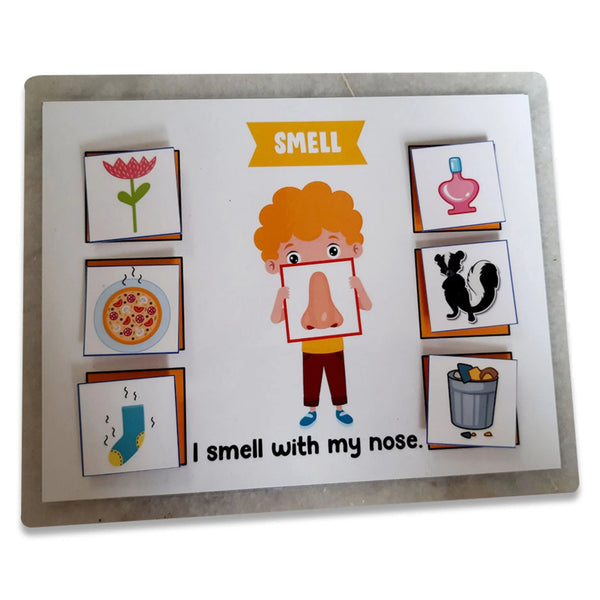
Olfactory input is a powerful trigger for memory and emotion. Incorporate safe, subtle scents that evoke familiarity and comfort. A tiny potpourri sachet with dried rose petals or a few whole cloves and cinnamon sticks can add a gentle aroma to the doll house 'kitchen' or 'garden'. Always ensure scents are natural, mild, and non-toxic, and supervise children closely, especially those under three.
A parent in Mumbai might introduce a tiny drop of edible rose water on a cotton ball for a 'flower garden', or a pinch of elaichi (cardamom) in a small, sealed pouch for the 'kitchen'. These familiar Indian scents create a deeper connection to their environment and culture, making the play experience more immersive and memorable. Such activity kits can be easily assembled at home.
Montessori Doll House for Multi-Sensory Play
A true montessori doll house for multi-sensory play focuses on realism, simplicity, and child-sized independence. It's about providing an environment where the child is free to explore, discover, and learn through their senses. Unlike highly prescriptive toys, a Montessori doll house encourages open-ended interaction, allowing children to arrange, manipulate, and create their own narratives.
Child development research consistently highlights the importance of open-ended play in fostering creativity and problem-solving. By choosing a wooden doll house with simple furniture and then adding your own diverse materials – from tiny clay utensils to fabric scraps – you empower your child to be the architect of their play. This aligns with the Montessori philosophy that children learn best by doing, experiencing, and self-correcting.
Beyond Play: Real-World Development Benefits of Multi-Sensory Doll Houses
The benefits of enriching doll house activities extend far beyond mere entertainment. They lay critical groundwork for academic and social skills. For instance, the intricate movements involved in arranging miniature furniture or dressing dolls significantly refine fine motor skills, which are direct precursors to writing and drawing.
Furthermore, the narrative aspect of playing with a multi-sensory doll house dramatically boosts language development. As a 4-year-old in Bengaluru narrates a story about a family preparing for Diwali in their doll house, describing the colours of the miniature diyas and the texture of the tiny outfits, they expand their vocabulary and storytelling abilities. This complex interaction between senses and language is a hallmark of effective early childhood education.
Moreover, multi-sensory doll house play aids emotional regulation. Children often re-enact real-life scenarios, processing feelings of joy, frustration, or empathy in a safe, controlled miniature world. This imaginative processing is vital for developing social-emotional intelligence. The American Academy of Pediatrics highlights the crucial role of imaginative play in healthy emotional development, allowing children to experiment with different roles and situations without real-world consequences.
Making it Truly Indian: Cultural Touches in Doll House Play
Incorporating elements from Indian culture naturally enriches the multi-sensory doll house experience. Think about miniature versions of traditional items: tiny clay pots for a kitchen, colourful 'rangoli' patterns on the floor, or small fabric swatches from old sarees to create traditional attire for dolls. This makes the play resonate deeply with a child's own cultural identity, fostering a sense of belonging and familiarity.
A doll house can become a reflection of a vibrant Indian joint family, complete with grandparents, parents, and children, all interacting in miniature scenarios. During festivals like Diwali or Holi, the doll house can be decorated, allowing children to mimic real-life celebrations and engage with cultural traditions on a tangible, multi-sensory level. This culturally resonant play enhances engagement and learning, making the doll house a cherished part of a child's early years.
To start your multi-sensory doll house adventure tonight, simply choose one sense – perhaps touch – and introduce three new, safe, textured items into your child's doll house. Observe how they interact and let their curiosity lead the way. It's a simple step that opens up a world of developmental possibilities.