Educational Toys for Gross Motor Skills: Montessori Outdoor Play
The journey of physical development in children is greatly enhanced by selecting appropriate educational toys that foster specific gross motor skills in an outdoor setting. Research shows that engaging children with Montessori outdoor play equipment directly contributes to improved balance, coordination, and strength, essential for their overall well-being. This approach offers a powerful antidote to increased screen time, promoting active learning and crucial Vitamin D synthesis, a concern for many Indian parents today, especially with ongoing discussions about limiting children's social media access.
As Sridhar Vembu, founder of Zoho, advocates for children reading books and playing in the dirt instead of screens, the focus on meaningful outdoor engagement becomes more vital. Montessori principles align perfectly with this sentiment, providing structured yet free play that combats the rising trend of Vitamin D deficiency and encourages a healthier, more active childhood reminiscent of traditional Indian playtime in the angan.
What are Montessori Gross Motor Toys?
Montessori gross motor toys are specifically designed materials that encourage large muscle movement and physical exploration, aligning with Dr. Maria Montessori's principles of self-directed learning. This matters because children naturally learn through movement and sensory experiences, building confidence and physical competence. Indian parents can leverage these toys to provide a structured yet free environment for their children to thrive physically, much like playing in the traditional angan or during festive gatherings.
Outdoor Educational Toys: Why Movement Matters for Indian Children
In bustling Indian cities, children often face academic pressure from a young age, leading to less unstructured outdoor play. However, child development experts agree that gross motor development is not merely about physical strength; it underpins cognitive functions, emotional regulation, and even academic readiness. Regular outdoor physical activity, facilitated by thoughtful outdoor educational toys, helps children burn energy, improve focus, and develop crucial spatial awareness.
Studies indicate that children engaged in active outdoor play exhibit better problem-solving skills and creativity. For Indian families, this means providing opportunities beyond textbooks, allowing children to run, jump, and explore their environment. Grandparents often cherish seeing their grandchildren play outdoors, connecting them to their own childhood memories of active, uninhibited fun.
Montessori Gross Motor Toys for Developing Balance
Balance is a foundational gross motor skill, crucial for everything from walking and running to standing still. Montessori-inspired outdoor balance toys are designed to challenge a child's equilibrium safely and progressively, fostering proprioception and spatial awareness. These experiences help children understand their body's position in space.
Balance Toys for Kids Outdoor: Stepping Stones & Beams
For children aged 2-6 years, outdoor stepping stones or low balance beams are ideal. These allow children to practice walking on uneven surfaces or narrow paths, constantly adjusting their body. Placing them in a varied pattern encourages planning and problem-solving, much like navigating a busy marketplace during a festival. Research shows that consistent practice on such equipment significantly improves static and dynamic balance.
Children learn to shift their weight, coordinate their steps, and build core strength without even realizing it's a 'lesson'. These gross motor skills toys become a part of their daily adventure, turning the garden or a safe communal area into an engaging learning zone, perfect for a joint family's evening playtime.
Climbing Toys for Kids: Building Strength and Confidence
Climbing is an instinctual activity for children, vital for developing upper body strength, grip, and problem-solving abilities. Providing safe and appropriate climbing toys for kids encourages them to assess risks, plan their movements, and experience the thrill of achievement. This builds immense self-confidence and resilience.
Montessori-Inspired Climbing Structures
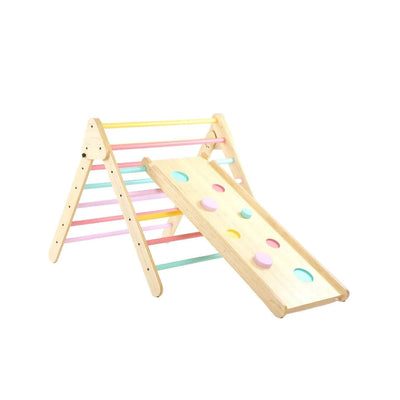
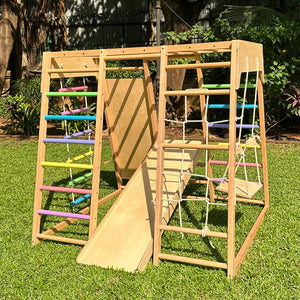
For preschoolers (3-7 years), low climbing domes, A-frame climbers, or small rock walls offer excellent opportunities. These structures, often made from natural wood, allow children to pull themselves up, navigate different holds, and coordinate their hands and feet. This process strengthens major muscle groups, enhances spatial reasoning, and develops perseverance.
As children reach for the next rung or hold, they are engaging their core, back, and arm muscles, crucial for overall physical development. Maria Montessori herself observed the intrinsic drive in children to explore their environment through movement, and climbing apparatus aligns perfectly with this developmental need. This kind of active play can be a healthy alternative to screen time, as endorsed by many Indian thought leaders.
Coordination Toys Outdoor: Enhancing Agility and Precision
Coordination involves the harmonious working of different body parts and senses. Outdoor play offers countless opportunities to refine hand-eye coordination, foot-eye coordination, and overall body agility. These skills are critical for sports, handwriting, and everyday tasks.
Outdoor Educational Toys for Integrated Movement
Activities involving throwing, catching, kicking, or even navigating obstacle courses with items like hula hoops or tunnels significantly boost coordination. Simple balls, beanbags, or even a child-friendly archery set are excellent coordination toys outdoor. For younger children (18-36 months), pushing and pulling wagons or large blocks across uneven terrain also refines motor planning and spatial judgment.
These activities require quick reflexes, depth perception, and the ability to anticipate movement, which are all high-level motor skills. Engaging in such play outdoors ensures children also benefit from fresh air and natural light, helping combat issues like Vitamin D deficiency prevalent in urban Indian populations. It’s an investment in their complete physical and cognitive health, a key principle of the Montessori method.
Beyond Play: Holistic Development with Outdoor Educational Toys
Choosing the right Montessori outdoor educational toys extends beyond just physical benefits. These experiences foster independence, problem-solving, and a deep connection with the natural world. Children learn to assess risks, make decisions, and develop resilience as they navigate physical challenges. This self-directed learning is at the heart of the Montessori philosophy, empowering children to become capable and confident individuals.
By providing an environment rich with opportunities for gross motor development, Indian parents are not just offering toys; they are offering a foundation for lifelong physical activity and well-being. This proactive approach ensures children develop a love for movement and exploration, moving them away from passive screen consumption towards active, meaningful engagement with their surroundings.
- Montessori outdoor educational toys are crucial for developing specific gross motor skills like balance, climbing, and coordination.
- Engaging in active outdoor play directly combats issues like increased screen time and Vitamin D deficiency in children.
- Balance toys such as stepping stones and low beams significantly improve a child's equilibrium and proprioception.
- Climbing structures like A-frame climbers build upper body strength, grip, and foster problem-solving skills and confidence.
- Coordination toys like balls and obstacle course elements enhance agility, precision, and hand-eye coordination.
- Providing a rich outdoor environment aligns with Dr. Maria Montessori's principles, promoting holistic physical and cognitive development in Indian children.
What are the core gross motor skills developed by outdoor Montessori toys?
Montessori outdoor toys primarily develop balance, climbing ability, and coordination. These skills are fundamental for a child's physical competence and confident interaction with their environment, promoting holistic development beyond just academic pursuits.
How do Montessori outdoor toys differ from regular playground equipment?
Montessori outdoor toys are thoughtfully designed with a clear developmental purpose, encouraging self-directed exploration and specific skill mastery rather than just general play. They often feature natural materials and graded challenges, aligning with a child's innate developmental stages.
At what age should I introduce Montessori gross motor toys?
Children can benefit from Montessori gross motor toys as early as 18-24 months, starting with simple balancing activities and sensory exploration. As they grow, around 3-6 years, they can progress to more complex climbing structures and coordination challenges, always observing their readiness.
Can outdoor play truly reduce screen time in Indian households?
Absolutely. Providing engaging, skill-building outdoor educational toys offers a compelling alternative to digital devices, drawing children towards active, imaginative play. Encouraging grandparents and other family members to join in outdoor activities further reinforces this positive habit in Indian homes.
How does outdoor Montessori play support a child's overall development?
Outdoor Montessori play not only strengthens muscles and improves physical dexterity but also boosts cognitive function, problem-solving skills, and spatial awareness. Furthermore, it fosters independence, confidence, and a deep connection with nature, which is vital for mental well-being.