Educational Toys for Holistic Outdoor Development
Montessori educational toys are essential catalysts for holistic outdoor development, fostering not just physical growth but also cognitive, social, emotional, and environmental connection in children. Research shows that engaging with purposeful educational toys in natural settings significantly enhances a child's overall well-being and learning capabilities, moving beyond mere physical activity to truly enrich their early years.
Holistic outdoor development refers to a child's comprehensive growth across physical, cognitive, social-emotional, and environmental domains, facilitated through engagement with nature. This matters because balanced development in these areas forms the foundation for lifelong learning and well-being. Indian parents can actively promote this by integrating structured Montessori activities with free-form outdoor exploration.
Embracing Outdoor Learning with Montessori Principles
In a world increasingly dominated by screens, the call to let children "play in dirt" and engage with tangible experiences resonates deeply with Indian parents. As prominent voices like Zoho's Sridhar Vembu advocate for reduced screen time and increased outdoor interaction, the Montessori philosophy offers a powerful, structured approach. It transforms simple outdoor play into profound learning opportunities, helping children develop a strong sense of self and surroundings.
Maria Montessori's philosophy champions hands-on learning, independence, and respect for a child's natural developmental pace. When applied outdoors, these principles create an environment where children aren't just playing; they are actively learning, exploring, and connecting with the natural world around them. This approach is vital for urban children, who often have limited access to extensive natural environments, making their local park or backyard a critical classroom.
Kids Learning Toys for Physical Mastery and Gross Motor Skills
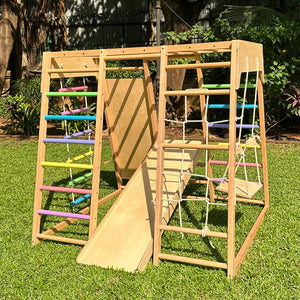
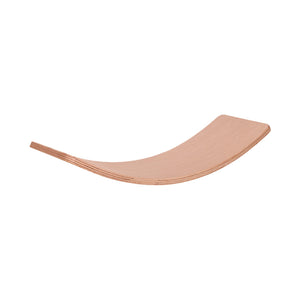
Outdoor spaces naturally encourage movement and activity, making them ideal for developing gross motor skills. Montessori-inspired outdoor setups often include items like balance beams, stepping stones, or climbing triangles, which are excellent gross motor educational toys. These tools challenge children's coordination, strength, and spatial awareness in a safe, engaging manner.
Child development experts agree that consistent engagement with gross motor activities builds strong muscles, improves balance, and refines motor planning skills. For instance, navigating a simple obstacle course built with outdoor blocks not only enhances physical prowess but also boosts confidence and problem-solving abilities. These activities are crucial for children who might otherwise spend too much time indoors, offering a refreshing and vital outlet for their boundless energy.
Beyond Physical: Cognitive Growth Through Montessori Outdoor Toys
Outdoor play with Montessori materials extends far beyond mere physical exertion, significantly stimulating cognitive development. Engaging with nature's elements – be it observing insects, planting seeds, or categorizing leaves – provides concrete learning experiences that are difficult to replicate indoors. These are prime examples of how Montessori outdoor toys can turn every outdoor adventure into a rich learning journey.
For instance, using magnifying glasses to examine soil or small plants encourages scientific observation and curiosity, nurturing a child's innate desire to understand the world. Sorting natural objects by size, shape, or color mirrors classic Montessori activities like the Pink Tower or Brown Stair, but with the added sensory richness of the outdoors. This direct interaction helps children build foundational concepts in science, mathematics, and language in a deeply experiential way.
Holistic Development Toys: Nurturing Social-Emotional Skills and Nature Connection
Outdoor environments, especially in bustling Indian communities where children often play together in apartment complexes or local parks, offer unique opportunities for social-emotional growth. Collaborative projects, like building a sandcastle or caring for a small garden, teach teamwork, communication, and empathy. These interactions are fundamental for developing strong interpersonal skills and emotional intelligence.
Studies indicate that children who spend more time outdoors develop a stronger sense of environmental responsibility and a deeper connection to nature. This connection is a critical component of holistic development, fostering respect for the planet and an understanding of ecological principles. Through guided observation and interaction with living things, children learn to appreciate the interconnectedness of all life, moving beyond self-focus to embrace a broader perspective.
Choosing the Right Montessori Educational Toys for Outdoor Adventures
Selecting appropriate Montessori outdoor toys is key to maximizing these developmental benefits. Look for materials that encourage open-ended play, natural exploration, and practical life skills. Simple tools like child-sized gardening sets, buckets, shovels, or even a basic mud kitchen can provide hours of rich, sensory-driven learning.
Consider items that foster creativity and construction, such as large wooden blocks or natural loose parts that children can arrange and rearrange. These outdoor learning toys stimulate imagination and problem-solving. For families living in joint setups, grandparents often cherish these outdoor moments, making them even more special by participating in the play and sharing traditional knowledge about nature.
Ultimately, the goal is to create an "prepared environment" outdoors, mirroring the intentionality of a Montessori classroom. This means offering a variety of engaging, safe, and developmentally appropriate materials that invite children to explore, experiment, and learn at their own pace. By doing so, we equip them not just with academic knowledge, but with resilience, curiosity, and a lifelong love for learning and the natural world.
- Montessori educational toys are critical for comprehensive holistic outdoor development.
- Engaging with educational toys outdoors enhances physical, cognitive, social, emotional, and environmental connection.
- Child development experts emphasize that outdoor play with purposeful toys significantly reduces screen time and boosts overall well-being.
- Montessori principles, applied outdoors, encourage independence, hands-on learning, and a deep connection to nature.
- Gross motor educational toys like balance beams and climbing structures are vital for physical development and coordination.
- Outdoor learning with Montessori materials fosters cognitive skills through observation, classification, and practical life activities.
What is holistic outdoor development for children?
Holistic outdoor development encompasses a child's comprehensive growth across physical, cognitive, social-emotional, and environmental domains, primarily through engagement with nature. It ensures balanced learning and well-being, fostering a deep connection to the world around them.
How do Montessori educational toys support outdoor learning?
Montessori educational toys are designed to be self-correcting and purpose-driven, making them ideal for outdoor learning by encouraging independent exploration and discovery. They provide concrete experiences that link abstract concepts to the natural environment, enhancing understanding and engagement.
What are some examples of gross motor educational toys for outdoor play?
Examples include balance beams, stepping stones, climbing structures, large construction blocks, and tricycles. These items are excellent gross motor educational toys that develop coordination, strength, and spatial awareness while enjoying the fresh air and open space.
Can outdoor play with Montessori toys reduce screen time for kids?
Yes, integrating Montessori outdoor toys into a child's routine provides engaging, hands-on alternatives to digital devices, naturally reducing screen time. When children are actively involved in meaningful play, their desire for passive entertainment diminishes, fostering healthier habits.
At what age can children benefit most from Montessori outdoor learning?
Children of all ages, from toddlers to early elementary, can significantly benefit from Montessori outdoor learning, though the activities adapt to their developmental stage. Even children as young as 18-24 months can begin exploring nature with simple, safe Montessori-inspired materials.