Importance of Outdoor Play for Child Development
The importance of outdoor play for children cannot be overstated; it is unequivocally as crucial for a child’s holistic development as regular study and nourishing meals. Child development experts agree that dedicated outdoor time fundamentally underpins physical, cognitive, social, and emotional growth, providing essential sensory experiences and fostering vital life skills that are impossible to replicate indoors. It directly impacts a child's overall well-being and ability to thrive, making it an indispensable component of their daily routine for Indian children navigating academic pressures and the pervasive influence of screens.
In today's dynamic Indian households, balancing academic pursuits, extracurricular activities, and family time often pushes outdoor play to the periphery. However, recent discussions, including a significant article from The Times of India, highlight that this prioritization must shift. Just as we wouldn't skip meals or neglect studies, we must ensure our children have ample opportunities to connect with nature and engage in unstructured outdoor activities, moving beyond mere recreation to a fundamental need.
What is Outdoor Play? Outdoor play encompasses any free, unstructured activity engaged in natural or open-air environments, from neighbourhood parks and society gardens to a simple balcony or the ancestral courtyard. This matters because it provides diverse sensory input, promotes robust physical activity, and encourages natural problem-solving. Indian parents can facilitate this by ensuring daily dedicated time away from screens in safe, engaging outdoor spaces, even amidst urban settings.
The Undeniable Importance of Outdoor Play for Children
For children across India, from bustling metros like Bengaluru to quieter towns, stepping outside is an invitation to learn, explore, and grow in ways structured environments cannot offer. Research consistently shows that children who spend regular time outdoors exhibit better physical health, enhanced cognitive abilities, and stronger emotional resilience. This fundamental connection to the outside world is not a luxury but a developmental necessity.
Prioritizing Outdoor Play: A Non-Negotiable for Holistic Development
In a culture often focused on academic excellence, shifting our mindset to see outdoor play as equally vital as schoolwork or a home-cooked meal is paramount. Just as we ensure our children are well-fed and well-educated, we must ensure they are well-played, especially outdoors. Prioritizing outdoor play means allocating dedicated time daily, even if it's just 30 minutes in the morning or evening, making it an unshakeable part of the family routine.
This shift in prioritization acknowledges that true holistic development, deeply valued in Montessori philosophy, extends far beyond textbooks. It embraces the belief that children learn best through direct experience and exploration, making outdoor play a cornerstone of their growth journey. For Indian parents grappling with time management and academic pressures, understanding this equivalence is the first step towards fostering well-rounded, healthy individuals.
Outdoor Play Benefits: Beyond Just Fun and Games
The myriad outdoor play benefits extend across every facet of a child's development, proving it's far more than just a pastime. From strengthening muscles to sharpening minds, the natural environment offers an unparalleled learning laboratory. Child development outdoor play experiences are diverse and profound, impacting children from infancy through their school years.
Physically, outdoor play is essential for developing gross motor skills like running, jumping, climbing, and balancing. These activities build strong bones and muscles, improve coordination, and enhance agility. Moreover, natural sunlight exposure is critical for Vitamin D synthesis, a nutrient vital for bone health and immunity – a concern increasingly highlighted in India, with many children facing Vitamin D deficiency due to less sun exposure, as reported by India Today.
Cognitively, engaging with nature stimulates creativity and problem-solving. Children learn to assess risks, navigate obstacles, and invent games, all of which enhance critical thinking. The unstructured nature of outdoor play allows for imaginative scenarios and independent exploration, fostering a love for discovery and intellectual curiosity that is foundational to the Montessori approach.
Socially and emotionally, outdoor environments encourage cooperation, negotiation, and empathy. Group games teach turn-taking and conflict resolution, while shared adventures build confidence and resilience. Spending time in nature has also been shown to reduce stress and anxiety, promoting a sense of calm and well-being in children.
Addressing Screen Time Alternatives with Nature's Classroom
The pervasive presence of digital screens is a growing concern for parents globally and in India. Recent comments by Zoho's Sridhar Vembu, advocating for stricter social media bans for young children and encouraging them to 'read books and play in dirt,' resonate deeply with the need for effective screen time alternatives. Outdoor play stands out as the most natural, engaging, and beneficial antidote to excessive screen exposure.
By intentionally swapping screen time for green time, parents can redirect children's energy towards activities that truly nourish their minds and bodies. Whether it's tending to a small garden, playing galli cricket with friends, or simply exploring a local park, these experiences provide invaluable sensory input and opportunities for active learning, contrasting sharply with the passive consumption offered by devices.
Montessori and the Call of the Outdoors: Fostering Child Development Outdoor Play
Maria Montessori, the pioneer of the Montessori method, emphasized the profound connection between children and nature. She observed that children have an innate desire to explore, interact with, and learn from their environment. For Montessori, the outdoor space is not just a playground; it is a meticulously designed 'prepared environment' where children can develop independence, concentration, and a deep appreciation for the natural world.
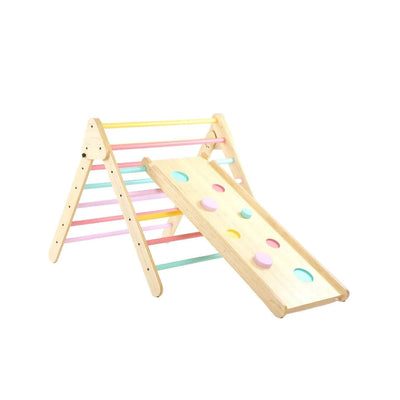
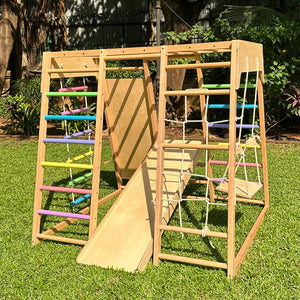
At SkilloToys, we align with this philosophy, recognizing that many of the skills developed through our Montessori materials – such as sensory exploration, practical life skills, and independent learning – are profoundly enhanced when extended to the outdoors. Activities like planting seeds, observing insects, or collecting natural objects directly foster the sensorial and practical development Maria Montessori championed. Our range of gross motor skill toys are designed to complement this outdoor exploration, encouraging movement and physical engagement both inside and out.
Encouraging child development outdoor play isn't just about fun; it's about providing the fundamental experiences that shape a child's understanding of the world and their place within it. It fosters a sense of wonder, cultivates observation skills, and instils a sense of responsibility towards the environment – vital lessons for future generations.
Ultimately, prioritizing outdoor play means investing in a child’s comprehensive well-being, acknowledging its equivalence to studies and meals. By making dedicated outdoor time a non-negotiable part of their daily routine, Indian parents can nurture resilient, curious, and physically robust children, truly setting them up for a lifetime of holistic success.
- Outdoor play is fundamentally as crucial for a child's holistic development as regular study and nourishing meals.
- Child development experts recommend children receive at least 60 minutes of unstructured outdoor play daily.
- Outdoor play significantly enhances gross motor skills, cognitive abilities, social-emotional intelligence, and sensory integration.
- Exposure to natural light during outdoor play is vital for Vitamin D synthesis, combating common deficiencies in children.
- Montessori philosophy views nature as a primary prepared environment, essential for a child's independence and sensory learning.
- Prioritizing outdoor time serves as an effective and healthy alternative to excessive screen time, promoting real-world engagement.
Why is outdoor play as important as studying?
Outdoor play is as vital as studying because it fosters a different, yet equally crucial, set of skills: physical coordination, sensory integration, problem-solving, and social-emotional intelligence. These experiences are fundamental for brain development and overall well-being, complementing academic learning rather than competing with it.
How much outdoor play do children need daily?
Child development experts recommend that preschool-aged children (3-5 years) get at least 60 minutes of unstructured outdoor play daily, while school-aged children (6-17 years) should aim for 60 minutes or more of moderate-to-vigorous physical activity. Consistency is key, even if it means breaking it into shorter segments throughout the day.
What are the key benefits of outdoor play for a child's brain development?
Outdoor play significantly boosts brain development by stimulating all senses, improving spatial awareness, enhancing problem-solving skills through exploration, and promoting creativity. It also helps in stress reduction and improves focus, which positively impacts a child's capacity for learning and emotional regulation.
How can busy Indian parents prioritize outdoor play?
Busy Indian parents can prioritize outdoor play by scheduling it like any other important appointment, making it a non-negotiable part of the daily routine. Utilise local parks, society gardens, or even a balcony for quick sessions, and involve grandparents in facilitating outdoor time, framing it as essential for health and development.
How does Montessori philosophy view outdoor play?
Montessori philosophy profoundly values outdoor play as an extension of the classroom, recognizing nature as the ultimate prepared environment. Maria Montessori advocated for children's direct engagement with natural elements, seeing it as essential for sensory development, fostering independence, and cultivating a deep respect for the environment.
What are some good outdoor activities for toddlers in India?
For toddlers in India, engaging outdoor activities include exploring a local park, playing with sand and water, chasing bubbles, helping in a small garden, or simply observing nature. Simple activities like walking on different textures or playing with a ball enhance gross motor skills and sensory integration.