Montessori Outdoor Gross Motor Activities: Nature Play
Engaging in Montessori outdoor gross motor activities nature offers children unparalleled opportunities for physical and cognitive development, directly addressing the modern challenge of increased screen time. By leveraging natural elements like mud, sticks, and stones, parents can provide a rich, free environment for their child to climb, balance, and explore, fostering crucial gross motor skills essential for overall well-being. This approach aligns perfectly with Montessori principles, which advocate for hands-on, self-directed learning in a prepared environment, extending beyond the classroom into the vast, open classroom of nature itself.
Why Nature is the Ultimate Montessori Playground for Indian Kids
Child development experts agree that unstructured outdoor play is fundamental for healthy growth, particularly in India where concerns about screen addiction and Vitamin D deficiency are rising. Research shows a direct link between reduced outdoor time and issues like myopia in children. Maria Montessori herself championed connecting children with nature, viewing it as an extension of the 'prepared environment' where freedom of movement and self-discovery are paramount.
Montessori outdoor gross motor activities with nature are structured engagements that utilize naturally occurring elements – like trees, rocks, mud, and water – to develop a child's large muscle groups and coordination. This matters because active engagement with varied natural textures and landscapes builds strength, balance, agility, and spatial awareness far more effectively than artificial indoor environments. Indian parents can implement this by creating safe, accessible outdoor play spaces, even small balconies or nearby parks, where children are encouraged to interact freely with the natural world around them.
Play in Dirt Activities for Kids India: Embracing Natural Elements
For Indian children, the simple act of playing in dirt offers a treasure trove of developmental benefits. As Sridhar Vembu advocated, letting children 'play in dirt' fosters a deep connection with the environment and boosts immunity. Activities like creating a mud kitchen in the backyard, digging for 'treasures' in a patch of soil, or helping grandparents plant seeds in the garden are excellent ways to engage their senses and muscles.
These activities naturally develop both fine and gross motor skills. Scooping mud, patting it into shapes, and carrying buckets of soil strengthen arm and core muscles while refining hand-eye coordination. It’s a wonderful way to introduce concepts of texture, weight, and transformation, all while enjoying the therapeutic benefits of natural elements. Such simple, accessible play forms the foundation for more complex movements.
Nature Play Gross Motor Skills: Climbing, Balancing, Exploring
Nature provides an inherent obstacle course that challenges and strengthens a child’s body. Activities that involve navigating varied terrain are crucial for developing robust nature play gross motor skills. Encourage your child to walk on fallen logs, step over rocks, or carefully climb onto low, sturdy tree branches under supervision. These aren't just games; they are fundamental exercises in balance, proprioception, and risk assessment.
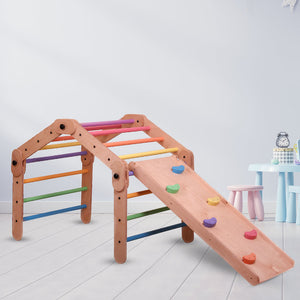
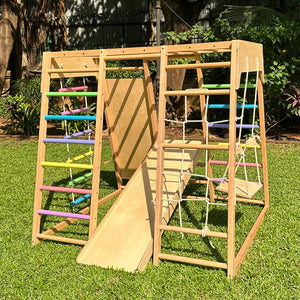
Building simple obstacle courses using found natural objects like large stones, twigs, and small mounds of earth encourages children to jump, crawl, and balance, enhancing their agility and coordination. These experiences contribute significantly to core strength and muscle development, skills that transfer to other physical activities. For children needing a little extra support or indoor alternatives, explore our range of gross motor skill development tools at SkilloToys.com.
Free Outdoor Activities for Children: Unstructured Exploration
The best part about using nature for gross motor development is its accessibility; many free outdoor activities for children require no special equipment, just curiosity and open space. A simple nature walk in a local park or even a walk around the neighbourhood can become an adventure. Encourage your child to collect different leaves, interesting stones, or fallen flowers, prompting them to bend, squat, and reach.
Transform a routine walk into a 'nature scavenger hunt' where children look for specific items like 'something rough,' 'something smooth,' or 'a red leaf.' This engages their observation skills while providing constant movement. Running freely across an open field, rolling down a gentle slope, or even splashing in puddles after a monsoon shower offers incredible sensory and gross motor stimulation, fostering joy and physical endurance.
Montessori Nature Activities: From Observation to Action
Montessori education profoundly values sensory exploration and observation, making Montessori nature activities inherently engaging. Encourage children to sort leaves by size, colour, or shape, much like they would with traditional Montessori materials such as the Pink Tower or Brown Stair. This refines their classification skills while utilizing gross motor movements to collect and arrange.
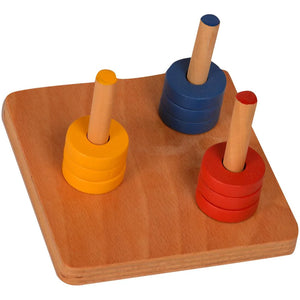
Water play, whether it's pouring water from one container to another using found objects, or observing a small stream flow, provides a rich sensory experience that also strengthens arm and core muscles. Creating nature mandalas or 'land art' with pebbles, petals, and twigs collected during walks enhances creativity and fine motor coordination, yet still involves walking, squatting, and reaching to gather materials. These activities foster concentration and a deep appreciation for the natural world. For a complete range of educational materials that support both indoor and outdoor learning, explore the Montessori Method learning materials and toys collection at SkilloToys.com.
Unstructured Outdoor Play Ideas: Fostering Independence
True Montessori outdoor play often involves minimal adult intervention, allowing children the freedom to direct their own learning and exploration. Unstructured outdoor play ideas empower children to build resilience and problem-solving skills. Let them build forts from fallen branches, create imaginary worlds beneath a large tree, or simply run, jump, and climb as their bodies dictate. This child-led approach respects their inner drive for movement and discovery.
In Indian homes, where children often spend time with joint families, grandparents, or older siblings, these moments of free play can become cherished memories. Observing children as they negotiate roles, create rules, and overcome physical challenges in a natural setting demonstrates the power of self-education. Studies indicate that children who engage in ample unstructured outdoor play exhibit better emotional regulation and academic performance.
Embracing nature as the primary tool for Montessori outdoor gross motor activities is a powerful, accessible, and often free way to support your child's holistic development. By encouraging simple acts like playing in dirt, climbing low branches, or exploring a local park, parents in India can significantly impact their child's physical health, cognitive abilities, and emotional well-being. Let's step away from screens and into the vibrant, dynamic classroom that nature so generously offers, fostering strong, capable, and joyful children.
- Montessori outdoor gross motor activities utilizing nature are essential for children's holistic development, addressing modern challenges like screen time and Vitamin D deficiency.
- Engaging in 'play in dirt' activities, as advocated by Sridhar Vembu, builds immunity, refines sensory perception, and strengthens large muscle groups.
- Nature provides an inherent environment for developing crucial gross motor skills through climbing, balancing on logs, and navigating varied terrains.
- Unstructured, free outdoor play fosters independence, problem-solving, and better emotional regulation in children, aligning with Montessori principles.
- Integrating natural elements into play is a free, accessible, and highly effective method for enhancing physical activity and cognitive growth for Indian children.
- Research consistently shows that ample outdoor play reduces risks of myopia and contributes positively to academic performance and overall well-being.
Why are outdoor gross motor activities important for children in India?
Outdoor gross motor activities are crucial for Indian children to combat rising screen time, prevent Vitamin D deficiency, and reduce the risk of myopia, as highlighted by recent news and research. These activities build essential physical strength, coordination, and balance.
How does playing in dirt help a child's development?
Playing in dirt significantly enhances a child's sensory development, fine and gross motor skills, and even boosts immunity through exposure to diverse microbes. It allows children to explore textures, weights, and engage in imaginative, hands-on learning.
What are some free Montessori-aligned outdoor activities using nature?
Free Montessori-aligned activities include nature walks to collect items, sorting leaves by attributes, building forts with sticks, balancing on fallen logs, and creating art with natural materials. These foster observation, concentration, and physical coordination.
At what age can children start engaging in nature-based gross motor play?
Children can begin engaging in nature-based gross motor play as early as 18-24 months, with supervision. Toddlers benefit from crawling on grass, stepping over small obstacles, and exploring safe natural environments, gradually progressing to more complex movements.
How can parents encourage unstructured outdoor play?
Parents can encourage unstructured outdoor play by providing a safe outdoor space, minimizing adult intervention, and allowing children the freedom to choose their activities. This could be a local park, a backyard, or even a community open space, where children can explore and create independently.