Montessori Outdoor Play Strategies for Urban Kids
Montessori outdoor play strategies are essential for enhancing urban Indian children's development, providing vital physical activity and sensory engagement often missed in screen-dominated lives. Research shows that structured freedom in nature directly combats issues like vitamin D deficiency and childhood obesity, prevalent concerns highlighted by recent India Today and Times of India reports. By integrating these strategies, parents can ensure their children experience profound benefits from their limited access to green spaces, fostering holistic growth from a young age.
Montessori outdoor free play is a child-led approach where children explore and interact with natural environments using their senses, fostering independence, concentration, hand-eye coordination, and gross motor skills. This matters because it allows children to follow their innate curiosity, building confidence and physical resilience. Indian parents can facilitate this by providing safe, stimulating outdoor spaces and minimal adult intervention, transforming everyday moments into learning opportunities.
The Unseen Costs of Indoor Lives for Urban Indian Children
In our rapidly urbanising India, the allure of screens often keeps children indoors, away from the invaluable benefits of nature. This shift is contributing to concerning trends: India Today recently highlighted a spike in vitamin D deficiency due to less sunshine exposure, while The Times of India has linked smartphone use to rising childhood obesity rates. Coupled with early heatwaves causing dehydration and fatigue, the urgent need for quality outdoor play is undeniable.
Child development experts agree that consistent physical activity outdoors is critical for not just physical health, but also cognitive and emotional well-being. It helps children manage stress, improve sleep, and develop crucial problem-solving skills. For Indian families, navigating school pressures, competitive entrance exams, and the comfort of air-conditioned homes means consciously prioritising outdoor time has become more important than ever.
Embracing Nature's Classroom: Montessori Principles for Outdoor Free Play
Maria Montessori firmly believed in the power of nature as the ultimate classroom. Applying Montessori principles to enhance outdoor free play means creating a 'prepared environment' even in a small urban Indian setting like a balcony or a society park. This approach respects the child's innate drive to learn, providing freedom within limits to explore and discover at their own pace.
Key principles include observation, allowing the child to lead their play, and offering open-ended materials that spark imagination. For Indian parents, this translates to letting children investigate a busy ant hill, collect fallen leaves during their evening walk, or simply experience the joy of splashing water. Such activities foster concentration, independence, and a deep connection with the natural world, regardless of the grandeur of the space.
Montessori Outdoor Play Strategies: Actionable Ideas for Indian Families
Implementing effective montessori outdoor play strategies doesn't require vast gardens or elaborate equipment; it's about intentionality. These strategies focus on empowering children to interact meaningfully with their surroundings, developing skills organically through exploration. Here’s how Indian families can put these ideas into practice, whether in a sprawling joint family compound or a compact apartment balcony.
Setting Up a 'Prepared' Outdoor Environment
Start small, yet thoughtfully. On a balcony or terrace, a tub of water, a few small shovels, and natural elements like pebbles, sand, or even soil from a potted plant can create a sensory rich environment. In a local park, identify a safe, relatively undisturbed corner where your child can freely explore without constant interruption.
Provide simple tools like a magnifying glass for examining insects, small buckets for collecting treasures, or child-sized gardening tools. The goal is to offer materials that invite interaction and discovery, rather than prescriptive toys that limit imagination. This empowers children to take ownership of their outdoor experience.
Encouraging Independent Exploration and Montessori Gross Motor Activities
Freedom of movement is paramount in Montessori. Outdoors, this means allowing children to run, jump, climb, and balance within safe boundaries. These Montessori gross motor activities are fundamental for developing coordination, strength, and spatial awareness.
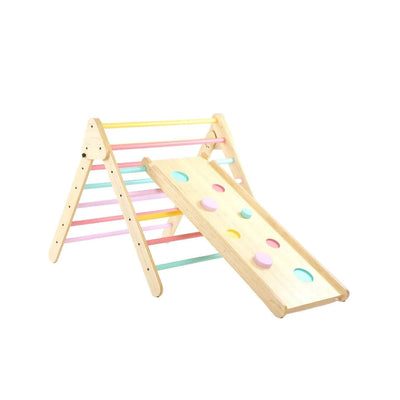
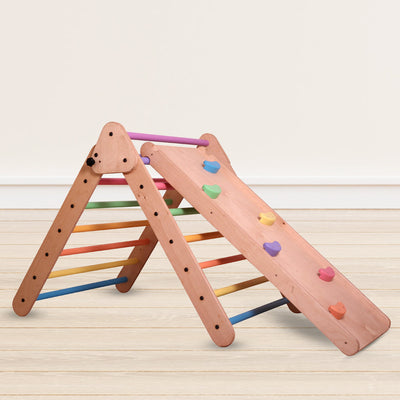
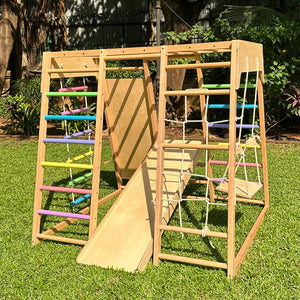
To further support this, consider age-appropriate gross motor skill development tools such as balancing beams or Pikler triangles from SkilloToys, designed to safely challenge and build strength. Observe your child's interests – if they are fascinated by climbing stairs, guide them to a safe, low structure where they can practice repeatedly, building confidence with each successful attempt.
Simple Outdoor Play Ideas for Urban Kids in Bengaluru and Beyond
No matter where you are in urban India, countless opportunities exist for enriching outdoor play. These outdoor play ideas for urban kids are easy to implement and incredibly beneficial for development, transforming ordinary moments into extraordinary learning experiences.
Take your child on a 'nature walk' around your society complex or a nearby park, encouraging them to collect specific items like a smooth pebble, a red flower, or a crinkly leaf. This scavenger hunt sharpens observation skills and connection to nature. For toddlers (18-24 months), simple water play in a tub on the balcony offers immense sensory delight and fine motor practice.
Encourage 'gardening' even with a small pot, allowing them to dig, plant a seed, and water it. This teaches responsibility and the cycle of life. These outdoor experiences beautifully complement the structured learning provided by authentic Montessori learning materials available at SkilloToys, ensuring holistic development across all domains.
Cultivating Quality Outdoor Play for Children Every Day
Consistency is key when fostering quality outdoor play for children. Studies indicate that children who spend at least 60 minutes in moderate-to-vigorous physical activity daily show significant improvements in mood, concentration, and overall health. Making outdoor time a daily family ritual, perhaps post-school or during festival breaks, creates a positive routine that children look forward to.
As parents, our role is to facilitate, not dictate. Offer opportunities, prepare the environment, and then step back to observe. Your presence is reassuring, but your constant direction can stifle independent exploration. By trusting your child's innate drive to learn and explore, you empower them to build self-reliance and resilience, crucial skills for navigating the world, both indoors and out.
Overcoming urban challenges like pollution or limited green spaces requires creativity. Seek out community gardens, explore different parks, or even utilise building terraces. The focus remains on providing engaging, child-led experiences that prioritise physical movement and sensory engagement over passive entertainment.
- Montessori outdoor play strategies directly combat vitamin D deficiency and childhood obesity in urban Indian children.
- Creating a 'prepared environment' for outdoor play fosters independence and concentration, even in small urban spaces.
- Freedom of movement and child-led exploration are crucial for developing gross motor skills and physical resilience.
- Simple outdoor play ideas like nature walks, sensory bins, and water play are highly effective for urban kids.
- Consistent, quality outdoor play significantly improves children's physical health, cognitive function, and emotional well-being.
- Indian parents can use local parks, balconies, and family gardens to implement effective Montessori outdoor play.
How can I encourage outdoor play in a small urban space?
Even a small balcony or terrace can become a 'prepared environment' for Montessori outdoor play. Provide simple materials like buckets, water, sand, or natural elements for sensory exploration and gross motor activities.
What are the benefits of Montessori outdoor play for urban Indian children?
Montessori outdoor play helps urban Indian children develop gross motor skills, sensory awareness, independence, and concentration. It also combats issues like vitamin D deficiency and childhood obesity often linked to excessive screen time.
How can I make outdoor play safe and stimulating in an Indian urban setting?
Prioritize safety by supervising children and ensuring the play area is secure. Stimulate play by offering natural materials, encouraging child-led exploration, and observing their interests to tailor activities, whether in a society park or a grandparent's garden.
Are there specific Montessori toys for outdoor gross motor development?
While Montessori emphasizes natural materials, gross motor skill development tools like climbing arches, balancing boards, or stepping stones align well with the philosophy. These encourage movement, coordination, and strength in a child-led manner.
How does Montessori outdoor play differ from general outdoor play?
Montessori outdoor play is distinguished by its emphasis on the 'prepared environment,' freedom of movement, child-led activity, and adult observation over direct instruction. It focuses on purposeful exploration that builds independence and intrinsic motivation, rather than just unstructured recreation.