Outdoor Play: Essential for Indian Child Development
The importance of outdoor play for child development is paramount, directly contributing to cognitive function, physical health, and emotional well-being, proving as vital as academic study and nutritious meals. Research shows that engaging with nature and movement outside significantly enhances problem-solving skills, reduces stress, and builds resilience in children, foundational for their growth.
Holistic child development integrates physical, emotional, social, cognitive, and spiritual growth, recognizing each facet as interconnected and equally significant. This approach matters immensely because it fosters a well-rounded individual capable of thriving in all aspects of life, not just academics. Indian parents can achieve this by consciously balancing structured learning with abundant free, unstructured outdoor play.
In many Indian homes, the emphasis on academics can inadvertently sideline the critical need for outdoor engagement. With rising screen time and increasing concerns about children's physical health, like Vitamin D deficiency and myopia, the conversation shifts from 'should we play outside?' to 'how do we make outdoor play a priority, alongside daily studies and meals?' This guide provides an energetic, nature-loving, and physical-development focused perspective, urging parents to re-evaluate what truly constitutes a child's essential daily routine.
Physical Vitality: More Than Just Exercise
Prioritizing outdoor play is fundamental for the physical activity essential for children, ensuring robust bodily development. Children need to run, jump, climb, and balance to develop gross motor skills, coordination, and spatial awareness, which are crucial for overall physical health. Maria Montessori observed that movement is critical for brain development, stating, 'The hand is the instrument of the intelligence,' but the whole body acts as the foundation for this intelligence.
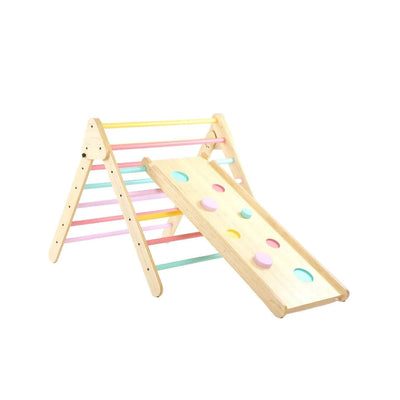
The current news context in India, as highlighted by India Today, reports a concerning increase in Vitamin D deficiency due to less sunshine exposure. Furthermore, Healthcare Radius discusses the alarming rise of myopia in Indian children. Studies indicate that adequate outdoor light exposure can significantly reduce the risk of myopia in children, making outdoor time a direct preventative measure against these growing health crises. Integrating varied physical challenges, like those found in gross motor skill toys, enhances these developmental benefits.
Beyond preventing deficiencies, regular outdoor physical activity strengthens bones, builds cardiovascular health, and boosts immunity. It's not just about burning calories; it's about building a strong, healthy body ready to tackle life's challenges. Even simple games of kho-kho or gully cricket in the neighbourhood park contribute profoundly to a child's well-being.
Cognitive Growth: Learning Beyond the Classroom
Outdoor play offers a rich environment for learning that complements and often surpasses what can be achieved with outdoor play vs academics in a structured classroom. When children explore outdoors, they engage in natural problem-solving, creative thinking, and sensory exploration. Building a sandcastle, navigating a rocky path, or simply observing a busy ant colony fosters a different kind of intelligence.
This unstructured, experiential learning aligns perfectly with Montessori philosophy, which advocates for children learning through discovery and interaction with their environment. Research shows children engaged in regular outdoor play exhibit improved concentration and executive function skills, which directly support academic success. The freedom to experiment and make decisions outdoors cultivates independence and self-reliance, qualities that are invaluable in any learning setting.
For an Indian child often pressured by academic performance, outdoor play provides a vital mental break and an opportunity for their brains to process information in new ways. It's a natural stimulant for curiosity and a space for hypothesis testing, crucial for developing a truly intelligent and adaptive mind.
Emotional & Social Well-being: Building Resilience Outdoors
The role of outdoor play in fostering holistic child development Montessori-style is profound, extending to emotional regulation and social competency. Spending time in nature reduces stress, calms the mind, and enhances mood, acting as a natural antidote to the pressures of modern life. The quiet contemplation of a garden or the exhilarating rush of a game with friends both contribute to emotional balance.
Outdoors, children naturally develop crucial social skills. Negotiating turns on a swing, sharing playground equipment, or collaborating on an imaginary adventure with peers teaches empathy, communication, and conflict resolution. These are skills that cannot be taught through textbooks but are learned experientially, often under the watchful, encouraging eyes of grandparents or neighbours in an Indian joint family setup.
The freedom and open-ended nature of outdoor environments encourage self-expression and build confidence. Children learn to assess risks, overcome small challenges, and experience success, all of which contribute to a strong sense of self and resilience. This emotional grounding is as vital as any academic achievement for a child's overall well-being.
Balancing Study and Play: A Practical Indian Approach
Successfully integrating and balancing study and play India-wide is not an impossible task, even amidst intense academic competition. It requires a conscious shift in parental mindset, viewing outdoor time not as a luxury but as a fundamental need, akin to meals and sleep. The alarming statistics about screen time impact on kids underscore the urgency of this re-evaluation.
Parents can start by designating non-negotiable outdoor play slots daily, perhaps immediately after school or before dinner. Weekends can be dedicated to family outings to local parks, community gardens, or even nature trails, embracing the natural beauty of Bengaluru and beyond. Involve children in planning these activities to boost their enthusiasm.
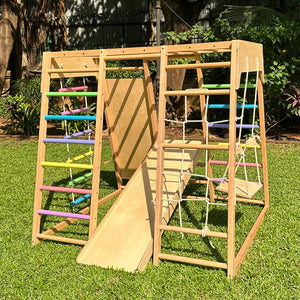
Instead of constantly reaching for screens, encourage creative outdoor alternatives. Simple props like a skipping rope, a ball, or even natural elements like pebbles and leaves can spark hours of imaginative play. SkilloToys provides a wide range of Montessori-inspired materials that can extend learning and play from indoors to the backyard, bridging the gap between structured and free exploration.
Remember, this balance is not about reducing study time, but about optimizing a child's overall development. A well-rested, physically active, and emotionally balanced child is far more capable of effective learning than one confined to a desk and screen.
- Outdoor play is as critical as academics and meals for a child's holistic development.
- Regular outdoor engagement significantly combats rising health issues like Vitamin D deficiency and myopia in Indian children.
- Unstructured outdoor play enhances cognitive skills such as problem-solving, creativity, and executive function.
- Maria Montessori emphasized that movement is foundational for intelligence and learning.
- Outdoor environments are crucial for developing essential social-emotional skills like empathy, communication, and resilience.
- Balancing study with ample outdoor play leads to improved concentration and overall academic performance.