Outdoor Play & Problem Solving Skills for Indian Kids
Outdoor play profoundly develops outdoor play problem solving skills for kids by offering unstructured environments where children encounter natural obstacles and social dilemmas, requiring them to think critically and adapt. This hands-on engagement is essential for cognitive growth, especially relevant in India where 'The Play Gap' due to academic pressures is a growing concern, as highlighted by recent reports like Her Circle's 'International Day Of Play'.
Developing problem-solving skills through outdoor play involves children independently navigating challenges in natural or semi-structured settings, finding creative solutions. This matters because it builds resilience, critical thinking, and adaptability, crucial for lifelong learning. Indian parents can facilitate this by providing safe, open-ended outdoor environments and observing their children's play.
Montessori Outdoor Learning: Fostering Independent Thinkers
Maria Montessori, a pioneer in child development, strongly advocated for connecting children with nature. She believed that the outdoor environment is a crucial extension of the classroom, providing limitless opportunities for self-directed exploration and learning. For Indian children, this means transforming our balconies, terraces, community parks, or even a local botanical garden into vibrant learning spaces.
In a Montessori context, outdoor learning isn't just about fresh air; it's about providing children with the freedom to interact with their environment, making choices, and facing natural consequences. When a child attempts to balance on an uneven path or navigate around a puddle, they are instinctively engaging their intellect and physical coordination. This process of trial and error, without immediate adult intervention, is foundational to developing robust problem-solving abilities.
Studies indicate that children engaged in regular outdoor, unstructured play develop stronger decision-making skills and greater self-confidence. This aligns perfectly with Montessori's emphasis on fostering independence from an early age, preparing children not just for school, but for life itself.
Cognitive Development Outdoor Play: The Brain's Natural Gym
The great outdoors acts as the brain's most dynamic gymnasium, offering unparalleled stimuli for cognitive development outdoor play. Unlike structured indoor activities or screen time, which The Times of India notes contribute to rising childhood obesity and sedentary lifestyles, outdoor play demands active engagement of multiple senses and brain functions simultaneously. When children climb a tree, build a fort with sticks, or chase a butterfly, they are constantly assessing risks, planning actions, and adapting to unpredictable elements.
Research shows that just one hour outdoors daily can significantly protect a child's eye health, as highlighted by India Today, but its cognitive benefits extend far beyond vision. Navigating varying terrains improves spatial awareness; experimenting with natural materials like mud, water, and leaves enhances creativity and critical thinking. These experiences directly translate into improved executive functions, including enhanced working memory, planning, and inhibitory control, which are vital for academic success and everyday challenges.
For children aged 3-6 years, such spontaneous play fosters divergent thinking – the ability to generate multiple solutions to a single problem. This invaluable skill is nurtured as they encounter open-ended problems, like how to transport water from a tap to a sandpit or how to collaborate with friends to move a heavy log, building their problem-solving toolkit.
Child Problem Solving Activities India: Everyday Adventures
In India, the potential for child problem solving activities India is immense, often woven into the fabric of daily life and community. From helping grandparents tend to a small kitchen garden to navigating the bustling lanes of a local market, every outdoor interaction presents a unique puzzle. Simple activities like collecting fallen leaves to identify different tree types, or designing a small irrigation channel for plants after monsoon rains, are rich problem-solving opportunities.
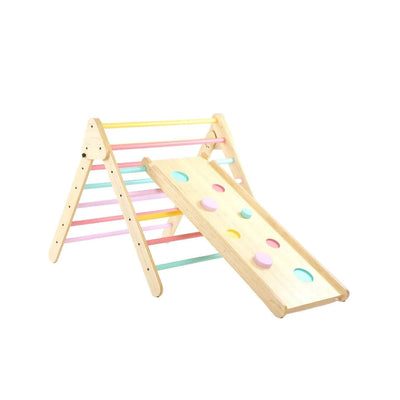
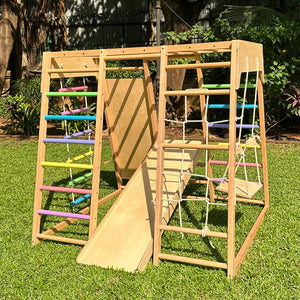
Consider children playing gully cricket; they must strategize batting orders, negotiate rules, and adapt to improvised boundaries, all while honing their teamwork and quick thinking. Even seemingly simple tasks like packing a picnic basket for a family outing to a nearby park or arranging items for a 'pretend shop' under a banyan tree encourage logical sequencing and spatial reasoning. Providing simple gross motor skill toys, like a durable balance beam or a small climbing ladder from SkilloToys.com, can further enhance these physical and cognitive challenges.
These everyday adventures, whether in a joint family courtyard or a community playground, empower children to think on their feet, fostering a sense of agency and competence. They learn to evaluate situations, anticipate outcomes, and adjust their approach – skills far more valuable than rote memorization.
Practical Life Skills Outdoors: Beyond the Classroom Walls
Montessori education places a strong emphasis on Practical Life skills, which are fundamental to developing independence and a sense of order. Outdoors, these skills take on a tangible, real-world dimension. Children learn responsibility by watering plants, sweeping fallen leaves from a patio, or sorting natural objects they've collected during a nature walk. These activities, often shared with siblings or cousins, cultivate fine motor skills, concentration, and a systematic approach to tasks.
When a child participates in a small gardening project, they aren't just planting seeds; they are learning about the life cycle, understanding cause and effect (e.g., too much water vs. too little), and developing patience. They encounter tangible problems – why isn't this seed sprouting? What happens if pests attack? – and must seek solutions. This direct engagement with the environment builds a powerful foundation for critical thinking.
Moreover, outdoor practical life skills like packing a bag for an adventure, or helping set up a makeshift tent, develop planning and organizational abilities. These experiences are invaluable for young learners, preparing them for more complex challenges later in life and complementing the foundational learning provided by Montessori learning materials from SkilloToys.com.
Key Takeaways
- Outdoor play is crucial for developing problem-solving skills in children by presenting natural, unstructured challenges.
- Montessori principles advocate for outdoor environments as extensions of the classroom, fostering independent thinking and self-directed learning.
- Regular engagement in outdoor play significantly enhances cognitive functions such as executive control, planning, and spatial awareness.
- Unstructured outdoor activities provide essential "brain gyms" that promote critical thinking and adaptability, contrasting with passive screen time.
- Incorporating practical life skills outdoors, like gardening or organizing natural elements, builds responsibility, concentration, and real-world problem-solving abilities.
- Indian children benefit immensely from local outdoor problem-solving activities, from gully cricket to helping in family gardens, fostering resilience and ingenuity.
Frequently Asked Questions
What age is best to start fostering problem-solving skills through outdoor play?
Children can begin developing problem-solving skills through outdoor play as early as 18-24 months. Toddlers exploring their environment, encountering obstacles, and experimenting with natural elements are already engaging in early forms of problem-solving.
How can parents encourage more outdoor problem-solving in their children?
Parents can encourage outdoor problem-solving by providing safe, unstructured outdoor time and open-ended materials like sticks, mud, water, and buckets. Observe your child's play without intervening immediately, allowing them to experiment and find their own solutions.
What are the specific benefits of unstructured outdoor play for cognitive development?
Unstructured outdoor play significantly boosts cognitive development by enhancing executive functions, critical thinking, creativity, and adaptability. Children learn to assess risks, plan actions, and generate multiple solutions in dynamic, unpredictable environments.
How does outdoor play align with Montessori principles for holistic child development?
Outdoor play perfectly aligns with Montessori principles by fostering independence, self-directed learning, and a connection to nature. It allows children to explore freely, make choices, and engage in practical life activities that build concentration, coordination, and a sense of responsibility.
Is outdoor play safe and beneficial for children in Indian urban environments?
Yes, outdoor play is highly beneficial and can be safely managed in Indian urban environments by utilizing community parks, botanical gardens, school grounds, or even safe building courtyards. Focus on supervised, open-ended play in designated green spaces to mitigate concerns and harness its immense benefits.