Doll House for Kids: Building Key School Readiness Skills
A doll house for kids is far more than just a toy; it's a powerful tool that significantly cultivates essential school readiness skills in Indian children. Through imaginative play, doll houses provide a miniature world where children practice social-emotional intelligence, language development, fine motor control, and critical problem-solving abilities, all vital for navigating preschool and beyond. Child development experts agree that engaging with these small worlds helps children master the complex social dynamics and practical skills required for formal schooling.
For many Indian parents in Bengaluru and across the country, the pressure to ensure their child is "school-ready" is immense. This isn't just about knowing ABCs or 123s; it's about developing a robust foundation of social, emotional, and cognitive capabilities. Research consistently shows that strong early childhood play, especially imaginative play with tools like doll houses, directly correlates with academic success and social adjustment later on.
What is a Montessori Doll House?
A Montessori doll house is an open-ended, often wooden, miniature home with simple, realistic furnishings that encourages imaginative play without predetermined narratives. This matters because it allows children to freely explore social scenarios and develop their own stories, fostering independence and creativity crucial for school. Indian parents can choose a doll house that reflects their home environment, making the play even more relatable and meaningful.
Unlike electronic toys that dictate the play, a well-designed Montessori doll house invites children to be the architects of their own miniature world. This freedom is key to developing intrinsic motivation and self-directed learning, principles central to the Montessori philosophy. Such play encourages children to engage deeply, solving problems and creating narratives independently.
The Science of Small Worlds: How Doll Houses Build Big Skills
The magic of a doll house lies in its ability to condense complex real-world interactions into a manageable, child-sized format. When a child plays with a doll house, they are not just moving figurines; they are actively processing observations about family dynamics, social etiquette, and the flow of daily life. This "miniature laboratory" allows for repeated experimentation with social norms, making abstract concepts concrete.
Studies indicate that children who engage in rich imaginative play demonstrate higher levels of cognitive flexibility and creativity. This ability to think flexibly is a cornerstone of school readiness skills, enabling children to adapt to new routines, absorb new information, and solve unexpected challenges in the classroom. It's a vital developmental leap that prepares them for formal learning environments.
Fostering Social Emotional Development for Preschool Success
One of the most significant contributions of dollhouse play is to a child's social emotional development. Children use dolls to act out familiar scenes from their homes, whether it's a bustling joint family dinner or a quiet moment with Dadi. This role-playing helps them process their own feelings, understand the perspectives of others, and experiment with different emotional responses in a safe space.
Imagine little Aarya in Bengaluru, making her doll-family characters argue over who gets the last ladoo, then negotiate a compromise. This seemingly simple play is a rehearsal for real-life conflict resolution and empathy. Researchers at Harvard's Center on the Developing Child emphasize that early social-emotional competence is a stronger predictor of school success than early literacy or math skills.
Boosting Language Development Preschool & Communication
Dollhouse play is a powerful catalyst for language development preschool children need to thrive. As children manipulate the dolls and furniture, they naturally engage in internal monologue or dialogue with the characters, narrating their stories and giving voice to their scenarios. This spontaneous verbalization significantly expands their vocabulary and refines their sentence structure.
From describing a doll's new dress to explaining why a character is "sad" or "happy," children are constantly practicing expressive language. This rich linguistic engagement not only prepares them for classroom discussions but also strengthens their ability to articulate needs and thoughts, a crucial aspect of overall communication. Parents can enhance this by asking open-ended questions about the dollhouse scene, like "What's happening here?" or "How do you think the baby doll feels?"
Developing Fine Motor Skills Preschool & Practical Life Application
The intricate details of a doll house and its accessories are perfect for honing fine motor skills preschool children will rely on daily. Picking up tiny teacups, arranging miniature beds, or dressing dolls with small clothing items requires precision and dexterity. These repetitive, focused movements strengthen the small muscles in a child's hands and fingers.
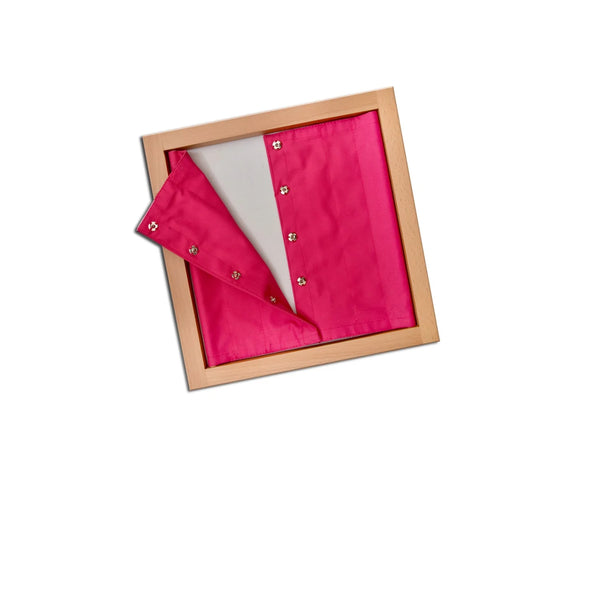
Such practice directly supports essential school tasks like holding a pencil correctly, cutting with scissors, or fastening buttons on their school uniform. Maria Montessori herself highlighted the importance of "Practical Life" activities that refine movement and coordination, and dollhouse play aligns perfectly with this principle, providing purposeful manipulation within a fun context. Exploring a wooden doll house can be an engaging way to build these foundational skills.
Problem-Solving & Cognitive Growth through Imaginative Play Benefits
Beyond the visible skills, dollhouse play offers profound imaginative play benefits that bolster cognitive development and problem-solving. Children must plan layouts, sequence events, and understand spatial relationships as they arrange rooms and create storylines. "Where does the kitchen go? What happens if the roof falls off? How do we get everyone ready for the festival?" These are all mini-problems that require critical thinking.
This process cultivates logical reasoning and creative problem-solving, equipping children with the mental flexibility to approach new challenges in the classroom. NCERT's National Curriculum Framework for Foundational Stage (2022) emphasizes the role of play in developing critical thinking and reasoning, making dollhouse play a valuable investment in a child's early education. It helps children understand cause and effect within a safe, playful environment.
Choosing the Best Doll House for Kids in India
When selecting a doll house, especially for school readiness, prioritize open-ended designs made from natural materials. Look for sturdy wooden options that encourage imagination rather than pre-programmed scenarios. A simpler, more realistic doll house allows your child to project their own experiences and creativity onto the play, rather than being passively entertained.
Consider the space available in your Indian home; some doll houses are compact, while others offer more room for elaborate play. The most important factor is that the doll house sparks your child's imagination and provides ample opportunity for them to develop these crucial skills. SkilloToys offers a range of Montessori learning materials, including doll houses, designed to support holistic development.
Ultimately, investing in a doll house for kids is investing in a powerful developmental tool. It provides a nurturing space for your child to grow into a confident, capable, and compassionate individual, well-prepared not just for school, but for life. Encourage your child to immerse themselves in this miniature world, and you'll witness their essential school readiness skills flourish right before your eyes.
Tonight, instead of asking about their day at school, ask your child to describe a scene they created in their doll house. Listen to their narrative, observe their problem-solving, and celebrate the incredible learning happening in their tiny, imaginative world. This simple interaction can open up a window into their developing mind and reinforce the value of their play.