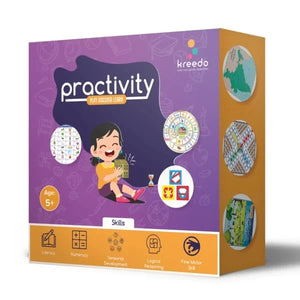
India Map Puzzle: Essential for School Readiness
An India map puzzle is undeniably crucial for a child's school readiness in India, laying foundational cognitive and fine motor skills essential for formal learning. Research shows that engaging with this specific type of educational puzzle at an early age significantly boosts spatial reasoning and early geography knowledge, preparing children for the classroom environment.
An India map puzzle is an educational toy where India's states and union territories are individual pieces, typically made from wood. This matters because it introduces children to their nation's geography and culture tangibly. Indian parents can integrate this into daily play to foster early learning and national identity.
In an era where children are often trying to swipe physical books, as highlighted by recent discussions in The Times of India, the tactile engagement offered by physical puzzles is more vital than ever. It counters the passive nature of screens, ensuring children develop the dexterity and focus needed for school. EuroKids CEO stresses the importance of strong early learning foundations, and an India map puzzle serves as an excellent cornerstone for such foundational development.
Building Essential Fine Motor Skills and Hand-Eye Coordination
Child development experts agree that the act of manipulating puzzle pieces directly strengthens a child's fine motor skills. Holding, turning, and accurately placing each state piece onto the map requires a precise pincer grasp and excellent hand-eye coordination. These are the very skills that underpin successful pencil grip, handwriting, and various practical life activities in preschool and LKG.
Studies indicate that children who engage with puzzles regularly show better spatial reasoning and hand-eye coordination compared to those who do not. For young Indian children, the repetitive yet engaging nature of fitting the distinct shapes of states like Rajasthan or Tamil Nadu builds muscle memory and prepares their hands for the rigours of writing and drawing. This tactile experience is a cornerstone of Montessori method learning materials, ensuring children learn through doing.
Introducing Early Geography and Cultural Awareness with India Map for Kids
A well-designed India map for kids serves as a child's first geography lesson, long before they encounter textbooks. As children assemble the puzzle, they visually learn the shapes and relative positions of states, absorbing information about India's vastness and diversity. This play-based learning seamlessly integrates with discussions about family visits to grandparents in different states or the vibrant festivals celebrated across the nation.
This early exposure to geography for preschoolers is not just about memorisation; it's about building a mental map of their country. They begin to understand concepts of north, south, east, and west in a concrete way. Parents can engage children by naming states and their capitals, perhaps even discussing different languages spoken or unique foods found in each region, fostering a rich cultural appreciation from a young age. These discussions are invaluable in joint family settings, where grandparents can share stories about their ancestral states.
Fostering Problem-Solving and Cognitive Development for School Readiness
Solving an educational puzzle for school readiness, especially one as intricate as an India map, is a complex problem-solving task for a young child. They learn to strategise, to identify patterns, and to use trial and error effectively. Each misplaced piece offers a learning opportunity, teaching perseverance and adaptability – critical traits for academic success.
Research consistently demonstrates that children with strong fine motor skills at age five are more likely to achieve higher scores in early literacy and numeracy. The cognitive processes involved in fitting puzzle pieces together – analysing shapes, comparing sizes, and understanding spatial relationships – significantly boost critical thinking. This prepares children not just for specific school subjects but for the general intellectual demands of formal education, strengthening their foundational learning capacity.
Enhancing Language Skills and Social-Emotional Growth
An India map puzzle is more than just a solitary activity; it's a springboard for rich language development and social interaction. As children work on the puzzle, parents and caregivers can engage them in conversations about states, their capitals, and famous landmarks. This dialogue expands vocabulary, improves communication skills, and helps children articulate their discoveries.
Playing together with an India map puzzle fosters social-emotional growth, especially within the Indian family context. Children learn to share, take turns, and manage frustration when a piece doesn't fit immediately. These shared experiences, perhaps with a parent or a Dadi, strengthen family bonds and teach valuable lessons in cooperation and emotional regulation. Montessori education places great emphasis on such self-correcting and interactive materials, which include a range of Montessori geography toys.
- India map puzzles develop crucial fine motor skills, essential for pre-writing and practical life activities.
- They introduce early geography, fostering a tangible understanding of India's states and cultural diversity.
- These puzzles significantly enhance problem-solving, spatial reasoning, and critical thinking abilities.
- Engaging with an India map puzzle promotes language development and social-emotional growth through interactive play.
- Maria Montessori's philosophy advocates for tangible, self-correcting materials like map puzzles for foundational learning.
- Regular engagement with physical puzzles, such as the India map, actively counters the challenges posed by excessive screen time on children's development.
What age is appropriate for an India map puzzle?
An India map puzzle is typically suitable for children aged 3 to 6 years. At this stage, children are developing fine motor skills and an understanding of shapes and spatial relationships, making them ready for such engaging educational tools.
How does an India map puzzle aid school readiness?
It aids school readiness by developing fine motor skills, hand-eye coordination, and problem-solving abilities essential for writing and classroom tasks. It also introduces early geography and cultural awareness, broadening a child's general knowledge base.
Are all India map puzzles the same?
No, India map puzzles vary in complexity, material, and features. Some may include state capitals or names directly on the pieces, while others might be plain, allowing for more verbal interaction. Montessori versions often focus on self-correcting design and tactile exploration.
How can parents make learning with an India map puzzle more engaging?
Parents can make learning engaging by discussing state languages, popular festivals, or family trips to different regions. Encourage children to share what they know and turn it into a storytelling session, fostering a deeper connection to their country.
What other Montessori geography toys complement an India map puzzle?
Other Montessori geography toys, such as continent puzzles, globes, or landform models, can complement an India map puzzle. These materials collectively build a comprehensive understanding of the world, from local to global, in a hands-on manner.