Montessori Strategies: Deeper Preschool Learning India
For Indian parents facing an extended preschool journey before Class 1, effective Montessori strategies extended preschool India offer a definitive pathway to profound learning and holistic development, ensuring these crucial years are not merely marked by repetition but by meaningful growth. Child development experts agree that a structured yet child-led approach maximizes cognitive and emotional preparedness, making the most of this additional time for sustained engagement.
Deeper learning in extended preschool refers to an educational approach that moves beyond rote memorization to foster critical thinking, problem-solving, and intrinsic motivation, building a strong foundation for future academic success. This matters because it cultivates a lifelong love for learning and equips children with essential life skills, rather than just academic facts. Indian parents can actively support this by providing a prepared environment that encourages exploration and self-directed activity.
Maximizing the Extended Preschool Years with Montessori in India
The recent news about Goa raising the Class 1 entry age to six, along with broader discussions around the NEP 2020, signals a nationwide trend: slowing down school entry to allow for a more robust foundational stage. This shift, while beneficial, has raised a 'real alarm' for many Indian parents: how do we ensure these extended preschool years are filled with quality, progression, and genuine deeper learning, rather than just repeating previous content?
Montessori education provides a proven framework to transform this extended period into an unparalleled opportunity for comprehensive development. Instead of viewing it as merely 'more time,' SkilloToys.com advocates for a strategic approach that nurtures your child's innate curiosity and capabilities, ensuring they are not just older, but truly ready for the academic rigours and social dynamics of Class 1.
The Prepared Environment: Foundation for Deeper Learning
At the heart of Montessori lies the concept of the 'prepared environment,' whether at home or in a school. This environment is thoughtfully arranged with age-appropriate, self-correcting materials that invite exploration and independent discovery. For Indian families, this means creating accessible spaces where children can engage with materials independently, fostering concentration and a sense of ownership over their learning.
A well-prepared environment reduces reliance on constant adult intervention, empowering children to learn through doing. Research shows that children in such environments develop superior problem-solving skills and a stronger sense of self-efficacy. This is particularly crucial in joint family settings, where designated learning spaces can offer calm and focus amidst the bustle.
Montessori Strategies for 5-6 Year Olds: Beyond Repetition
For children aged 5-6, the extended preschool period is ripe for introducing more complex concepts and refining earlier skills. The Montessori approach ensures that learning is always progressive, building on prior knowledge without becoming repetitive or leading to burnout.
Cultivating Intrinsic Motivation and Avoiding Burnout
Avoiding 'preschool burnout' is a significant concern for parents, especially given the traditional pressure for early academic achievement in India. Montessori counters this by fostering intrinsic motivation through freedom of choice and respect for the child's individual pace. When children are allowed to choose their work, they engage more deeply and sustain interest for longer periods.
This approach means that if a child is fascinated by the Montessori Method Learning Materials related to geography, they can spend extended periods exploring it, rather than being rushed to the next activity. This self-directed engagement is crucial for preventing fatigue and maintaining a joyful attitude towards learning, making the most of these precious years before formal schooling.
Engaging Activities for Deeper Learning
Montessori strategies for 5-6 year olds are rich and varied, ensuring continuous intellectual stimulation:
- Advanced Practical Life: Children at this age thrive on real-world responsibilities. Activities like preparing simple snacks, caring for plants, or even basic stitching teach valuable life skills, coordination, and concentration.
- Sensorial Refinement: Materials like the Binomial or Trinomial Cube introduce abstract mathematical concepts through concrete experiences. This refines their senses and lays the groundwork for advanced algebra and geometry. Consider exploring options like the Pink Tower to enhance their understanding of dimensions and order.
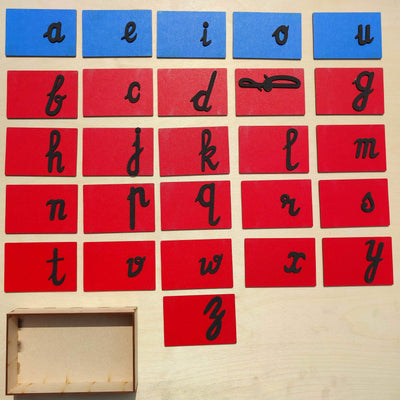
- Language Explosion: With a solid foundation in phonics from materials like the Sandpaper Letters, 5-6 year olds move to composing sentences and stories with the Movable Alphabet. They explore grammar, sentence structure, and even early creative writing, expanding their vocabulary and communication skills significantly.
- Mathematical Operations: Children progress from understanding quantities with Golden Beads to performing addition, subtraction, multiplication, and division using various bead frame materials. They grasp the decimal system and place value concretely, making abstract concepts accessible.
- Cultural Exploration: Engaging with maps, globes, and cultural materials broadens their worldview. They learn about different countries, festivals, and life forms, fostering a global perspective that is vital for modern Indian children.
Quality Preschool Curriculum India: What to Look For
For parents evaluating preschools or designing a home-based curriculum during these extended years, certain elements are non-negotiable for ensuring deeper learning and school readiness. A quality curriculum in India must prioritize holistic development over rote memorization.
Aligning with NEP 2020 Age Recommendations
The National Education Policy (NEP) 2020 emphasizes a strong foundational stage from ages 3 to 8, focusing on play-based, activity-based, and experiential learning. Montessori education inherently aligns with these principles. Child development experts agree that this approach fosters creativity, critical thinking, and collaborative skills – exactly what NEP 2020 advocates for.
When assessing a program, look for environments that encourage independence, offer a variety of self-correcting materials, and have trained educators who observe and guide, rather than dictate. This ensures that your child's preschool experience is enriching and developmentally appropriate, setting them up for success in Class 1 and beyond.
Long-Term Benefits of a Deeper Learning Approach
Investing in a deeper learning approach during the extended preschool years yields significant long-term benefits for Indian children. It builds more than just academic skills; it cultivates resilience, adaptability, and a genuine love for learning.
Children exposed to comprehensive Montessori strategies are often more self-disciplined, confident, and possess superior executive function skills. They are not just 'ready' for Class 1 academically, but also emotionally and socially equipped to navigate new challenges, collaborate with peers, and approach new concepts with curiosity and enthusiasm. Studies indicate that early childhood education focused on hands-on discovery and problem-solving leads to higher engagement and academic achievement in later years, a testament to the power of quality preschool preparation.
- Extended preschool years, particularly for 5-6 year olds in India, offer a critical opportunity for deeper, rather than repetitive, learning.
- Montessori strategies, centered on a prepared environment and self-directed activity, effectively address concerns about quality and progression before Class 1.
- The Montessori approach helps prevent preschool burnout by fostering intrinsic motivation and respecting the child's individual pace.
- Child development experts recommend focusing on practical life, sensorial, language, and math activities to build strong foundational skills.
- Aligning with NEP 2020's focus on foundational learning, Montessori emphasizes experiential and play-based education.
- Research indicates that a deeper learning curriculum fosters critical thinking, problem-solving, and a lifelong love for learning.
How do Montessori strategies ensure quality learning during extended preschool?
Montessori strategies prioritize individualized, self-directed learning, allowing children to progress at their own pace and engage deeply with concepts. This approach ensures children master foundational skills rather than simply covering material, fostering true understanding and confidence.
What are some Montessori activities suitable for 5-6 year olds in India?
For 5-6 year olds, Montessori activities include advanced practical life skills like cooking or gardening, exploring geometry with constructive triangles, engaging with the movable alphabet for creative writing, and using golden beads for complex mathematical operations. These activities build on earlier foundations, offering new challenges and deeper engagement.
How can I avoid preschool burnout for my child in India?
Avoiding preschool burnout involves prioritizing child-led learning and respecting your child's natural pace, rather than imposing excessive academic pressure. Montessori emphasizes freedom within limits, allowing children to choose activities that genuinely interest them, thus maintaining enthusiasm and a love for learning.
How does Montessori align with the NEP 2020 age recommendations for early learning?
Montessori inherently aligns with the NEP 2020's emphasis on foundational literacy and numeracy, experiential learning, and holistic development for the 3-8 age group. Its child-centric, play-based approach perfectly complements the policy's vision for joyful and meaningful early education, preparing children comprehensively for Class 1.
What is deeper learning in the context of extended preschool years?
Deeper learning in extended preschool refers to an educational approach that moves beyond rote memorization to foster critical thinking, problem-solving, and intrinsic motivation, building a strong foundation for future academic success. This cultivates a lifelong love for learning and equips children with essential life skills, rather than just academic facts.