Preschool Quality India: Montessori Benchmarks Post-NEP 2020
Ensuring high preschool quality India is crucial for a child's foundational development, especially with the transformative goals of NEP 2020. A quality preschool environment provides a child-centric, stimulating, and safe space that fosters holistic growth, going beyond mere childcare to lay strong cognitive, social, and emotional groundwork.
As Indian parents, navigating the myriad preschool options can feel overwhelming, particularly with national efforts like the 'Call for EOIs: Technical support to Early Childhood Care and Education' signaling an urgent need for improvement. This guide empowers you with clear Montessori benchmarks to evaluate early childhood education programs, ensuring your child receives the very best start.
What is Quality Early Childhood Education (ECE)? Quality Early Childhood Education (ECE) refers to structured, stimulating learning experiences for children aged 3-8, focusing on holistic development. This matters because robust ECE programs are proven to enhance lifelong learning, social skills, and school readiness. Indian parents can confidently evaluate ECE by seeking environments that align with proven pedagogical approaches like Montessori.
Understanding Quality ECE Post-NEP 2020: What India Needs
The National Education Policy (NEP) 2020 marks a significant shift in India's approach to early learning, emphasizing 'Foundations First' and integrating Early Childhood Care and Education (ECCE) as an integral part of the education continuum. This policy underscores the importance of a strong foundation during the crucial developmental years, recognizing that 90% of a child's brain develops by age five. It calls for play-based, activity-based, and inquiry-based learning, moving away from rote memorization.
This national focus directly impacts the standards for NEP 2020 ECE guidelines, urging preschools to adopt pedagogies that truly nurture a child's potential. As news from Ahmedabad suggests changes in preschool education, and Goa raises Class 1 entry age, parents are right to be concerned about the quality of the earliest learning experiences. Research consistently shows that children in high-quality ECE programs exhibit better academic outcomes and social-emotional skills in later life.
Montessori Preschool Standards India: Key Benchmarks for Parents
When assessing Montessori preschool standards India, parents should look beyond the name and delve into the practical application of Montessori principles. The Montessori method, pioneered by Dr. Maria Montessori, offers a scientifically proven approach to child development, emphasizing independence, respect for the child, and hands-on learning.
The Prepared Environment: A Child-Centric Space
A hallmark of quality Montessori education is the 'prepared environment.' This means a classroom designed entirely for children, with child-sized furniture, materials arranged logically on accessible shelves, and a sense of order and beauty. Such an environment encourages freedom of movement, exploration, and concentration, allowing children to choose their activities and learn at their own pace.
Child development experts agree that an organized, stimulating environment fosters independence and a deep sense of security. Observe if the space feels calm and inviting, reflecting the peace and order often found in traditional Indian homes, even amidst the hustle of a joint family.
The Role of the Montessori Directress: Guide, Not Instructor
Unlike traditional teachers, a Montessori Directress (teacher) acts as a guide, observing children and introducing them to materials when they are developmentally ready. They do not dictate learning but facilitate it, nurturing each child's intrinsic motivation. A qualified Directress holds specific Montessori certification and understands how to support a child's natural learning process without interference.
Look for a Directress who is patient, observant, and respectful of each child's individual personality and pace. They should be a gentle presence, fostering a respectful and loving atmosphere, much like a beloved grandparent guiding a child.
Montessori Materials: Hands-On Learning for High-Quality Foundational Learning
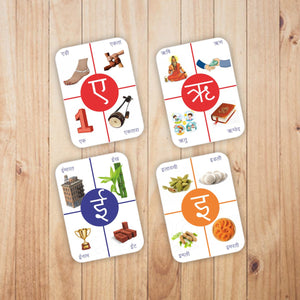
Central to the Montessori approach are the specially designed, self-correcting educational materials. These tools, such as the Pink Tower, Sandpaper Letters, or Knobbed Cylinders, engage multiple senses and allow children to grasp abstract concepts through concrete, hands-on experiences. This sensory engagement is vital for developing fine motor skills, concentration, and logical thinking, which are pillars of high-quality foundational learning.
Studies indicate that children who work with Montessori materials develop a deeper understanding of mathematical, linguistic, and scientific concepts. Explore our collection of Montessori Method Learning Materials at SkilloToys.com to see examples of the quality tools that foster this profound learning. These materials are crucial for building the cognitive scaffolding needed for future academic success, alleviating some of the pressure Indian parents often feel regarding school readiness.
Mixed-Age Classrooms: Fostering Peer Learning and Leadership
Montessori classrooms typically group children in three-year age spans (e.g., 3-6 years). This arrangement mirrors natural family dynamics, allowing older children to mentor younger ones, reinforcing their own learning and developing leadership skills. Younger children, in turn, are inspired by their older peers and learn through observation.
This unique setup fosters a strong sense of community, empathy, and social responsibility, invaluable life skills for children growing up in diverse Indian communities. It promotes collaboration over competition, preparing children not just for LKG or UKG, but for life itself.
Observation and Individualized Learning Plans
A true Montessori program relies heavily on observation to understand each child's interests, developmental stage, and learning style. Based on these observations, the Directress creates individualized learning plans, guiding the child towards activities that challenge and engage them. This personalized approach ensures that every child, whether an 18-month-old exploring sensorial practical life materials or a 5-year-old mastering language materials, receives tailored support.
Such individualized attention stands in stark contrast to one-size-fits-all curricula, making it a powerful indicator of a program's commitment to genuine child development and a high standard of ECE.
Evaluating Early Childhood Education India: A Checklist for Parents
When you are ready for the crucial step of evaluating early childhood education India options, remember these practical tips. Trust your instincts as a parent, and don't hesitate to ask detailed questions. A transparent preschool will welcome your inquiries.
- Visit during operational hours: Observe children and staff in action. Are children engaged and happy? Is the environment calm yet purposeful?
- Inquire about staff qualifications: Look for Montessori-certified Directresses and a low student-to-teacher ratio (ideally 1:8 for 3-6 years).
- Assess hygiene and safety: Cleanliness, child-proofing, and emergency procedures are non-negotiable, especially important for the health of our little ones.
- Understand parent involvement: A quality preschool values parent partnership, offering regular communication and opportunities for involvement.
- Review the daily schedule: Does it allow for ample unstructured play, concentrated work cycles, and outdoor time, reflecting the holistic development stressed by NEP 2020?
Choosing a preschool is more than just finding a convenient location; it's about securing a nurturing foundation for your child's entire future. By applying these Montessori benchmarks, Indian parents can confidently select a high-quality ECE program that aligns with their values and national educational goals.
- High preschool quality India is essential for a child's holistic development, as emphasized by NEP 2020's focus on foundational learning.
- Montessori preschool standards India prioritize child-led learning within a 'prepared environment' and individualized instruction.
- The Montessori Directress acts as a guide, fostering independence and a love for learning rather than direct instruction.
- Specialized Montessori materials are crucial for sensory engagement and developing concrete understanding of abstract concepts.
- NEP 2020 ECE guidelines advocate for play-based, discovery-oriented learning, a philosophy deeply embedded in the Montessori method.
- Evaluating early childhood education India requires parents to observe classroom dynamics, teacher qualifications, and the presence of a truly child-centric approach.
What defines a high-quality preschool in India?
A high-quality preschool in India offers a child-centric environment with qualified educators, a rich curriculum, and fosters holistic development across cognitive, social, emotional, and physical domains. It prioritizes active learning and respects individual learning paces, as emphasized by NEP 2020.
How does NEP 2020 influence early childhood education standards?
NEP 2020 emphasizes foundational learning, shifting focus towards competency-based education, critical thinking, and holistic development for children aged 3-8. It promotes play-based, discovery-oriented learning and aims to integrate ECCE with the formal education system, setting a higher bar for preschool quality nationwide.
What are the core principles of a Montessori preschool?
Montessori preschools operate on principles of child-led learning, a prepared environment, hands-on materials, and mixed-age classrooms facilitated by a trained Directress. The approach respects the child's natural developmental stages and intrinsic motivation, fostering independence and a love for learning.
Why are Montessori materials important for foundational learning?
Montessori materials are scientifically designed to be self-correcting and sensory-based, allowing children to learn abstract concepts through concrete experiences. They build concentration, fine motor skills, problem-solving abilities, and a deep understanding of academic concepts, forming a strong base for future learning.
What questions should Indian parents ask when evaluating preschools?
Parents should inquire about teacher qualifications, student-teacher ratios, daily routines, safety protocols, and the school's philosophy on discipline and assessment. It is also vital to observe the children's engagement, the cleanliness of the environment, and how parents are involved in their child's learning journey.