Cracking the Code of Division: Making Math Fun for Kids with Montessori
Ah, division! For many children (and let's be honest, even some adults!), it can feel like a tricky mountain to climb. The abstract nature of dividing numbers often leads to confusion and frustration, making rote memorization the go-to, but often ineffective, solution. But what if there was a way to make division not just understandable, but genuinely enjoyable?
Enter the world of Montessori, where learning is hands-on, engaging, and deeply rooted in practical understanding. Today, we're exploring a fantastic tool that embodies this philosophy perfectly: the Montessori Materials Division Learning Board.
What Makes This Division Board So Special?
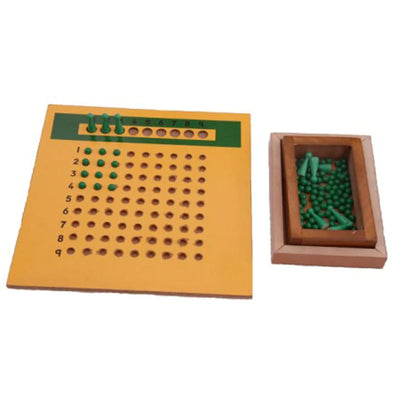
This isn't just another math workbook; it's a tactile, visual experience. Imagine a sturdy wooden board, beautifully designed with 9 rows of 9 cavities. It comes with vibrant green skittles and a generous supply of green beads. The genius lies in its simplicity: it allows children aged 4-10 to literally 'see' and 'do' division, transforming a complex idea into a concrete action.
The numbers 1 to 9 are clearly printed, guiding your child through the process. Made from durable MDF wood, it's designed to withstand countless learning sessions, making it an excellent addition to your collection of educational wooden toys.
Why Hands-On Math is a Game Changer for Kids
For young learners, especially those in their foundational years, abstract concepts are hard to grasp. They thrive on sensory experiences. Montessori learning toys like this division board bridge that gap, allowing children to manipulate objects, observe the results, and internalize mathematical principles without even realizing they're 'studying'. This approach is key for building early math skills.
When children physically distribute beads among skittles, they aren't just memorizing; they're constructing a deep understanding of what a divisor, dividend, and remainder truly mean. This practical math learning fosters a love for numbers, rather than a fear.
How Does the Division Learning Board Work in Practice?
It's surprisingly intuitive! Let's take an example like 10 divided by 2:
- Your child picks two green skittles, representing the 'divisor,' and places them in the designated slot.
- Next, they count out ten green beads, the 'dividend,' ready to be shared.
- Then comes the fun part: they distribute the ten beads one by one into the cavities below each skittle, ensuring each skittle gets an equal share.
- Once all beads are distributed, they can easily see how many beads each skittle received (the 'quotient') and if any beads are left over (the 'remainder').
This method of learning division for kids removes the pressure and makes it an exploratory game, perfect for developing problem-solving skills.
What Key Skills Does This Montessori Toy Develop?
Beyond mastering division, this board nurtures a range of essential developmental skills:
- Logical Thinking: Children develop a systematic approach to problem-solving.
- Fine Motor Skills: Handling the small beads and skittles refines hand-eye coordination and dexterity.
- Concentration & Focus: The engaging process encourages sustained attention.
- Mathematical Fluency: It solidifies understanding of core math concepts visually, leading to greater confidence.
- Independent Learning: The self-correcting nature of Montessori materials empowers children to learn at their own pace.
Tips for Parents: Making the Most of Your Division Board at Home
To maximize the learning potential of this excellent educational toy, here are a few suggestions:
- Start Simple: Begin with small, easy divisions that have no remainders to build confidence.
- Make it a Story: Frame division as sharing cookies or toys among friends to make it relatable.
- Encourage Exploration: Let your child experiment with different numbers. There's no 'wrong' way to explore and learn.
- Be Patient: Learning takes time. Celebrate small victories and focus on understanding over speed.
Introducing the Montessori Materials Division Learning Board into your child's playtime is more than just teaching math; it's about fostering a lifelong positive relationship with learning. It's truly one of the best educational toys for kids in the 4-10 age group, transforming a potentially intimidating subject into an exciting adventure.
Discover the magic of practical math learning with this Montessori toy and many other engaging educational tools. Visit SkilloToys.com today to explore a world of quality, skill-building toys designed for your child's holistic development.