Doll House for Kids: Montessori Activities for Toddlers (1-3 Years)
A doll house for kids aged 1-3 years is far more than just a toy; it is a powerful Montessori tool that unlocks imaginative play, crucial for a toddler's holistic development. This miniature world provides a safe, controlled environment where young children can process real-life experiences, practice social interactions, and build essential cognitive skills, directly aligning with national priorities for early childhood education.
As the government, through initiatives like the National Departmental Summit on Women and Child Development, and global bodies like UNICEF emphasize the critical importance of early childhood education, parents in India are increasingly seeking purposeful play options. A Montessori doll house offers just that: a foundation for foundational learning that goes beyond rote memorization.
What is Montessori Doll House Play?
Montessori doll house play is child-led, open-ended engagement with a miniature house and its inhabitants, designed to mirror the child's real-world environment. This matters because it allows toddlers to develop self-regulation, empathy, and problem-solving skills through hands-on, imaginative scenarios. Indian parents can use this approach to help their toddlers understand and process the rich, complex dynamics of their own homes and families.
Why a Doll House for Kids Fuels Development (1-3 Years)
Child development experts agree that imaginative play, often referred to as pretend play, is fundamental for growth in early childhood. For toddlers aged 1-3, a doll house becomes a critical arena for this development, offering profound doll house benefits for toddlers across multiple domains. Studies indicate that children who engage in regular pretend play show advanced language skills, better problem-solving abilities, and enhanced creativity compared to those with less imaginative play experiences.
In a bustling Indian household, with grandparents, aunts, uncles, and cousins often under one roof, a doll house provides a perfect micro-world for a child to observe, understand, and re-enact complex social dynamics. Little Aanya in Bengaluru might use her doll house to practice welcoming guests, resolving minor squabbles between doll siblings, or even mimicking her Dadi's storytelling sessions. This active processing helps toddlers internalize social norms and emotional responses in a low-stakes environment.
Montessori Doll House Activities: Nurturing Toddler Imaginative Play
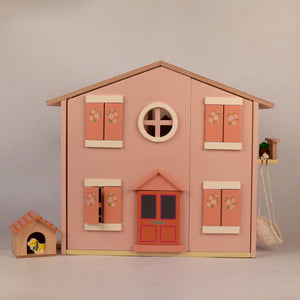
Montessori principles emphasize practical life and sensorial experiences. With a doll house, these translate into engaging activities that stimulate toddler imaginative play and foster independence. The beauty lies in simplicity and allowing the child to lead, making the experience deeply personal and impactful. SkilloToys offers a range of Montessori learning materials, including educational doll houses, designed for this very purpose.
Daily Routines & Practical Life
Toddlers thrive on routine. Encourage your child to re-enact daily activities within their doll house. For instance, little Rohan might wake up his doll family, help them brush their teeth, prepare a miniature breakfast, or send them off to a pretend school. These simple actions reinforce sequencing, responsibility, and mimic the rhythm of their own day, providing a comforting sense of predictability.
Family Dynamics & Emotional Expression
The doll house is a powerful tool for understanding and expressing emotions. Your child can act out scenarios like a grandparent's visit, a new baby arriving, or even a doll feeling sad because another doll took its toy. Observing your child's play can offer insights into their emotional landscape. You might notice them comforting a doll, expressing anger, or showering affection, all crucial steps in their emotional intelligence development.
Festivals & Cultural Celebrations
Immerse your child's doll house in Indian culture. Provide tiny fabric pieces for saris, small bowls for prasad, or miniature lamps for Diwali. A toddler can arrange their doll family for a mock Diwali puja, set up a small Holi celebration with coloured powders, or prepare for Raksha Bandhan. This not only reinforces cultural identity but also makes the play deeply meaningful and relevant to their lives.
Problem-Solving Scenarios
A doll house encourages nascent problem-solving skills. Perhaps a doll falls and needs help, or a piece of furniture breaks and needs 'fixing'. Your child might use other toy pieces to create a solution or find a 'doctor' doll. These moments, though simple, build critical thinking and creative problem-solving, skills highly valued in India's educational landscape.
Cultivating Pretend Play Development with SkilloToys
Choosing the right educational doll houses for pretend play development is key. SkilloToys focuses on open-ended, durable wooden doll houses and accessories that invite interaction without over-prescription. The satisfying click of a wooden doll figure moving through its miniature home, the gentle whisper of a toddler's imaginative dialogue – these are the sounds of true learning unfolding.
Maria Montessori herself emphasized the child's innate drive for purposeful activity. A doll house, when aligned with Montessori principles, provides a canvas for this drive. It allows toddlers to internalize their world, practice complex social roles, and develop the independence necessary for navigating life, from the smallest family gathering to the grandest festival. Encourage your toddler to create their own stories, arrange their tiny world, and through this powerful play, watch their imagination and confidence flourish. Explore our range of educational toys to find the perfect doll house for your little one.