Child Scientific Curiosity: Montessori Assessment Guide
Understanding and nurturing a child's scientific curiosity is a cornerstone of effective early childhood development, directly influencing their cognitive growth and problem-solving abilities. Research consistently shows that observing a child's innate drive to explore and understand their environment is crucial for tailoring educational experiences. For Indian parents, identifying these early signs allows for timely support and engagement with Montessori educational toys and activities that foster a love for science.
This guide delves into the Montessori approach to observation and assessment, empowering you to effectively evaluate your child's early STEM engagement. The ability to identify emerging interests in science during early childhood is critical for parents, ensuring that the effectiveness of early science play is maximized and aligned with individual developmental pathways.
What is Child Scientific Curiosity?
Child scientific curiosity is the intrinsic drive in young children to observe, question, explore, and experiment with their surroundings to understand how things work. This matters because it forms the bedrock for critical thinking, logical reasoning, and a lifelong passion for learning and discovery. Indian parents can actively foster this by providing a rich, responsive environment that encourages hands-on exploration and answers their child’s ‘why’ questions patiently.
Montessori Science Observation: The Art of Following the Child
Montessori education places immense value on keen observation as the primary tool for understanding a child's developmental stage and individual interests. Maria Montessori herself emphasized that the adult's role is not to teach but to guide by observing the child’s spontaneous activity and tailoring the environment accordingly. This meticulous Montessori science observation helps parents discern patterns in their child's exploration.
For instance, an 18-month-old repeatedly dropping a spoon from their high chair is not misbehaving; they are conducting a physics experiment on gravity and sound. Similarly, a three-year-old meticulously sorting stones by size and colour is engaging in classification, a fundamental scientific skill. In many Indian homes, this informal observation is often naturally integrated into the routines of joint families, where grandparents and older siblings also contribute to understanding a child's unique tendencies.
By paying close attention to what captures your child's sustained interest – be it insects in the garden, the mechanics of a bicycle, or the changing phases of the moon – you gain invaluable insights. This continuous, non-judgmental observation reveals their budding cognitive development science skills and preferred modes of learning. Studies indicate that children who are consistently observed and responded to develop stronger problem-solving capabilities.
Early STEM Assessment: Identifying Budding Scientists at Home
Assessing your child's scientific curiosity doesn’t require formal tests; rather, it involves recognizing key behaviours and responses in their everyday interactions. This informal early STEM assessment focuses on identifying engagement, persistence, and problem-solving strategies. For example, does your child persist in trying to fit a shape into a puzzle even after initial failures? Do they ask ‘why’ or ‘how’ when encountering new phenomena?
Look for indicators such as sustained attention to a task, independent exploration of materials, and attempts to repeat actions to see different results. Children who are naturally curious might also enjoy categorizing objects, recognizing patterns, or dissecting a flower to see its parts. These are all vital precursors to formal scientific inquiry, signaling an active mind ready for deeper engagement.
The effectiveness of science play can be informally assessed by observing if the activity stimulates curiosity, encourages hands-on manipulation, and leads to further questions or exploration. When a child returns to a specific activity or asks for more information on a topic, it signifies successful engagement. Providing age-appropriate Montessori materials that encourage sensory exploration and logical thinking can significantly enhance this assessment process.
Fostering Cognitive Development Through Science Skills
Early engagement with science is pivotal for developing robust cognitive development science skills. Through scientific exploration, children learn to observe keenly, ask pertinent questions, form hypotheses, and test them out – fundamental skills that transcend scientific disciplines. Research shows that early exposure to STEM concepts significantly enhances critical thinking and analytical abilities in later life.
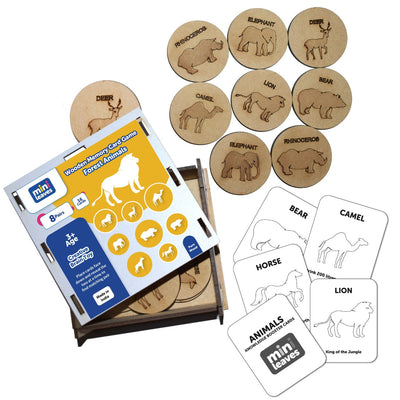
Montessori environments are designed to support this naturally, offering a “prepared environment” where children have the freedom to choose activities that pique their interest. This autonomy, combined with thoughtfully designed materials, encourages sustained focus and deep understanding. For instance, activities involving water play, botany puzzles, or classified cards about animals directly support the development of observational skills, classification abilities, and an understanding of natural systems.
Investing in science educational toys for cognitive growth means selecting items that encourage hands-on exploration, problem-solving, and discovery. These are not merely toys but tools for learning, fostering a child’s inherent drive to explore. This approach aligns perfectly with initiatives like Punjab’s “Mission Aarambh,” which aims to strengthen early childhood learning through engaging parents and providing digital resources, reinforcing the importance of early intervention and thoughtful engagement.
Evaluating Science Play Effectiveness in Indian Homes
To truly understand if your efforts in fostering scientific curiosity are effective, you must engage in evaluating science play effectiveness. This involves observing whether the activities lead to sustained interest, independent exploration, and genuine inquiry. A child who is truly engaged will not just passively receive information but will actively seek it out, asking “What happens if…?” or “Can I try that again?”
In the context of Indian families, this might mean seeing if children integrate scientific concepts into their imaginative play – perhaps pretending to be botanists exploring the ‘Tulsi’ plant or astronomers charting stars from the balcony. It also involves balancing the pressure for academic achievement with the need for unstructured, curiosity-driven play. Experts agree that a child's sustained engagement and joy in discovery are far better indicators of effective learning than mere memorization.
This systematic yet gentle approach to evaluation is also vital for children with specific developmental needs, such as those with Down Syndrome. Tailored observation and assessment allow parents to identify individual strengths and areas for growth, ensuring that support for cognitive and physical development is perfectly aligned with the child's unique pace and style of learning, as highlighted by recent articles in The Times of India.
Real-world Applications and Addressing Modern Challenges
Applying these Montessori observation principles extends beyond dedicated ‘science time’ and into everyday life. From cooking experiments in the kitchen – observing how ingredients change with heat – to understanding local flora and fauna during a visit to a neighbourhood park, opportunities abound. This helps children connect scientific principles to their immediate environment.
It is also crucial to consider the “impact of touchscreen digital exposure on children’s social development and communication,” as reviewed by Frontiers. While digital tools can be supplementary, hands-on, tangible experiences remain paramount for robust scientific and cognitive development. Prioritizing direct interaction with the physical world over excessive screen time ensures that children fully develop their sensory, motor, and critical thinking skills, which are foundational to true scientific inquiry.
- Observing a child's scientific curiosity is fundamental for tailoring effective early STEM engagement.
- Montessori observation techniques offer a powerful framework for understanding a child's developmental interests.
- Informal assessment of scientific curiosity focuses on a child's sustained engagement, persistence, and problem-solving.
- Early exposure to hands-on science activities significantly boosts cognitive development and critical thinking.
- Evaluating the effectiveness of science play involves looking for genuine inquiry, independent exploration, and joy in discovery.
- Prioritizing real-world, hands-on experiences over excessive digital exposure is crucial for comprehensive scientific development.