Educational Toys for Cognitive & Language Development (0-8)
Educational toys are essential tools that actively support children's cognitive and language development from birth to eight years, providing hands-on experiences crucial for foundational learning. This comprehensive guide, rooted in Montessori principles, empowers Indian parents to select and utilise the best educational resources for their child's holistic growth.
Research consistently shows that a stimulating early environment, rich with purposeful materials, significantly impacts brain architecture and future learning capabilities. For Indian families navigating the joys and challenges of raising young children, understanding how specific educational toys foster intellectual and linguistic brilliance is paramount.
What Are Montessori Educational Toys?
Montessori educational toys are purposefully designed, self-correcting materials that facilitate learning through discovery and independent exploration. They are typically made from natural materials, focusing on one concept at a time to cultivate concentration and develop specific cognitive and language skills through direct engagement.
The Montessori Philosophy: Nurturing Cognitive & Language Growth
The Montessori approach, founded by Dr. Maria Montessori, champions a child-centric educational philosophy, recognising children as active participants in their development. It emphasises a 'prepared environment' where children can freely explore specially designed materials that cater to their innate curiosity and 'sensitive periods' for learning.
For Indian families, integrating Montessori principles means creating a home environment that respects the child's developmental pace, encourages independence, and values purposeful activity. This philosophy aligns beautifully with the Indian cultural emphasis on respect for learning and self-reliance, empowering children to become self-motivated learners who articulate their thoughts clearly and solve problems creatively.
Cognitive Development Toys: Building Logical Minds (0-8 years)
Cognitive development encompasses a child's ability to think, reason, solve problems, and understand the world around them. Montessori educational toys are meticulously designed to support each stage of this complex journey.
Sensory Exploration & Early Logic (0-18 months)
In the initial months, infants learn primarily through their senses. Montessori mobiles, grasping toys, and rattles are perfect for this stage, stimulating visual tracking, auditory discrimination, and fine motor skills. These simple yet profound materials lay the groundwork for neural pathway development.
Parents can observe their baby's intense concentration with a 'Munari mobile' or the careful exploration of a 'interlocking disc' — moments that demonstrate the earliest forms of cognitive engagement. Such foundational experiences are critical, with studies indicating that rich sensory input in infancy can enhance later cognitive function.
Problem-Solving & Spatial Reasoning (18 months - 4 years)
As toddlers grow, their world expands to include manipulation and problem-solving. Stacking rings, sorting boxes, and puzzles become invaluable. The 'Pink Tower' and 'Brown Stair' materials introduce concepts of size, order, and dimension, fostering spatial awareness and logical sequencing.
Engaging with a wooden puzzle, a child isn't just fitting pieces; they're developing hand-eye coordination, pattern recognition, and the ability to think through challenges. This active engagement is far more beneficial than passive screen time, which a Frontiers systematic review highlighted can negatively impact social development and communication in children.
Abstract Thinking & Mathematics Readiness (4-8 years)
For preschoolers and early school-goers, Montessori materials transition to more abstract concepts. Number rods, golden beads, and geometric solids help children grasp mathematical principles concretely before moving to abstract symbols. These toys make complex ideas tangible and accessible.
The process of counting beads or arranging number rods helps children internalise quantity and sequence, building a strong foundation for future mathematical reasoning. This prepares them effectively for the academic rigours often faced in Indian schools, ensuring a deep understanding rather than rote memorisation.
Language Development Toys: Fostering Communication & Expression (0-8 years)
Language development is intertwined with cognitive growth, enabling children to communicate needs, express ideas, and connect with others. Montessori educational toys provide a rich foundation for verbal and written language.
Early Language Acquisition & Vocabulary (0-18 months)
Even before words emerge, infants are absorbing language. High-contrast picture books, verbal interaction, and sound cylinders introduce new vocabulary and sounds. Parents narrating daily activities in Hindi, English, or their mother tongue, combined with these toys, create an immersive language environment.
Simple object boxes with miniature items for identification and naming are excellent for building early vocabulary. Encouraging children to point, babble, and eventually name objects solidifies their understanding and use of language within the home.
Articulation & Sentence Formation (18 months - 4 years)
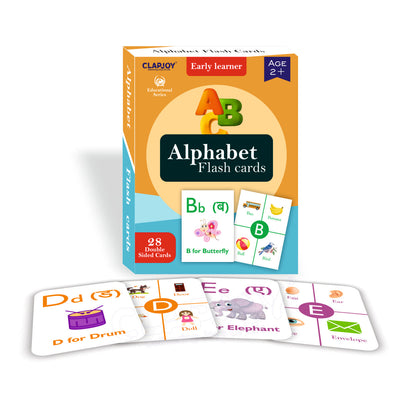
As toddlers begin to speak, language development toys focus on expanding vocabulary, improving articulation, and forming simple sentences. Matching cards, story cards, and classification games like 'Farm Animals' encourage children to verbalise observations and construct narratives.
Playing 'I Spy' with household objects or describing pictures in a book with grandparents strengthens their ability to articulate thoughts and use descriptive language. This continuous interaction helps refine their speech and builds confidence in expressing themselves, reducing potential communication gaps.
Reading & Writing Readiness (4-8 years)
The Montessori environment introduces reading and writing as natural extensions of spoken language. Sandpaper letters allow children to trace the phonetic sounds, engaging tactile and auditory senses simultaneously. The movable alphabet empowers them to build words and sentences before they can physically write.
These materials prepare children comprehensively for literacy, fostering an early love for reading and writing rather than pressure. This foundation is invaluable as they transition to primary school, providing a distinct advantage in literacy skills. It also supports inclusive learning, as highlighted by The Times of India, by offering multi-sensory approaches beneficial for children with diverse learning needs, including those with Down Syndrome.
Selecting the Best Educational Toys for Your Indian Home
Choosing the right educational toys involves thoughtful consideration of your child's developmental stage and your family's values. The vast array of options can be overwhelming, but a few key principles guide Montessori selection.
Age-Appropriateness & Child's Interest
The most effective educational toys align with a child's current sensitive period and individual interests. Observe what captivates your child; if they are fascinated by numbers, introduce concrete counting materials. If they enjoy stories, focus on language-rich activities. For instance, a 18-24 month old will thrive with simple stackers, while a 5-year-old will gravitate towards the Montessori Movable Alphabet.
Durability, Safety & Cultural Relevance
Prioritise toys made from natural, non-toxic, and durable materials like wood. These are not only safer but also provide a richer sensory experience. In joint Indian families, heirloom-quality toys can be passed down, creating a legacy of learning. Consider toys that naturally integrate with Indian culture, such as traditional story-telling cards or block sets for building miniature temples.
Simplicity & Purpose
Montessori toys are typically simple, focusing on teaching one concept at a time, which prevents overstimulation and fosters deep concentration. Avoid toys with too many functions, flashing lights, or loud noises. The beauty lies in their singular purpose and the child's self-directed discovery.
This minimalist approach encourages children to engage their imagination and problem-solving skills fully, rather than passively receiving entertainment. It nurtures their emerging interest in science during early childhood, allowing them to experiment and understand cause and effect without distraction.
- Educational toys, especially Montessori-aligned ones, are critical for optimal cognitive and language development in children aged 0-8.
- The Montessori philosophy fosters independent learning, problem-solving, and concentration through specifically designed, self-correcting materials.
- Early sensory and problem-solving toys build foundational neural pathways, impacting future cognitive function and mathematical readiness.
- Hands-on language materials like sandpaper letters and object boxes are more effective for vocabulary and literacy than excessive digital screen time.
- Selecting age-appropriate, durable, and simple educational toys that resonate with a child's interests enhances engagement and learning outcomes.
- Integrating Montessori principles into Indian home life supports holistic development, involving family members and cultural contexts in the learning journey.
What are the best educational toys for a 2-year-old's language development?
For a 2-year-old, the best educational toys for language development include picture books, object boxes with matching cards, and simple sorting games. These materials encourage vocabulary acquisition and sentence formation through hands-on interaction and conversation.
How do Montessori educational toys support cognitive skills in young children?
Montessori educational toys support cognitive skills by offering self-correcting materials that encourage independent problem-solving and logical thinking. Children learn through direct manipulation, developing concentration, fine motor control, and an understanding of abstract concepts.
Are screen-based educational games as effective as physical educational toys?
Research indicates that physical educational toys offer superior benefits for holistic cognitive and language development compared to screen-based games. Hands-on interaction, sensory engagement, and real-world manipulation are crucial for building neural connections in early childhood.
When should Indian parents introduce reading and writing educational toys?
Indian parents can introduce reading and writing educational toys during the sensitive period for language, typically between 3.5 and 5 years. Materials like sandpaper letters and the movable alphabet allow children to explore sounds and word formation at their own pace, fostering readiness for formal schooling.
How can grandparents help with Montessori learning at home in India?
Grandparents can significantly aid Montessori learning by creating a supportive, language-rich environment and engaging children in purposeful play. They can share stories, teach traditional games, and involve children in everyday tasks, enriching their cognitive and language experiences with cultural context.