Hindi Varnamala with Pictures: A Montessori Guide 0-8
Effectively teaching hindi varnamala with pictures from an early age is a cornerstone of robust language development, setting Indian children aged 0-8 on a path to literacy. Research shows that early, multi-sensory exposure to a native language script enhances cognitive abilities, preparing children not just for school but for lifelong learning.
This comprehensive Montessori guide offers practical, science-backed strategies for parents aiming to introduce the rich Hindi alphabet in an engaging and effective manner, leveraging visual aids to make learning intuitive and fun. It aligns perfectly with the philosophy that play-based learning deserves equal footing with nutrition in child development, as highlighted by bestcolleges.indiatoday.in.
What is Hindi Varnamala with Pictures?
Hindi Varnamala, comprising vowels (swar) and consonants (vyanjan), is the foundational script for the Hindi language. It matters because mastering these pictorial representations forms the bedrock of literacy, enabling children to read and write fluently. Indian parents can introduce this rich linguistic heritage through engaging, multi-sensory experiences from an early age.
The Montessori Advantage for Hindi Varnamala for Kids
The Montessori method offers a unique, child-centric approach to language acquisition, making it exceptionally effective for teaching hindi varnamala for kids. Dr. Maria Montessori observed that children possess an 'absorbent mind,' capable of effortlessly soaking up information from their environment. This principle guides the use of concrete, hands-on materials that allow children to explore and discover at their own pace.
For Hindi Varnamala, this translates into materials that isolate specific learning challenges, such as identifying letter shapes, associating them with sounds, and building words. This self-directed learning fosters independence, concentration, and a genuine love for language, rather than rote memorisation. It's a method that caters to diverse learners, supporting cognitive and physical development universally.
Starting Early: Nurturing Language Development 0-8 with Hindi Alphabet
Introducing language concepts early, especially the Hindi alphabet, significantly impacts a child's overall language development 0-8. While formal writing may begin around 3-4 years, pre-literacy skills can be nurtured much earlier, even during infancy.
For infants and toddlers (0-2 years), this involves listening to Hindi rhymes, stories narrated by grandparents, and engaging with picture books that subtly feature Hindi letters. Around 2-3 years, children begin to develop phonological awareness—the ability to hear, identify, and manipulate the individual sounds in spoken words. This is the perfect time to introduce the sounds of Varnamala, often through simple songs or games, before even showing the letter forms. Studies indicate that children exposed to a second language before age five demonstrate enhanced cognitive flexibility and problem-solving skills.
Essential Montessori Materials to Teach Hindi Alphabet with Pictures
Montessori classrooms, and increasingly Indian homes, rely on specially designed materials to teach hindi alphabet effectively. These materials make abstract concepts tangible and accessible to young minds.
- Hindi Sandpaper Letters: These textured letters allow children to trace the form of each Varnamala character, engaging their tactile sense. The child feels the shape while simultaneously saying the sound, creating a powerful sensory memory. This prepares them for writing without the pressure of holding a pencil. You can explore a range of similar foundational learning materials in our Montessori collection.
- Moveable Hindi Alphabet: Once children know the sounds, the moveable alphabet empowers them to construct words without needing to write. This builds confidence in spelling and sentence formation, fostering early literacy in a hands-on manner.
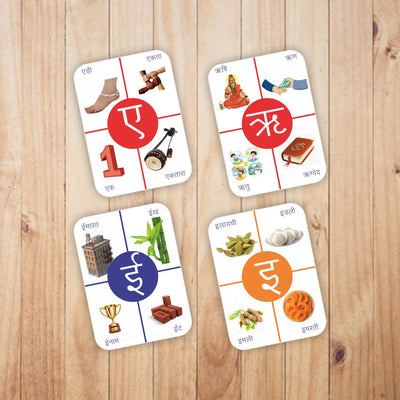
- Picture-Word Matching Cards: These cards pair a picture with its corresponding Hindi word, reinforcing vocabulary and letter-sound associations. For example, a picture of an "आम" (Aam - mango) with the word written below, helps connect the sound 'Aa' to the visual representation.
- Varnamala Puzzles: Engaging hindi varnamala with pictures puzzles are excellent for letter recognition and fine motor skills. Children match the letter shape to its correct slot, often featuring an associated picture. Discover various engaging options for your child in our puzzles collection.
Creative Activities for Montessori Hindi Language Learning at Home
Beyond specific materials, incorporating playful activities makes montessori hindi language acquisition a joyful experience within the Indian home context. The presence of a joint family, especially grandparents, can significantly enrich this process through storytelling and traditional songs.
- "Varnamala ki Khoj" (Alphabet Hunt): Hide pictures or small objects around the house that start with different Hindi letters. Children then find them and identify the initial sound.
- Hindi Story Time with Visuals: Use large, colourful picture books. Point to the words as you read, especially focusing on the initial letter of key words. Encourage children to "read" the pictures and guess the story.
- Sensory Trays: Fill a tray with sand, rice, or semolina (suji). Show your child a Hindi letter and encourage them to trace it in the tray with their finger. This is a wonderfully tactile way to practice letter formation.
- Varnamala Art & Craft: Dedicate a "Letter of the Week." Create crafts or drawings related to that letter, for instance, drawing "क" for "कमल" (Kamal - lotus) and decorating it.
Clinical spectrum studies, even those focused on children with cerebral palsy, underscore the importance of early, targeted interventions. Similarly, a structured, playful approach to language learning benefits all children, laying robust neural pathways.
Integrating Educational Toys for Hindi Literacy
SkilloToys.com understands the unique needs of Indian parents seeking high-quality educational toys for hindi literacy. Our curated selection of Montessori-aligned materials complements these teaching strategies perfectly. From wooden Varnamala blocks to interactive sound puzzles, these tools are designed to captivate young minds and make learning the Hindi alphabet an immersive experience.
By choosing materials that are durable, aesthetically pleasing, and scientifically sound, parents ensure their child's learning environment is stimulating and supportive. Investing in such resources means investing in your child's cognitive growth and their connection to a vibrant linguistic heritage, preparing them confidently for school and beyond.
- Early exposure to hindi varnamala with pictures significantly boosts a child's cognitive and linguistic development.
- The Montessori method provides a child-centric, multi-sensory approach that makes learning the Hindi alphabet intuitive and engaging.
- Introducing pre-literacy skills for Hindi can begin as early as 18-24 months, focusing on sounds before formal letter recognition.
- Tactile materials like Hindi Sandpaper Letters are crucial for kinesthetic learners to understand letter forms and sounds.
- Integrating playful activities and culturally relevant storytelling, often with family involvement, enriches the Hindi language learning experience at home.
- High-quality educational toys specifically designed for Hindi literacy reinforce learning and build confidence in young Indian learners aged 0-8.
When is the best age to start teaching Hindi Varnamala?
The ideal age to introduce Hindi Varnamala concepts is between 2.5 and 5 years, though pre-literacy exposure can begin as early as 18-24 months. Focusing on sound recognition and visual matching before formal letter tracing ensures a strong foundation for children.
What Montessori materials help with Hindi alphabet learning?
Montessori materials such as Sandpaper Letters (Hindi script), Moveable Alphabets, and Picture-Word Matching Cards are highly effective for Hindi alphabet learning. These tools engage multiple senses, reinforcing letter recognition, sounds, and word building for children.
How can I make learning Hindi Varnamala fun at home?
Make learning Hindi Varnamala fun by incorporating play-based activities like singing Varnamala songs, creating 'Varnamala walks' around the house to identify objects starting with specific letters, and using interactive storybooks. Engaging grandparents in storytelling also makes the process culturally rich and enjoyable for kids.
Is learning Hindi Varnamala important for language development 0-8?
Yes, mastering Hindi Varnamala is critically important for comprehensive language development in children aged 0-8. It provides the fundamental building blocks for reading, writing, and understanding Hindi, fostering cognitive skills and a strong connection to India's rich linguistic heritage.
How do pictures aid in teaching Hindi Varnamala to kids?
Pictures significantly aid in teaching Hindi Varnamala by creating strong visual associations between the letter and an object, making abstract concepts concrete for young learners. This visual cue helps children recall letter sounds and forms more easily, accelerating their recognition and comprehension abilities.