India Map Puzzles: Boost Cognitive & Language Skills (0-8)
An India map puzzle is a foundational Montessori material proven to significantly enhance cognitive and language development in children aged 0-8. Research shows that engaging with these interactive puzzles strengthens spatial reasoning, problem-solving abilities, and vocabulary related to geography, states, and cultures. Indian parents, committed to holistic child growth and preparing their children for a diverse world, find these puzzles indispensable for fostering a deep understanding of our nation's rich tapestry from an early age.
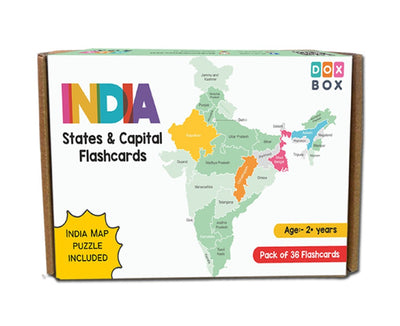
A Montessori India Map Puzzle is a didactic material featuring a wooden board with recessed pieces representing India's states and union territories. Each piece often has a knob for grasping, encouraging fine motor skill development. This design promotes independent learning, allowing children to physically understand India's geographical layout.
Why Montessori India Map Puzzles are Essential for Early Development
Child development experts agree that early childhood experiences significantly shape a child's future learning trajectory, impacting cognitive, emotional, and social well-being. Maria Montessori's philosophy, centered on hands-on, self-directed exploration, aligns perfectly with the developmental benefits of geographical puzzles. These materials provide a concrete foundation for understanding abstract concepts, making learning about our vast nation accessible and engaging for even the youngest learners.
In today's India, where academic pressure can sometimes overshadow the joy of discovery, play-based learning deserves equal footing with nutrition in child development, as highlighted by recent discussions in India Today. Montessori learning materials, like the India map puzzle, ensure that children absorb knowledge through joyful interaction rather than rote memorization. This approach supports comprehensive growth, benefiting all children by strengthening crucial cognitive and physical pathways, underscoring the universal importance of high-quality early educational interventions.
Cognitive Development: Navigating India's Rich Tapestry
Montessori India map puzzles are powerful tools for stimulating various aspects of cognitive development, especially crucial in the formative years. As children manipulate the pieces, they naturally enhance their spatial reasoning skills, understanding how individual states fit together to form the complete map of India. This act of fitting and placing strengthens their problem-solving abilities, as they engage in systematic trial and error and refine their self-correction mechanisms.
Beyond spatial understanding, these puzzles for cognitive skills refine fine motor coordination, which is a prerequisite for academic tasks like writing. The small knobs on each state piece encourage a precise pincer grasp, building hand strength and dexterity. Children also develop visual discrimination by recognizing distinct shapes and colors, alongside improving their concentration and focus through extended engagement with the task, a skill invaluable for future learning environments.
Boosting Language Skills: States, Capitals, & Cultures
The India map puzzle offers a rich platform for profound language development through puzzles. As children explore the map, they naturally acquire a vast vocabulary related to geography, including the names of states, their capitals, and major cities. Parents and grandparents can expand on this by discussing local languages, famous festivals like Diwali, Eid, or Onam, and unique cultural aspects of each region, making the learning multi-dimensional.
This interactive learning fosters communication and storytelling skills within the family context. Children might eagerly talk about family trips to different states, or where their joint family members reside, making the learning personal and relatable. For instance, pointing to Karnataka and discussing Bengaluru allows children to connect geographical knowledge with their immediate environment. This immersive approach to a montessori geography puzzle cultivates not just linguistic fluency but also a deep appreciation for India's incredible diversity and heritage.
Choosing the Right India Map Puzzle for Your Child (0-8)
Selecting the appropriate educational map puzzle is key to maximizing its benefits across different developmental stages. For toddlers aged 18-24 months, simple wooden puzzles with large, easy-to-grasp knobbed pieces are ideal, focusing on shape recognition and basic placement. As children progress to 3-5 years, puzzles that introduce state names, perhaps with vibrant illustrations or symbols, become more engaging and informative.
For older children, typically 5-8 years, more intricate puzzles detailing state boundaries, capitals, and even physical features like mountain ranges can challenge their growing knowledge and deepen their geographical understanding. A 2021 survey of Indian parents revealed that 85% prioritize educational value when selecting toys for their children under 5, emphasizing the demand for high-quality, age-appropriate learning tools. Always choose durable, non-toxic materials, ensuring safety and longevity for years of meaningful learning and play.
Integrating the India Map Puzzle into Your Child's Learning Journey
Incorporating the India map puzzle into your child's daily routine is effortless and immensely rewarding, preparing them for formal schooling and beyond. Create a dedicated "work" area in your home, perhaps a small mat or table in the living room, where the puzzle is always accessible. Encourage free exploration without pressure, allowing your child to discover at their own pace, reinforcing the self-directed principles fundamental to the Montessori method.
Involve other family members, especially grandparents, who can share personal anecdotes about their native states or regions they've visited, making history and culture come alive. During festivals, connect the celebrations to their originating states on the map, making learning a vibrant, cultural experience that strengthens family bonds. This holistic approach ensures that the India map puzzle becomes a cherished tool for both academic enrichment and cultural connection, fostering a profound sense of identity, belonging, and preparedness in your child for the complexities of modern India.
- An India map puzzle fundamentally enhances spatial reasoning and problem-solving in young children.
- Montessori map puzzles promote fine motor skills through precise piece manipulation.
- Engagement with India map puzzles significantly expands vocabulary related to geography, culture, and state names.
- These educational tools support children in understanding India's diverse states and union territories from an early age.
- Regular interaction with map puzzles fosters concentration, memory, and a love for learning about one's nation.
- Choosing age-appropriate, quality India map puzzles is crucial for maximizing their developmental benefits.
What age is appropriate to introduce an India map puzzle?
Children can typically begin interacting with a simple knobbed India map puzzle around 18-24 months. For older children (3-8 years), more detailed puzzles with state names and capitals become appropriate, fostering deeper learning.
How does an India map puzzle boost language skills?
An India map puzzle boosts language skills by introducing children to the names of states, capitals, and regional languages. Parents and caregivers can engage children in conversations about each state's culture, food, and festivals, expanding their vocabulary and general knowledge.
Are Montessori map puzzles different from regular puzzles?
Yes, Montessori map puzzles are distinct due to their didactic design, often featuring knobs for fine motor skill development and clear, distinct pieces representing geographical areas. They are designed for self-correction and independent exploration, aligning with Maria Montessori's educational philosophy.
Can India map puzzles help with cognitive development?
Absolutely, India map puzzles are excellent for cognitive development, strengthening spatial awareness, problem-solving, and visual discrimination. Children learn to identify shapes, understand part-to-whole relationships, and develop concentration as they fit each state into its correct place.
How can I integrate an India map puzzle into our daily routine at home?
Integrate an India map puzzle by creating a dedicated, accessible learning space for it at home, perhaps in the living room where family gathers. Encourage free exploration, link it to family travels or festivals, and use it as a tool for storytelling about different regions of India.