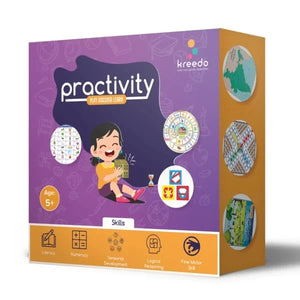
Educational Toys Bridge Learning Gaps in Indian Schools
Educational toys are crucial for bridging the significant learning gaps prevalent in many underfunded Indian primary schools, directly addressing the quality concerns highlighted by recent UNESCO reports. By offering hands-on, self-correcting learning experiences, these tools empower children aged 5-8 to build foundational skills that conventional classroom settings might miss. This approach is vital for ensuring every child, irrespective of their school's resources, receives a high-quality education.
Recent UNESCO findings underscore a pressing reality: India's education spending consistently falls short of the targeted 6% of GDP, impacting the quality of learning for millions of children. While headlines like "46 million children out of school" are alarming, the challenges extend to those enrolled, with many Indian public schools struggling to provide adequate resources and personalized attention. Parents, despite paying lakhs for education, often find their children grappling with rote learning, missing out on holistic development.
Why Indian Primary Schools Face Learning Gaps
Research shows that underfunded schools in India often contend with large class sizes, insufficient learning materials, and limited teacher training. This environment often prioritizes memorization over understanding, leaving many primary school children aged 5-8 with significant learning gaps in critical areas like logical reasoning, problem-solving, and foundational literacy and numeracy. The systemic pressure to perform in exams, a common aspect of Indian parenting, can further exacerbate these issues, masking a lack of deep comprehension.
This situation directly impacts a child's ability to truly grasp concepts, moving beyond surface-level knowledge. Studies indicate that without proper engagement with concepts through practical application, children develop a disinterest in learning, viewing it merely as a chore. Addressing these challenges requires innovative solutions that supplement the existing educational framework.
Montessori Educational Toys: A Proven Solution for Primary Learning
Montessori educational toys are purpose-designed tools that encourage self-directed learning and skill development through hands-on exploration. This matters because they cultivate independence, critical thinking, and a love for learning, which are often overlooked in rote memorization systems. Indian parents can integrate these materials at home to supplement their child's school education effectively.
Maria Montessori's philosophy, though often associated with early childhood, offers profound benefits for primary school children aged 5-8. Her methods emphasize prepared environments where children can choose activities, learn at their own pace, and discover concepts through manipulation and experience. This approach directly counteracts the passive learning often found in under-resourced classrooms, fostering genuine engagement.
How Educational Toys Support Quality Learning at Home and Beyond
Incorporating high-quality educational toys at home provides a powerful advantage, especially when school resources are stretched. These materials act as personal learning aids, allowing children to revisit challenging concepts or explore new ones in a relaxed, pressure-free environment. This supplementary learning can significantly mitigate the impact of quality gaps in formal schooling, building confidence and competence.
Child development experts agree that hands-on learning, especially for children aged 5-8, is paramount for cognitive development. When a child manipulates a concrete material like the puzzles, they are not just playing; they are actively constructing knowledge. This engagement makes learning memorable and fosters a deeper understanding than passive listening or memorizing from textbooks alone.
Beyond Textbooks: Practical Kids Learning Toys for Skill Development
Traditional Indian schooling often relies heavily on textbooks and worksheets, which, while important, can sometimes overlook the need for practical application. Kids learning toys bridge this gap by offering tangible experiences that solidify abstract concepts. For instance, while a textbook might explain fractions, a Montessori fraction circle set allows a child to physically manipulate and understand the parts of a whole.
Moreover, these tools promote essential life skills beyond academics. ActivityKits focused on practical life exercises, such as pouring, sorting, or dressing frames, enhance fine motor skills, concentration, and independence. These skills are invaluable for daily life within a joint family setting and for navigating future academic and professional challenges with greater confidence.
Addressing Indian Public School Quality Challenges with Montessori
While improving public school infrastructure is a long-term goal for India, parents have an immediate role to play in enhancing their children's learning journey. By thoughtfully selecting Montessori-aligned educational toys, parents can create a rich learning environment at home that complements their child's school experience. This proactive approach helps children develop strong foundations in math, language, and sensory discrimination.
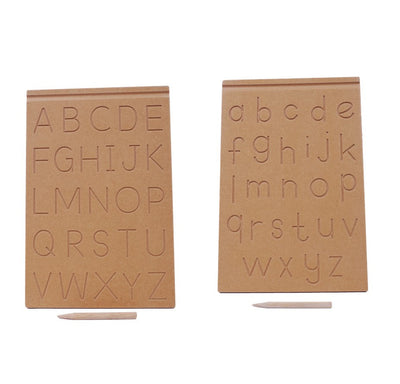
For instance, materials like sandpaper letters and movable alphabets significantly aid early literacy, while the Golden Beads or colored bead stairs foster a profound understanding of number systems. These tools are designed to be self-correcting, allowing children to learn from their mistakes independently, a crucial skill often underdeveloped in a crowded classroom setting where individual feedback is limited.
Empowering Parents: A Holistic Approach to Learning (5-8 Years)
In a world where "learning is free online, so why are parents paying lakhs for education?" is a valid question, the answer lies in quality and personalized engagement. Montessori educational toys provide that missing layer of quality, offering a structured yet flexible framework for learning at home. They foster intrinsic motivation, which is far more valuable than external pressure for grades.
Empowering children aged 5-8 with the right educational tools means equipping them for a future that demands adaptability and critical thinking, not just rote recall. It's about nurturing their innate curiosity and providing them with the means to explore, question, and discover, ensuring their academic journey is one of joy and deep understanding, even amidst broader educational challenges.
- Montessori educational toys directly address learning quality gaps in underfunded Indian primary schools.
- Recent UNESCO reports highlight India's insufficient education spending, affecting children aged 5-8.
- These toys promote hands-on, self-directed learning, countering rote memorization prevalent in many schools.
- Integrating Montessori materials at home supplements formal education, enhancing foundational skills and critical thinking.
- Montessori methods build independence, concentration, and a love for learning in primary school children.
- Quality educational tools are crucial for holistic development, preparing children for a future beyond exam pressures.
How do educational toys help children aged 5-8 in underfunded schools?
Educational toys provide hands-on, experiential learning opportunities that often fill the void left by inadequate resources in underfunded schools. They enable children to grasp complex concepts through self-discovery, fostering critical thinking and problem-solving skills independently.
Is Montessori education suitable for primary school children in India?
Yes, Montessori for primary school is highly suitable in India, particularly for children aged 5-8. Its emphasis on self-directed learning, practical life skills, and concrete materials complements traditional schooling by building a strong foundation for abstract thought and sustained concentration.
Can Montessori toys really address learning gaps caused by school quality issues?
Absolutely. Child development experts agree that Montessori toys are specifically designed to address fundamental learning gaps by offering individualized, multi-sensory experiences. Materials like the Golden Beads for math or sandpaper letters for language build core competencies that might be missed in large, under-resourced classrooms, improving overall Indian public school quality.
What kind of educational toys are best for primary school children?
For primary school children aged 5-8, the best educational toys include those that promote logical thinking, fine motor skills, literacy, and numeracy. Examples are detailed Montessori materials such as the Pink Tower for spatial reasoning, puzzle maps, comprehensive activityKits, and science experiment sets.
How can Indian parents integrate Montessori educational toys at home effectively?
Indian parents can integrate Montessori educational toys at home by creating a prepared environment that encourages exploration and independence. Provide age-appropriate materials, observe your child's interests, and allow them to choose their activities, reinforcing concepts learned at school and nurturing their innate curiosity.