Educational Toys for Primary School Academic Success
To significantly boost primary school academic performance (5-8 years), strategically using Montessori educational toys at home offers a proven, hands-on approach that cultivates foundational skills essential for subjects like math, language, and science. Research consistently shows that engaging children with purpose-built learning materials enhances their concentration and problem-solving abilities, directly translating to better classroom engagement and academic results.
Montessori for academic success involves leveraging specifically designed materials that promote self-directed learning and skill mastery through concrete experiences. This approach helps Indian children grasp complex concepts intuitively, preparing them not just for rote learning, but for deep understanding and application in primary school subjects.
In India, where parents increasingly seek quality education, evidenced by reports like 'Why 4 in 10 Indian children go to private schools', the emphasis on academic excellence is undeniable. While online resources abound, as noted by NDTV's 'Learning Is Free Online, So Why Are Parents Paying Lakhs For Education?', the tangible, experiential learning offered by Montessori educational toys provides a unique and invaluable advantage. These tools allow children to construct knowledge actively, making learning deeply personal and profoundly effective, reducing the pressure associated with abstract concepts.
Laying Strong Foundations for Math Success (5-8 Years)
Montessori educational toys provide a concrete pathway to mastering abstract mathematical concepts for children aged 5-8 years. Materials like the Golden Beads, Number Rods, and Stamp Game transform counting, place value, and basic operations into tactile experiences. Child development experts agree that early exposure to such Montessori learning materials fosters a deep, intuitive understanding of numbers, far beyond mere memorization. For instance, the Golden Bead material allows a child to physically count out units, tens, hundreds, and thousands, making the concept of large numbers and place value tangible. Studies indicate that strong early math skills are a significant predictor of overall academic achievement in primary school and beyond.
Indian parents can integrate these kids learning toys into daily routines. For example, during family mealtimes, grandparents can use Number Rods to illustrate simple addition, or children can use fraction circles to understand sharing portions of their favourite treats. These primary school learning activities make math relatable and fun, building a solid base for complex topics taught in CBSE or ICSE curricula.
Nurturing Literacy and Language Development at Home
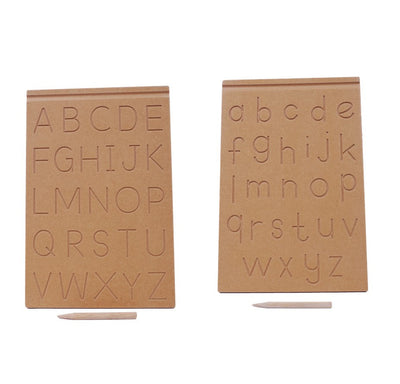
For children aged 5-8, developing robust literacy skills is paramount, and Montessori educational toys are specifically designed to support this. The Sandpaper Letters allow children to trace letter shapes while simultaneously hearing their phonetic sound, creating a multi-sensory link that accelerates reading readiness. Once phonetic awareness is established, the Movable Alphabet empowers children to construct words and sentences independently, without the physical challenge of writing, boosting confidence in early composition. Research shows that this tactile-kinesthetic approach significantly enhances phonemic awareness and early reading comprehension.
In multilingual Indian homes, these tools are invaluable for developing fluency in English or regional languages. Parents can use story cards for sequencing, encouraging narrative skills, or introduce grammar symbols to make sentence structure visible. Such Montessori for academic success initiatives at home provide a rich language environment, complementing school lessons and fostering a genuine love for reading and writing.
Cultivating Problem-Solving and Critical Thinking Skills
Montessori educational games for 5-8 year olds are not just about rote learning; they are meticulously designed to cultivate crucial problem-solving and critical thinking abilities. Montessori puzzles, such as geometric shape puzzles or knobbed cylinders, require children to observe, analyze, and logically determine solutions. Practical life activities, like dressing frames or pouring exercises, teach sequence, precision, and self-correction, all fundamental aspects of problem-solving.
These primary school learning activities encourage children to think independently and systematically. For an Indian child navigating complex social dynamics in a joint family or planning for a festival celebration, the ability to break down tasks and think critically is invaluable. The self-correcting nature of many Montessori materials means children learn from their mistakes autonomously, building resilience and a growth mindset vital for academic and life challenges.
Fostering Focus and Independence for Lifelong Learning
One of the most significant contributions of Montessori educational toys to academic performance is their ability to foster concentration and independence. Dr. Maria Montessori observed that children, when given engaging and purposeful work, exhibit remarkable periods of sustained concentration. The design of Montessori materials encourages uninterrupted work cycles, allowing children to deeply engage with a task without external distraction or constant supervision.
This self-directed learning cultivates intrinsic motivation, a stark contrast to external pressures often seen in the Indian academic system. Children who learn to focus and work independently are better equipped to manage their schoolwork, tackle complex assignments, and develop self-discipline. This empowers them to take ownership of their education, a crucial skill that benefits their primary school years and sets them up for lifelong learning success.
Beyond Academics: Holistic Development Through Montessori
While the academic benefits are clear, Montessori educational toys offer far more than just better grades; they nurture holistic development essential for a well-rounded individual. The materials and methodology implicitly teach respect for oneself, others, and the learning environment. Children develop fine motor skills, hand-eye coordination, and sensory discrimination, which are foundational for all academic tasks.
The individualized pace of Montessori learning, for instance, naturally caters to diverse learning styles, a principle increasingly valued in inclusive educational discussions across India. This approach helps children build confidence, emotional regulation, and social skills through collaborative play and respectful interaction. Ultimately, by providing a balanced foundation, these kids learning toys prepare children not just for school, but for navigating the complexities of life with curiosity, resilience, and a genuine love for discovery.
- Montessori materials build concrete understanding of abstract academic concepts for 5-8 year olds.
- Hands-on educational toys enhance primary school math skills, including number sense and operations.
- Sandpaper letters and movable alphabets significantly improve literacy and language development.
- Problem-solving educational games foster critical thinking and independence for primary schoolers.
- The Montessori approach promotes focus and self-discipline, crucial for academic success and reducing pressure.
- Holistic development nurtured by these toys supports overall well-being and learning potential in children.
How do Montessori educational toys specifically help with primary school math?
Montessori math materials, like the Golden Beads and Number Rods, allow children to physically manipulate quantities and operations. This concrete experience builds a strong understanding of place value, addition, and subtraction, directly supporting primary school curriculum requirements.
Can Montessori materials really improve reading and writing for 5-8 year olds?
Absolutely. Materials such as Sandpaper Letters introduce phonetic sounds through touch, while the Movable Alphabet allows children to construct words before they can physically write. These tools foster phonemic awareness and early composition skills essential for reading and writing fluency.
Are these educational toys suitable for children facing academic pressure in India?
Yes, SkilloToys' Montessori educational toys are ideal for Indian children facing academic pressure. They encourage self-directed learning and intrinsic motivation, helping children develop a love for learning rather than just rote memorization, which can alleviate stress.
How do Montessori learning activities develop problem-solving skills in primary school children?
Montessori learning activities, including various puzzles and practical life exercises, require children to analyze situations, follow sequences, and self-correct. This process naturally develops logical reasoning, critical thinking, and independent problem-solving abilities crucial for academic and life challenges.
At what age should Indian parents introduce Montessori educational toys for academic success?
While Montessori principles can be introduced from birth, for specific primary school academic success, introducing age-appropriate Montessori educational toys around 4-5 years helps build foundational skills. Continuous engagement through the 5-8 year age band ensures sustained academic benefits.