Montessori Gardening for Primary School India: Ease Pressure, Boost Learning
In an era where academic pressure often casts a long shadow over childhood, particularly for primary schoolers in India, parents are actively seeking balanced approaches to learning. Montessori gardening primary school India provides a powerful antidote, fostering holistic development and easing academic stress. Studies consistently demonstrate that engaging children aged 5-8 in hands-on gardening activities significantly enhances their cognitive abilities, emotional regulation, and practical life skills, making learning a joyful, organic process beyond rote memorization.
Recent news, highlighting schools that have integrated gardening, democracy, and emotional development as core to their curriculum, underscores a vital shift in educational philosophy. This move acknowledges that true learning extends far beyond textbooks, a principle central to Dr. Maria Montessori’s pedagogy. For Indian families navigating the rising costs and intense demands of education, a return to nature-based learning offers invaluable benefits.
What is Montessori Gardening?
Montessori gardening is a child-led, hands-on approach to cultivating plants, aligning with Maria Montessori's philosophy of connecting children with nature and practical life. It matters because it allows primary schoolers to learn through direct experience, fostering independence, responsibility, and an understanding of ecological processes. Indian parents can easily implement this by creating small garden spaces or even potted plant areas at home.
Easing Academic Pressure with Green Spaces: The Montessori Way
The academic grind faced by many Indian primary schoolers, with its emphasis on competitive exams and high grades, can lead to significant stress. Montessori gardening provides a vital escape and a powerful stress-reliever. When children engage with soil, water, and plants, their minds naturally calm, reducing anxiety levels and fostering a sense of peace.
Child development experts agree that spending time in nature improves concentration and reduces symptoms of ADHD. This natural immersion acts as a therapeutic break, allowing children to return to their academic tasks with renewed focus and a calmer disposition. For urban Indian children, even a small balcony garden can become a sanctuary for mental well-being, fostering emotional intelligence alongside botanical knowledge.
Cultivating Practical Life Skills for Primary Schoolers
Gardening is a masterclass in practical life skills for primary schoolers, an area Montessori education prioritizes. Children learn to measure seeds, dig soil, water plants precisely, and observe growth patterns. These activities hone fine motor skills, coordination, and patience – qualities often overlooked in purely academic settings.
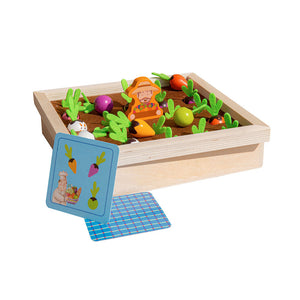
From planting saplings during festivals like Vanamahotsava to understanding the seasonal cycles of crops, Indian children develop a deep connection to their environment and culture. They learn responsibility by caring for living things and problem-solving when faced with wilting plants or pests. Incorporating practical tools, similar to those found in activity kits, further refines their dexterity and understanding of cause and effect.
Hands-On Learning: A Foundation for Academic Success
Montessori gardening is the epitome of hands-on learning, transforming abstract concepts into tangible experiences. A child planting a seed doesn't just read about botany; they experience it directly. They witness germination, observe photosynthesis, and understand life cycles in a profound, unforgettable way.
This experiential learning translates directly into improved academic performance. Research indicates that children involved in gardening programs show better science scores and enhanced problem-solving abilities. When children engage with puzzles related to plant life cycles or sorting activities for seeds, their cognitive skills are reinforced across multiple domains.
Beyond Textbooks: Academic Benefits of Gardening for Kids
The benefits of gardening extend well beyond practical skills, positively impacting various academic areas. Mathematics becomes tangible when children count seeds, measure plant growth, or calculate water quantities. Language skills flourish as they learn new vocabulary related to plants, gardening tools, and natural processes, and describe their observations.
Science comes alive through direct observation of plant biology, ecosystems, and environmental factors. Geography is explored by understanding different climates and the origins of various plants. Gardening nurtures a sense of wonder and inquiry, essential for lifelong learning, and complements the structured learning found in Montessori method learning materials.
Engaging Gardening Activities for 5-8 Year Olds
Introducing gardening to primary schoolers should be fun and age-appropriate. Start with simple tasks: planting quick-growing seeds like mustard or fenugreek in small pots. Children can decorate their pots, giving them a sense of ownership. Encourage them to observe and draw the daily changes in their plants.
More complex activities can include composting kitchen scraps, understanding soil composition, or identifying local birds and insects attracted to the garden. Creating a 'sensory garden' with fragrant herbs like tulsi or mint can engage multiple senses, making it a rich learning experience for children and often a shared activity with grandparents in Indian homes.
- Montessori gardening for primary schoolers in India significantly eases academic pressure by providing a calming, natural environment.
- Engaging in hands-on gardening activities cultivates essential practical life skills like fine motor coordination, responsibility, and problem-solving.
- Studies show that children participating in gardening programs demonstrate improved academic performance in subjects like science and mathematics.
- Gardening fosters a deep connection to nature, promoting emotional well-being and reducing stress in children aged 5-8 years.
- Incorporating child-led gardening, even in small spaces, offers a holistic approach to education, aligning with Montessori principles of experiential learning.
What age is best to start Montessori gardening with children?
Children can begin engaging in simple Montessori gardening activities as early as 18-24 months, focusing on sensory exploration. For primary schoolers (5-8 years), they are ready for more complex tasks like planting, weeding, and observing growth cycles.
Does Montessori gardening truly reduce academic stress in children?
Yes, research consistently shows that engaging in nature-based activities like Montessori gardening significantly reduces stress and anxiety in children. It provides a calming sensory experience and a break from intense academic demands, promoting emotional well-being.
What practical skills do children learn through Montessori gardening?
Children learn a wide array of practical life skills, including fine motor coordination through planting and harvesting, responsibility in caring for plants, patience, problem-solving, and understanding of life cycles. These skills are fundamental to their independence and overall development.
How can I incorporate Montessori gardening at home in an Indian context?
Even in urban Indian homes, you can start with small potted plants on balconies, window sills, or in a small backyard. Involve children in daily watering, observing, and even growing edible herbs or vegetables. Grandparents often enjoy sharing traditional gardening knowledge, making it a joint family activity.
Are there specific Montessori materials for gardening?
While there aren't 'Montessori gardening materials' in the same way as Pink Towers, the Montessori philosophy applies to using child-sized, real tools and providing purposeful, hands-on activities. Focus on real gardening tools scaled for children and tasks that allow for independent exploration and learning.