Montessori Math Activities Primary School: Foundations for India
Addressing India’s alarming primary school math crisis requires innovative solutions that go beyond rote learning. Research shows that Montessori math activities primary school can effectively build strong foundational understanding for children aged 5-8, offering a tangible path to overcome challenges highlighted by recent Google News reports. This method empowers young learners to grasp complex concepts through hands-on engagement, transforming academic pressure into genuine discovery.
The urgent 'learning crisis' in India, where statistics reveal '60 per cent of Class 5 private school kids can’t solve basic math problems,' underscores the critical need for a more effective approach. Montessori education, with its emphasis on concrete, self-correcting materials, provides a powerful antidote to this widespread issue. It nurtures a deep, conceptual understanding that prepares children not just for exams, but for lifelong logical thinking.
What is Foundational Math for Primary School?
Foundational math for primary school involves developing a deep understanding of number sense, place value, and the four basic operations (addition, subtraction, multiplication, and division). This matters because a solid foundation prevents future struggles and fosters a positive relationship with mathematics. Indian parents can empower their children by encouraging exploration and conceptual clarity over mere memorization.
Addressing India's Math Learning Gap: Why Montessori Works
The current educational landscape in India often places immense academic pressure on children, especially in subjects like mathematics, leading to widespread 'basic math problems primary school India.' Many children learn formulas without truly understanding the underlying concepts, a challenge compounded by large class sizes and standardized testing. This can be seen in reports questioning why India continues to treat university students like schoolchildren, suggesting a systemic issue in foundational learning.
Montessori education provides a refreshing alternative by focusing on individual learning paces and hands-on exploration. Child development experts agree that children aged 5-8 learn best through direct interaction with their environment. Montessori materials are designed to be self-correcting, allowing children to discover errors independently, which builds resilience and self-reliance rather than fostering fear of mistakes.
Hands-On Learning: Core Montessori Math Activities Primary School
Effective Montessori math activities primary school are characterized by their tangible nature, enabling children to literally 'build' their understanding of numbers. For instance, the Golden Bead Material helps children visualize quantities and place value, allowing them to perform addition, subtraction, multiplication, and division with thousands, hundreds, tens, and units. This concrete experience makes abstract operations highly intuitive.
Other vital materials include the Spindle Box, which introduces the concept of zero and quantity matching, and the Number Rods, which aid in understanding sequencing and basic arithmetic. The Stamp Game provides a more abstract, yet still manipulative, way to practice operations. These tools empower children to manipulate and internalize mathematical principles at their own pace, fostering a genuine love for the subject.
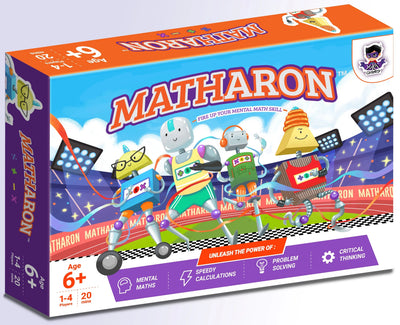
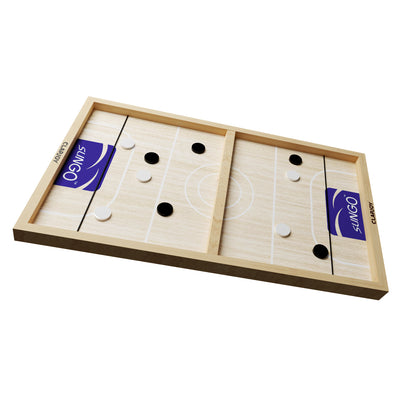
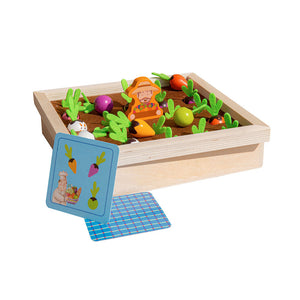
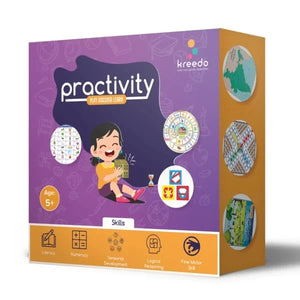
For parents looking to support this learning at home, engaging activityKits can replicate many Montessori principles. These kits often contain materials designed for hands-on exploration, promoting independent learning and reinforcing concepts learned at school or within a Montessori environment. They offer a wonderful way to extend the learning journey beyond the classroom.
Building Foundational Math Skills Primary School Through Play
Developing robust foundational math skills primary school isn't just about calculation; it's about logical thinking and problem-solving. Montessori encourages children to work independently or in small groups, selecting activities that appeal to their current stage of development. This freedom within limits cultivates intrinsic motivation and makes learning feel like play, rather than a chore.
Activities like geometric puzzles found in puzzles, for example, indirectly prepare children for geometry and spatial reasoning. Maria Montessori observed that children have an 'absorbent mind,' capable of taking in vast amounts of information through their senses. By providing a rich, prepared environment, we allow them to construct their understanding of mathematical order and patterns naturally, alleviating much of the stress associated with traditional academic performance.
Montessori for Math Primary School: Beyond Rote Learning
The traditional emphasis on rote memorization in many Indian primary schools often leads to children excelling in examinations without true conceptual understanding. This approach can be a significant barrier when children encounter more complex problems in higher grades. Montessori for math primary school fundamentally shifts this paradigm.
Instead of memorizing multiplication tables, a Montessori child uses bead chains or the multiplication board to physically build and understand the concept of multiplication as repeated addition. This deep engagement ensures that when they eventually commit facts to memory, it is built upon a solid, meaningful foundation. This method ensures lasting comprehension and a genuine appreciation for mathematics, contrasting sharply with the 'rising cost of learning in India' if it doesn't lead to true understanding.
Supporting Early Math Learning India: A Parent's Role
Creating a supportive environment for early math learning India goes beyond textbooks and tutors; it involves integrating mathematical concepts into daily life. Parents and even grandparents in joint families can play a crucial role. For instance, involving children in counting vegetables at the market, measuring ingredients for a family meal, or calculating quantities during festival preparations makes math real and relevant.
The aim is to foster curiosity and a positive attitude towards numbers, effectively countering the pressure associated with 'academic pressure math primary.' Celebrate their efforts and discoveries, rather than solely focusing on correct answers. Providing access to quality educational tools, such as those from the Montessori Method Learning Materials collection, can make a significant difference in a child's mathematical journey, turning challenges into opportunities for growth and joyful learning.
- Montessori math activities for primary school (5-8 years) offer a proven solution to India's math learning crisis, focusing on conceptual understanding.
- The approach addresses the statistic that 60% of Class 5 private school kids struggle with basic math problems by making abstract concepts tangible.
- Hands-on Montessori materials like Golden Beads and Stamp Game build strong foundational math skills, including number sense and operations.
- Montessori education fosters intrinsic motivation and problem-solving, moving beyond traditional rote learning prevalent in India.
- Parents can support early math learning by integrating Montessori principles and activities into daily Indian home life, reducing academic pressure.
- Maria Montessori's methods empower children to learn independently, fostering a lifelong positive relationship with mathematics.
What is the Montessori approach to math for primary school?
The Montessori approach to math for primary school (ages 5-8) emphasizes hands-on, concrete materials that help children develop a deep conceptual understanding of numbers and operations. It progresses from tangible experiences to abstract reasoning, fostering independent problem-solving skills.
How do Montessori materials help with basic math problems in primary school?
Montessori materials like the Golden Beads, Stamp Game, and Fraction Skell help children visualize abstract mathematical concepts, making them tangible and understandable. This concrete experience builds a strong foundation, allowing children to solve basic math problems with genuine comprehension, not just rote memorization.
Can Montessori help my child if they are struggling with math in a traditional Indian school?
Yes, Montessori can significantly help children struggling with math in traditional settings by filling conceptual gaps. It provides a different pathway to understanding, often re-engaging children who have become disengaged or anxious due to rote learning, building confidence through self-discovery and success.
What foundational math skills do Montessori activities develop for primary school children?
Montessori activities develop foundational math skills such as number recognition, counting, place value, addition, subtraction, multiplication, division, and fractions. Crucially, they also foster logical thinking, problem-solving strategies, and an intrinsic love for mathematical exploration.
How can parents integrate Montessori math at home to support early math learning in India?
Parents in India can integrate Montessori math at home by providing a prepared environment with age-appropriate materials, encouraging hands-on exploration, and connecting math to daily life, such as counting objects during festivals or calculating ingredients for cooking. Focus on understanding over speed, and celebrate effort.