Montessori Solutions for India's Learning Crisis
Montessori solutions India learning crisis address the critical gap where enrolment alone fails to guarantee quality education for primary school children (5-8 years), a pressing concern highlighted by 'The Indian Express.' Research consistently shows that while India has made strides in primary school enrolment, the actual learning outcomes often lag significantly. This situation creates a profound challenge for parents navigating the academic landscape, wondering if their child is truly learning despite attending school.
The learning crisis in India refers to the widespread issue where children, despite being enrolled in primary school, do not acquire foundational literacy and numeracy skills. This matters because it undermines future academic success and societal development. Indian parents can advocate for and implement learning strategies that prioritise deep understanding over rote memorisation.
Understanding India's Primary School Learning Gap
Child development experts agree that India faces a 'learning crisis' far more significant than its 'enrolment crisis' in primary education. This means countless children are attending school but are not genuinely grasping fundamental concepts, often leading to children not learning despite enrollment. For parents in cities like Bengaluru, where competition for good schools is fierce, the pressure to enrol their child is immense. Yet, merely being in a classroom doesn't equate to receiving quality education primary school India truly needs.
The traditional focus on rote learning for exams, coupled with large class sizes, often overlooks individual learning needs. This creates a cycle where learning gaps widen, and children, particularly those aged 5-8, lose interest and confidence. Studies indicate that foundational skills in reading and arithmetic are often not met, creating long-term disadvantages. The rising cost of learning in India, as noted by the India Development Review, further compounds this, making effective learning strategies more critical than ever.
How Montessori Cultivates Deep Learning in Indian Homes
The Montessori approach for deep learning offers a powerful antidote to the learning crisis by prioritising understanding over memorisation. Maria Montessori's philosophy champions hands-on, self-directed learning, where children engage with concrete materials to grasp abstract concepts. This method is particularly effective for primary schoolers (5-8 years) as it aligns with their developmental stage, moving from concrete experiences to abstract thought.
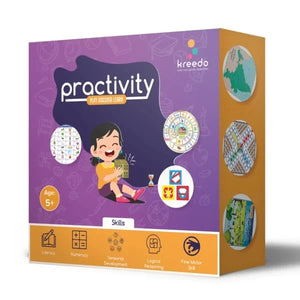
For Indian families, integrating Montessori principles at home can significantly enhance their child's learning journey. Imagine a child using a set of numerical rods to understand quantity or activity kits that encourage exploration and problem-solving, rather than just memorising numbers. This fosters genuine curiosity and provides effective learning strategies for kids India, preparing them not just for exams, but for life. It's about empowering children to learn through discovery, transforming their learning experience from passive reception to active engagement, a crucial element for quality education in India.
Empowering Primary Schoolers (5-8 Years) with Practical Montessori Tools
Montessori materials are specifically designed to aid development across various domains, making them invaluable for addressing learning gaps primary school children might experience. For children aged 5-8, materials such as the Pink Tower build visual discrimination and logical thinking, while Sandpaper Letters provide a tactile foundation for literacy. These tools encourage independent exploration and self-correction, crucial skills often missing in traditional settings.
Indian parents can easily incorporate these principles into their home environment. Simple puzzles can develop spatial reasoning, while everyday tasks like sorting spices or folding laundry can become practical life activities that build concentration and fine motor skills. In joint families, grandparents can play a significant role by facilitating these activities, creating a rich learning ecosystem at home. This approach empowers children to become active participants in their education, building a strong foundation for future academic success.
Montessori's Holistic Development for India's Future
Beyond academic prowess, Montessori fosters holistic development, nurturing critical thinking, problem-solving, emotional intelligence, and resilience – qualities essential for India's future generation. This stands in stark contrast to an education system often criticised for its intense academic pressure and singular focus on exam results. By allowing children to follow their intrinsic interests, Montessori cultivates a deep love for learning that extends beyond the classroom walls and into everyday life.
Authoritative sources confirm that a child's early years are foundational for developing these crucial life skills. Montessori classrooms and homes become spaces where children learn to collaborate, communicate effectively, and develop a sense of responsibility. This approach ensures that quality education primary school India provides extends beyond textbooks, preparing children to adapt and thrive in an ever-changing world, rather than just excel in competitive exams.
- Montessori solutions directly combat India's learning crisis by focusing on deep understanding over rote memorisation.
- The learning crisis in India refers to low foundational skill acquisition despite high primary school enrolment.
- Montessori's hands-on, self-directed approach is crucial for primary schoolers (5-8 years) to bridge learning gaps.
- Indian families can implement Montessori principles at home using age-appropriate materials and fostering independence.
- Specific Montessori tools like Golden Beads and Sandpaper Letters are highly effective for children aged 5-8.
- Montessori education promotes holistic development, cultivating critical thinking and emotional intelligence essential for India's future.
What is the biggest challenge in India's primary education system today?
The biggest challenge in India's primary education system is the 'learning crisis,' where a significant number of enrolled children do not acquire foundational literacy and numeracy skills. This gap between enrolment and actual learning impacts long-term academic and personal development.
How does the Montessori method differ from traditional schooling for 5-8 year olds?
The Montessori method for 5-8 year olds emphasises self-directed learning, hands-on exploration with specific materials, and an individualized pace, fostering deep understanding. In contrast, traditional schooling often relies on rote memorisation, standardised curricula, and teacher-led instruction for the entire class.
Can Montessori principles be applied effectively at home for primary schoolers?
Yes, Montessori principles can be effectively applied at home. Creating a prepared environment with accessible, age-appropriate materials, fostering independence, and respecting the child's natural curiosity can significantly enhance their learning journey outside of school.
What specific Montessori materials are beneficial for children aged 5-8?
For children aged 5-8, materials like the Golden Beads for mathematics, grammar boxes for language, various types of puzzles for problem-solving, and practical life activities that involve real-world tasks are highly beneficial. These tools encourage concrete learning experiences.
How does Montessori help reduce academic pressure on Indian children?
Montessori reduces academic pressure by shifting focus from competitive assessment and rote memorisation to intrinsic motivation and mastery of concepts. It allows children to learn at their own pace, fostering a love for learning rather than fear of failure, which is crucial in India's high-pressure academic environment.