Private Primary Schools India: Montessori for Holistic Growth
Within India's competitive educational landscape, integrating Montessori principles into your child's learning can profoundly enhance their experience in private primary schools India by fostering holistic development and easing academic pressure. Studies indicate that a child-centric approach, characteristic of Montessori, cultivates intrinsic motivation and a love for learning, crucial for children aged 5-8 years. This approach provides a balanced foundation, preparing them not just for exams but for life.
The prevalence of private schooling in India is undeniable, with recent reports like Newslaundry's 'Why 4 in 10 Indian children go to private schools' highlighting a significant trend. While parents invest heavily, as noted by NDTV's 'Learning Is Free Online, So Why Are Parents Paying Lakhs For Education?', concerns about academic pressure and a lack of holistic development persist. This guide explores how Montessori principles and educational toys can specifically support and enhance your child's journey within these demanding environments.
What are Montessori Principles in Primary Education?
Montessori principles in primary education advocate for a child-centred approach, emphasizing independence, respect for the child's natural psychological development, and hands-on, self-paced learning within a prepared environment. This matters because it allows children to discover and construct knowledge actively, rather than passively receiving information. Indian parents can integrate these principles by providing enriching learning materials and fostering a supportive, autonomy-promoting atmosphere at home, complementing their child's school experience.
Fostering Holistic Development in India's Private Primary Schools
Child development experts agree that holistic development, encompassing intellectual, emotional, social, and physical growth, is paramount in the early school years (5-8 years). Many traditional private primary schools in India often prioritize academic rigor, sometimes inadvertently overlooking these crucial aspects. Montessori philosophy directly addresses this by nurturing skills like critical thinking, problem-solving, and resilience through practical, self-directed activities.
For instance, activities involving sequencing and logical reasoning, similar to those found in Montessori sensorial work, develop a child's cognitive abilities beyond rote memorization. This approach helps children understand the 'why' behind concepts, fostering a deeper, more enduring knowledge base. It also encourages social interaction and collaborative learning, vital for navigating peer relationships in school and within the broader Indian community, including interactions with grandparents and joint family members.
Easing Academic Pressure in Private Schools India with Montessori
Academic pressure is a palpable reality for many Indian children, even in their primary years, often stemming from competitive environments and parental aspirations. Montessori benefits private school children by shifting the focus from external validation to internal motivation. The freedom to choose activities and work at one's own pace dramatically reduces stress and anxiety, replacing it with a sense of accomplishment and joy in discovery.
Maria Montessori's approach encourages children to correct their own mistakes through self-checking materials, fostering a growth mindset rather than fear of failure. This prepares them not only for school assessments but also for life's challenges, instilling confidence and adaptability. When children feel secure and competent, they are better equipped to handle the demands of their school curriculum, performing better without the crushing weight of undue pressure.
Enhancing Private School Education Quality in India with Montessori
While the quality of private school education in India varies significantly, parents can actively enhance their child's learning journey by incorporating Montessori principles. Many private schools excel in providing structured curricula, but may lack opportunities for individualised, hands-on exploration. Integrating Montessori materials and methodologies at home can fill these gaps, providing a rich, supplementary learning environment.
For example, using Montessori-inspired materials helps children solidify abstract concepts learned in school through concrete manipulation. This ensures a deeper understanding and retention, significantly boosting their engagement and academic performance. Exploring a wide range of Montessori method learning materials and toys can transform home learning into an exciting extension of their school day.
Montessori Educational Toys: A Complement to Private Primary School Learning
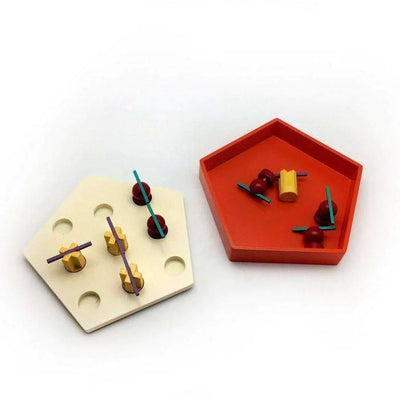
Montessori educational toys are not just playthings; they are purposeful tools designed to develop specific skills. For children aged 5-8 attending private primary schools in India, these materials offer invaluable reinforcement and extension of classroom learning. For instance, geometric puzzles and construction sets develop spatial reasoning and problem-solving skills, crucial for mathematics and science.
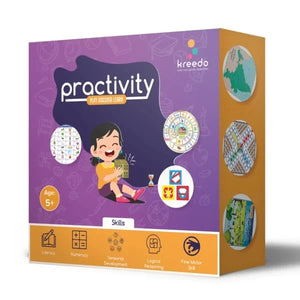
Similarly, activity kits focusing on practical life skills or cultural exploration can foster independence and a global perspective, aligning with a holistic educational approach. These hands-on experiences complement the theoretical knowledge gained in school, ensuring that learning is meaningful and applicable to real-world scenarios. SkilloToys offers a curated selection designed to empower Indian children in their educational journey.
Choosing Primary School India: Looking Beyond Ranks to Holistic Learning
When choosing primary school India, many parents instinctively look at academic rankings and peer reputation. However, a truly supportive environment for a child's overall well-being extends far beyond these metrics. Child development research suggests that schools promoting autonomy, intrinsic motivation, and a positive learning environment lead to greater long-term success and happiness.
Parents should consider schools that demonstrate a commitment to social-emotional learning, critical thinking, and creative expression, alongside academic achievement. Engaging with school staff, observing classroom dynamics, and speaking with other parents can provide insights into whether a school truly embraces holistic development. Prioritizing a child's natural curiosity and joy in learning ensures they thrive, not just survive, their early school years.
- Research shows that nearly 40% of Indian children attend private schools, a significant trend influencing parental educational choices.
- Montessori principles foster holistic development, nurturing intellectual, emotional, social, and physical growth in children aged 5-8 years.
- Academic pressure in private primary schools India can be eased by adopting child-centric, self-paced learning methods characteristic of Montessori.
- Maria Montessori's philosophy promotes intrinsic motivation and self-correction, reducing reliance on rote memorization and fear of failure.
- Montessori educational toys and materials, like puzzles and activity kits, provide concrete, hands-on experiences that reinforce abstract school concepts.
- Parents choosing primary schools in India should prioritize environments that support a child's natural curiosity and overall well-being, not solely academic rankings.
How can Montessori help my child in a private primary school in India?
Montessori principles, focusing on self-directed learning and practical life skills, complement traditional curricula by fostering independence, critical thinking, and a deeper understanding of concepts. This approach helps children thrive academically while reducing the stress often associated with competitive schooling.
What is holistic development in the context of private primary schools?
Holistic development refers to nurturing a child's intellectual, emotional, social, and physical growth simultaneously. In private primary schools, this means moving beyond just academic scores to cultivate curiosity, creativity, resilience, and empathy, preparing children for comprehensive life success.
Do Montessori toys help with academic pressure in Indian schools?
Yes, Montessori educational toys are designed to make learning tangible and engaging, reducing the pressure of abstract concepts. They encourage hands-on exploration, problem-solving, and self-correction, building confidence and intrinsic motivation rather than relying on rote memorization and fear of failure.
Are private primary schools in India suitable for all children?
Private primary schools in India offer diverse environments, and suitability depends on individual child needs and school philosophy. While many focus on academic excellence, incorporating Montessori principles, either at home or through school choice, can ensure a more balanced and supportive learning experience for any child.
How can I identify a private primary school that supports holistic development?
Look for schools that emphasize experiential learning, offer diverse extracurricular activities, and have a low student-teacher ratio. Inquire about their approach to social-emotional learning, conflict resolution, and opportunities for independent work, all indicative of a commitment to holistic child growth.