Affordable Homeschooling India: Free Resources & Smart Strategies
Making affordable homeschooling in India a reality involves strategically utilizing abundant free online resources and implementing smart budgeting techniques, proving that quality education does not demand exorbitant fees. Research shows that families can achieve substantial savings by opting for home-based learning, redirecting funds from school fees towards enriching experiences and tailored educational materials. This approach empowers parents to provide high-quality, personalized education within their financial comfort zone, aligning with the spirit of the NDTV article 'Learning Is Free Online, So Why Are Parents Paying Lakhs For Education?'.
Affordable homeschooling refers to delivering high-quality education at home without significant financial strain. This matters because it democratizes access to personalized learning experiences, allowing Indian parents to tailor education to their child's unique needs and pace. Families can achieve this through resourcefulness and careful financial planning, ensuring educational excellence is not exclusive to high-income households.
Leveraging Free Homeschooling Resources India
India is rich with accessible and free educational content, making quality `online learning free India for kids` a tangible reality. Government initiatives like DIKSHA, SWAYAM, and e-Pathshala provide comprehensive NCERT curricula, digital textbooks, and video lessons across various subjects. These platforms are invaluable for supplementing learning, offering structured content from early grades to higher secondary education, and can be accessed by any family with an internet connection.
Beyond government resources, global platforms offer a treasure trove of learning opportunities. Khan Academy provides free, world-class education for anyone, anywhere, covering subjects from maths and science to humanities. YouTube Education channels, Coursera for Kids, and various open-source curricula also offer high-quality content that can be integrated into a homeschool plan. These resources eliminate the need for expensive tuition or subscriptions, directly addressing concerns raised by 'The Rise Of Homeschooling In India' article regarding accessible education.
Don't overlook local community resources either. Public libraries in Bengaluru and other cities often have extensive collections of children's books, educational DVDs, and even offer free workshops or reading programs. Visiting local museums, art galleries, and historical sites provides hands-on learning experiences without significant entry fees, transforming the city into an extended classroom for your child.
Smart Budgeting for Homeschooling in India
One of the most compelling arguments for `affordable homeschooling India` is the substantial financial relief it offers from traditional schooling costs. Families opting for homeschooling immediately save on tuition fees, transportation, uniforms, textbooks, and various miscellaneous school expenses. These savings alone can amount to lakhs of rupees annually, which can then be reinvested into enriching experiences or saved for higher education.
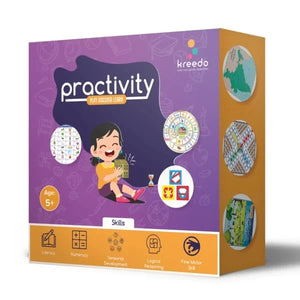
Developing a detailed `homeschooling budget India` is crucial for maximizing savings. Prioritize essential learning materials that offer long-term value and versatility. Instead of buying numerous single-purpose toys, invest in open-ended educational tools like Montessori `activityKits` or foundational Montessori Method learning materials from SkilloToys, which can be used for various age groups and learning objectives. Child development experts agree that quality, versatile materials foster deeper learning than a multitude of cheap, disposable items.
Furthermore, consider DIY learning materials. Everyday household items, craft supplies, and even nature finds can be transformed into engaging educational tools. Second-hand book markets, online swap groups, and toy exchanges within homeschooling communities are excellent avenues for acquiring resources at minimal cost. Studies indicate that families who prioritize resourcefulness and repurposing often report the highest levels of satisfaction with their cost-effective education.
Curating a Cost-Effective Learning Environment
Creating an enriching learning environment at home doesn't require a dedicated classroom or expensive furniture. Focus on a comfortable, organized space that encourages concentration and exploration. Utilizing a corner of the living room, a quiet spot in a bedroom, or even a communal area in a joint family home can be perfectly adequate. The key is a 'prepared environment' that is accessible and stimulating for the child, as advocated by Maria Montessori.
Embrace outdoor learning as a free and impactful educational tool. Regular nature walks in local parks, visits to community gardens, or even exploring the backyard can teach biology, observation skills, and environmental awareness. These experiences provide hands-on learning that complements academic studies and encourages physical activity, fostering holistic development in a cost-effective manner.
Engage grandparents and extended family in the homeschooling journey. In many Indian homes, elders possess a wealth of knowledge, from storytelling and traditional arts to practical life skills like cooking or gardening. Their involvement not only strengthens family bonds but also provides invaluable, free instruction in cultural heritage and life skills, creating a rich, intergenerational learning experience. This aligns with the 'Why are some Indian parents saying no to conventional schools?' perspective, highlighting the unique advantages of home-based, family-integrated learning.
Community & Bartering: Beyond Monetary Savings
Building connections within the local homeschooling community can be a game-changer for `cost-effective education India`. Homeschooling groups, whether online or in-person, offer a platform for parents to share resources, ideas, and even teaching responsibilities. Many groups organize co-ops where parents with specific expertise teach a subject to a group of children, reducing the need for external tutors.
Bartering and swapping are common practices that significantly reduce costs. Families can exchange textbooks, educational games, and even specialized `activityKits` their children have outgrown. This collaborative approach fosters a sense of community and ensures that valuable learning materials get extended use, preventing waste and saving money for everyone involved. It exemplifies a sustainable model for education, where collective effort trumps individual expenditure.
Collaborative learning projects, where several homeschooling families work together on a science experiment, a historical presentation, or a creative arts project, also offer immense benefits. These shared experiences provide social interaction for children, expose them to different perspectives, and pool resources and expertise, all while keeping individual costs minimal. This strengthens the network of support that is vital for successful homeschooling in India.
Integrating Montessori Principles Affordably
The Montessori method, championed by Maria Montessori, emphasizes self-directed activity, hands-on learning, and collaborative play, making it inherently adaptable to an affordable home environment. While specific Montessori materials like the Pink Tower or Sandpaper Letters are renowned, the underlying principles can be implemented using everyday items. For children aged 18-24 months, simple household objects can become tools for practical life activities, developing fine motor skills and independence.
Focus on creating a 'prepared environment' that encourages independence and exploration. This means organizing materials simply, making them accessible to the child, and allowing them freedom within limits. For instance, instead of buying a formal language material, parents can create DIY sandpaper letters or use magnetic alphabets for tactile learning. Engaging children in daily chores, like pouring water or folding clothes, naturally integrates practical life skills without cost.
SkilloToys offers high-quality Montessori Method learning materials designed to be durable and versatile, providing long-term value. While some investments may be made, prioritize materials that can be used across various developmental stages. For example, building blocks can teach geometry, fractions, and creative construction. Experts agree that a few well-chosen, open-ended materials are far more effective than a room full of expensive, single-use items, especially when considering a long-term homeschooling journey.
- Affordable homeschooling in India is achievable through strategic resource utilization and smart budgeting.
- Free government and international online platforms offer vast educational content, making quality learning accessible.
- Smart budgeting eliminates traditional school costs, freeing funds for enriching, personalized experiences.
- Community engagement, skill-sharing, and bartering significantly reduce homeschooling expenses.
- Montessori principles can be integrated affordably using DIY materials and versatile, foundational tools.
- A personalized, cost-effective education can rival or surpass conventional schooling quality through deliberate planning.
Is homeschooling legal in India?
Yes, homeschooling is absolutely legal in India and is a growing choice for many families seeking alternative education paths. Parents have the right to educate their children at home, often aligning with a child's unique learning pace and interests.
Where can I find free homeschooling resources in India?
India offers numerous free resources, including government platforms like DIKSHA, SWAYAM, and e-Pathshala, providing NCERT content and digital textbooks. International platforms like Khan Academy and YouTube Education also offer vast educational libraries free of cost for children of all ages.
How much does homeschooling cost in India on average?
The cost of homeschooling in India varies widely but can be significantly lower than traditional schooling, ranging from negligible to a few thousand rupees per month. This depends on whether families rely heavily on free resources or invest in paid curricula and materials, but it consistently eliminates major school fees, transport, and uniform expenses.
Can Montessori education be done affordably at home?
Absolutely. Montessori education can be very affordable at home by focusing on the philosophy of child-led learning and a prepared environment, rather than expensive materials alone. Parents can create DIY materials, repurpose household items, and invest in a few versatile, long-lasting Montessori-inspired tools over time.
What role do community groups play in affordable homeschooling?
Community groups are invaluable for affordable homeschooling, offering opportunities for resource sharing, skill exchange, and collaborative learning. Joining local homeschooling networks allows families to swap books, share educational `activityKits`, and even coordinate group field trips, significantly reducing individual expenses and fostering a supportive environment.